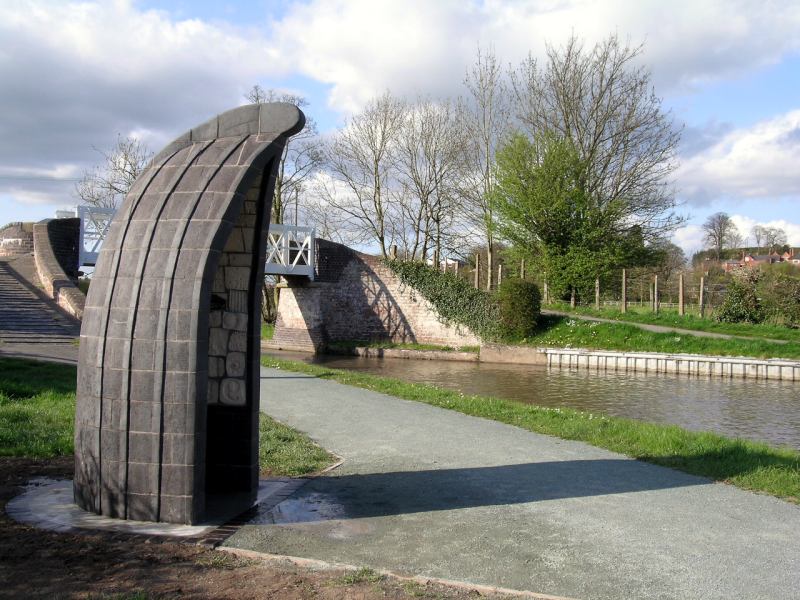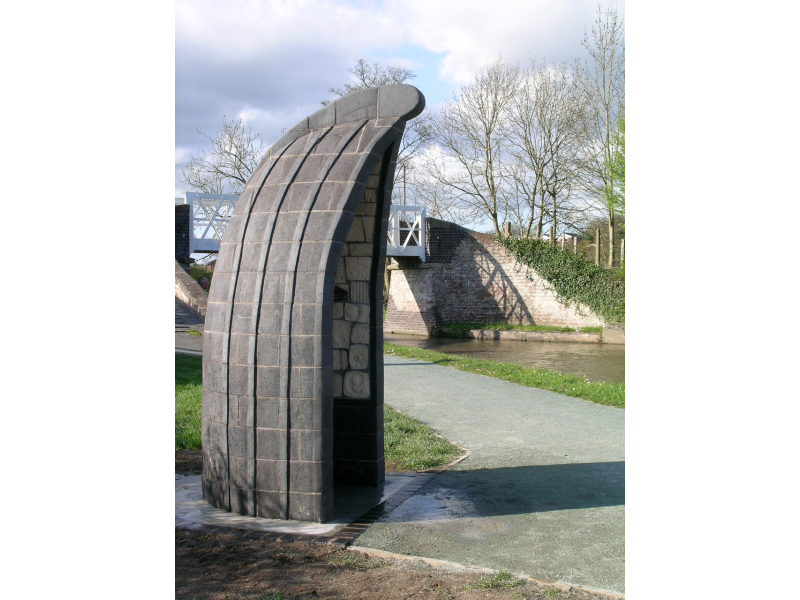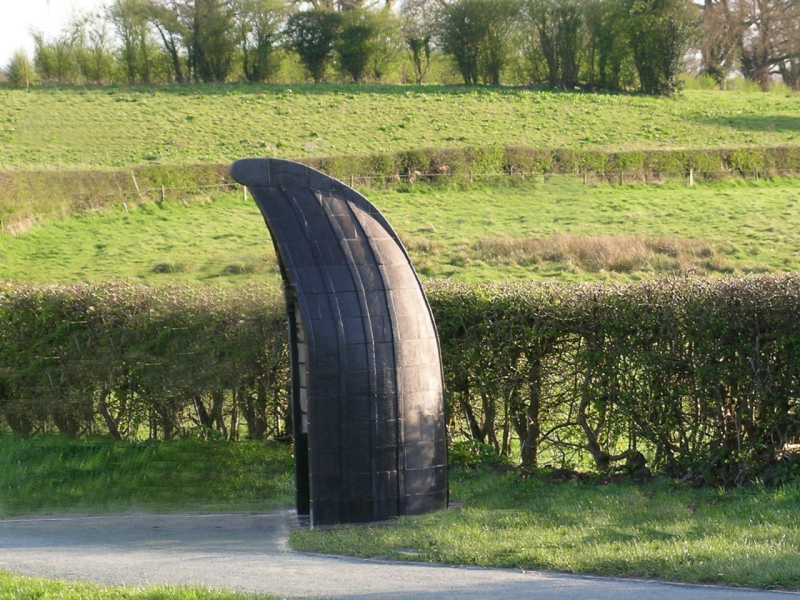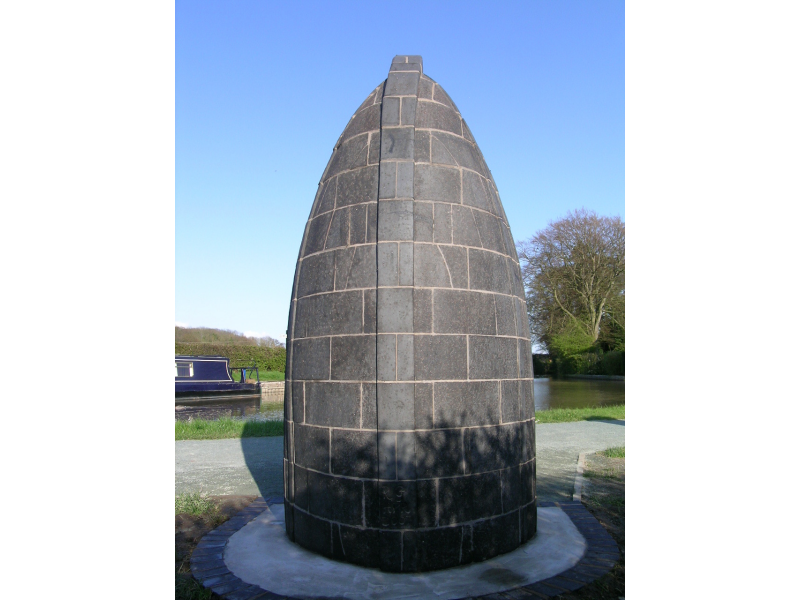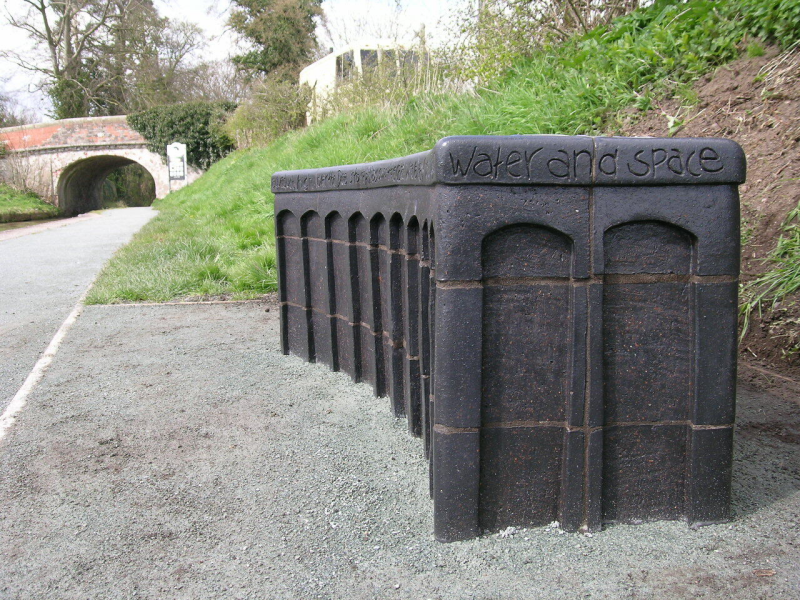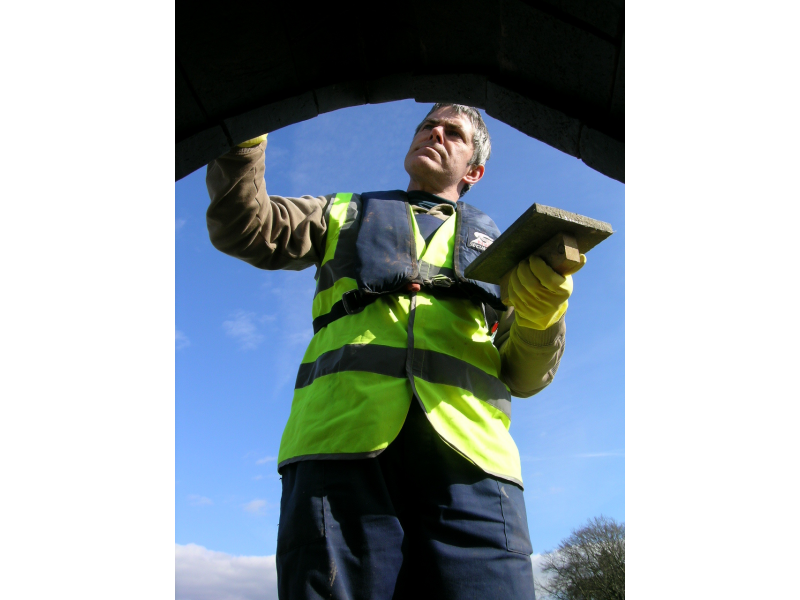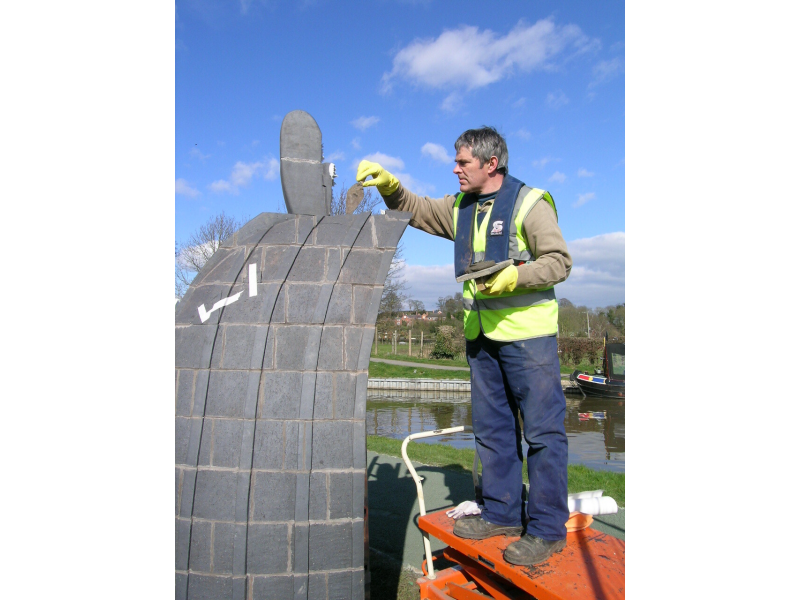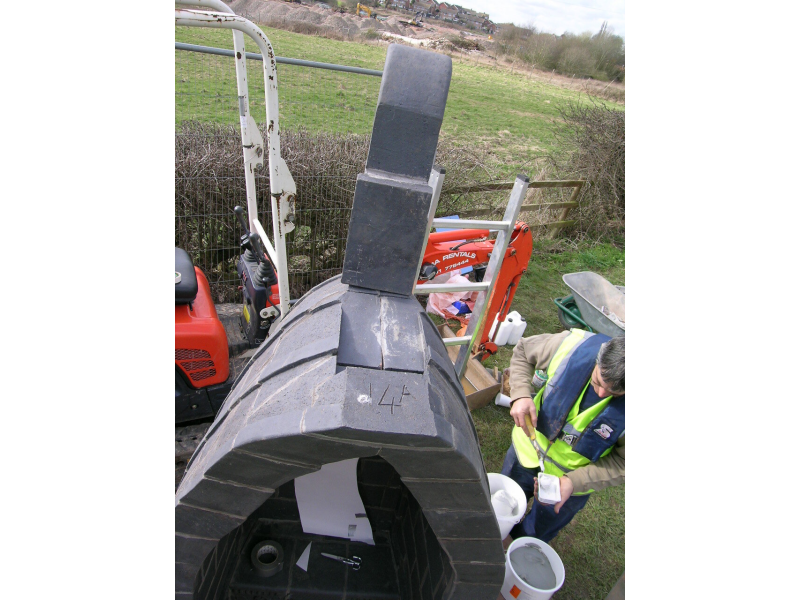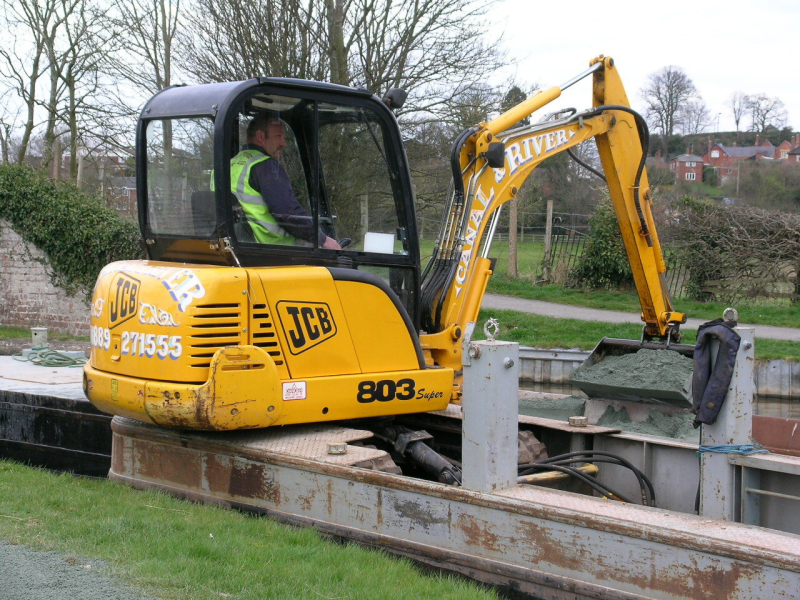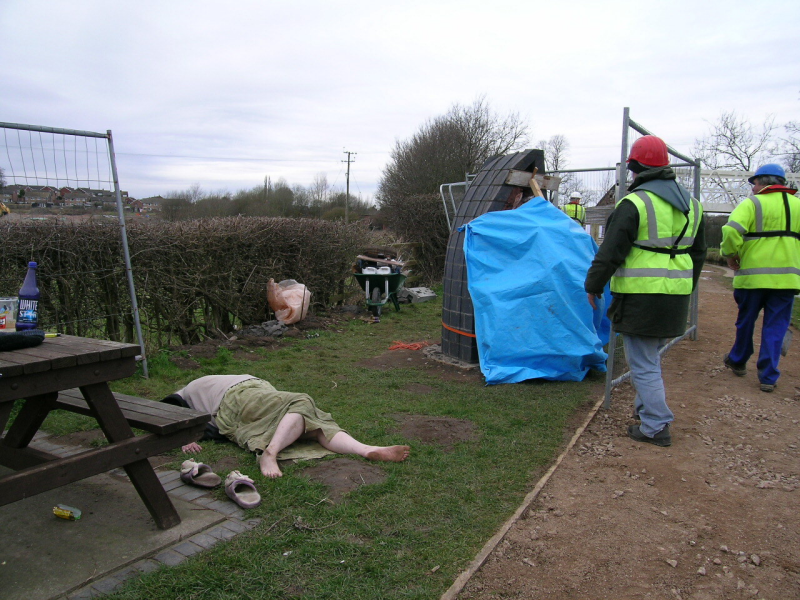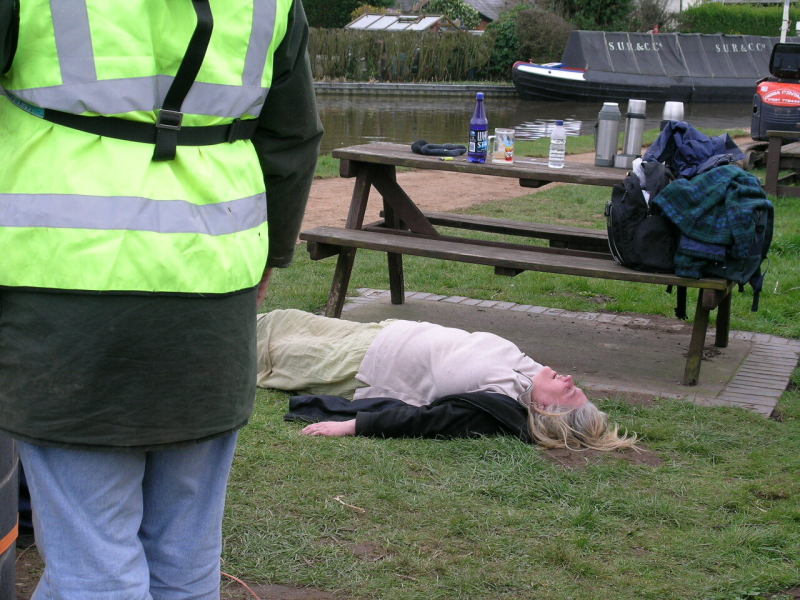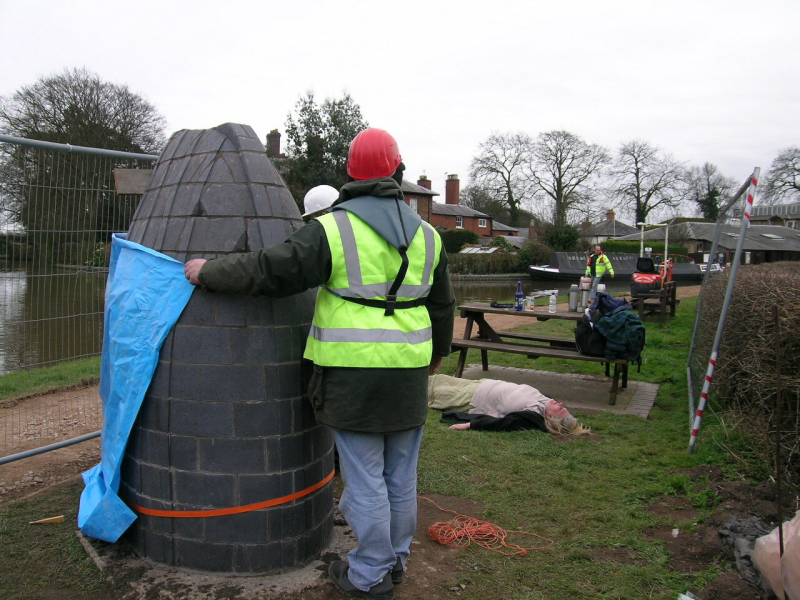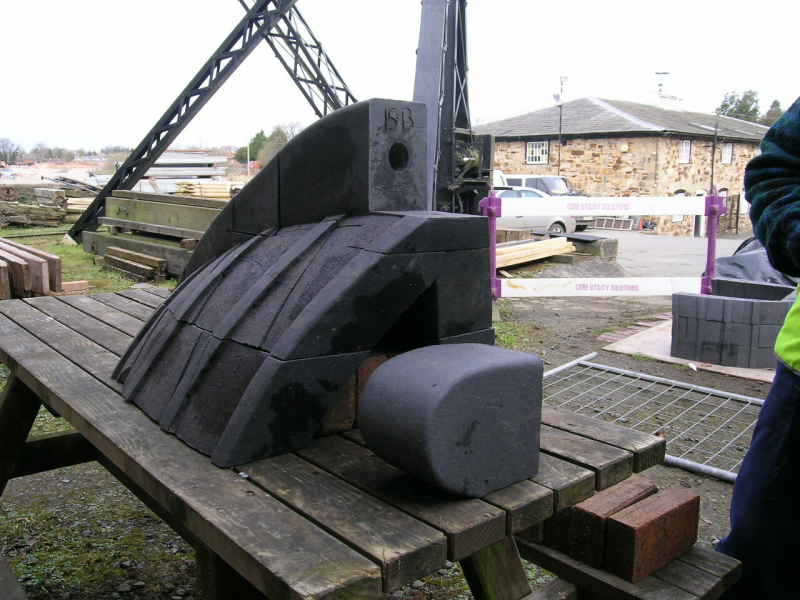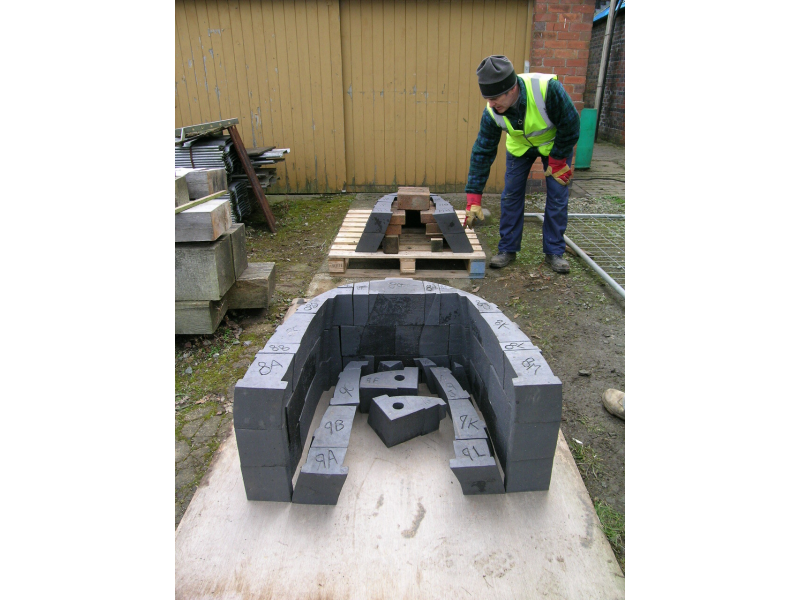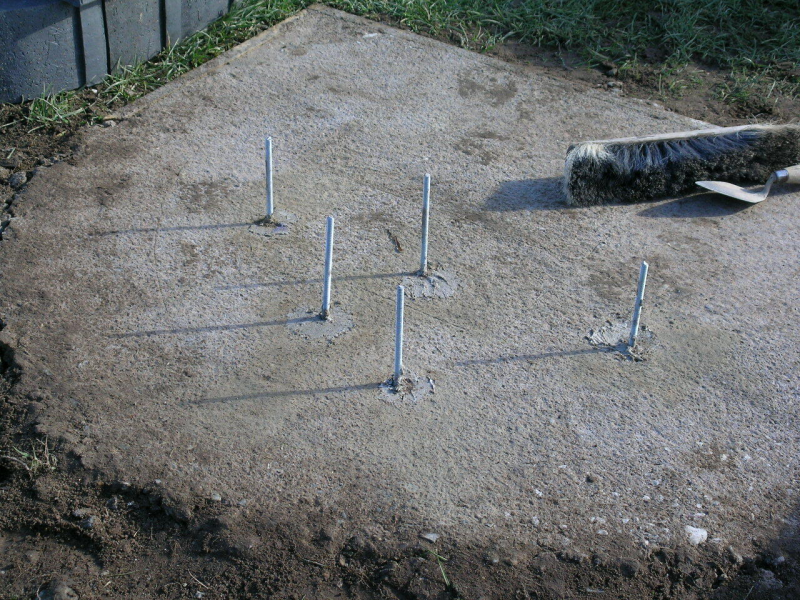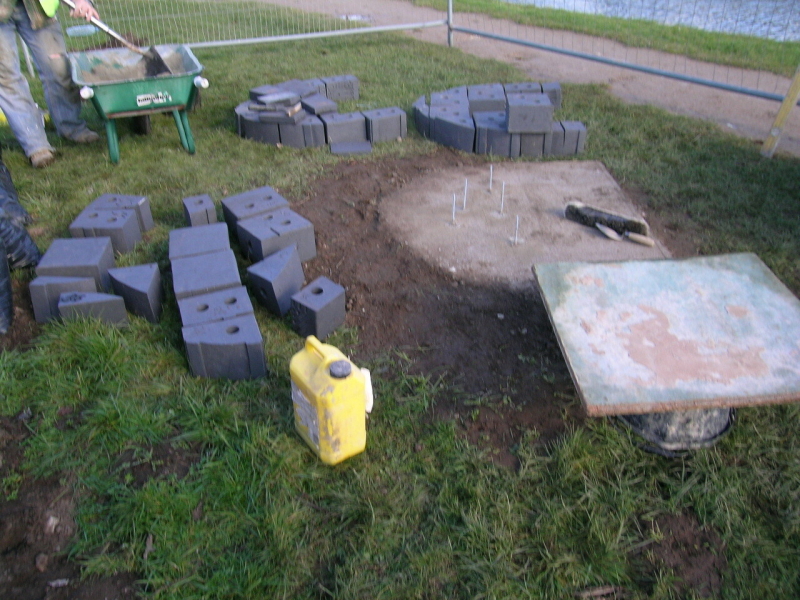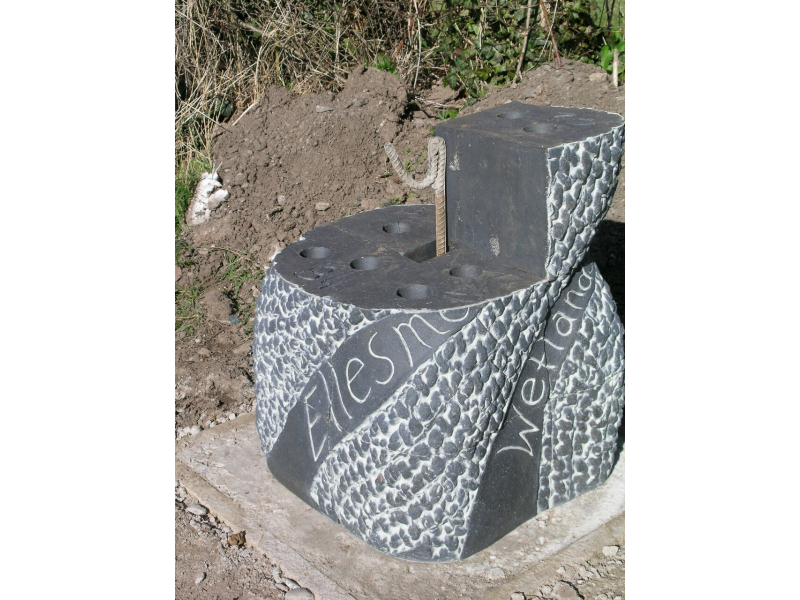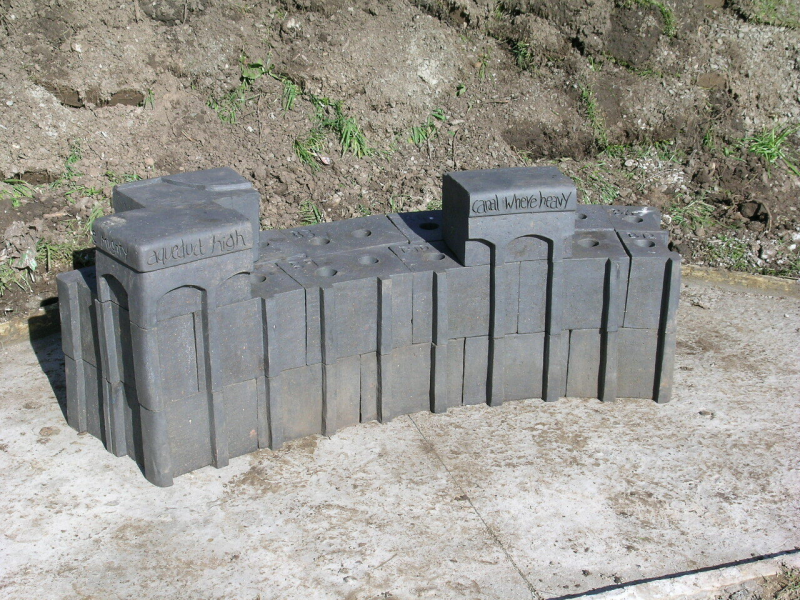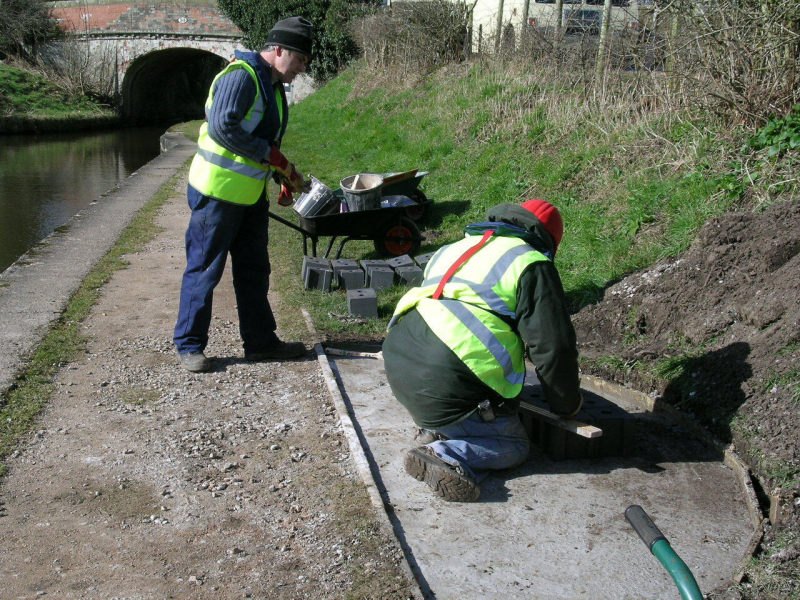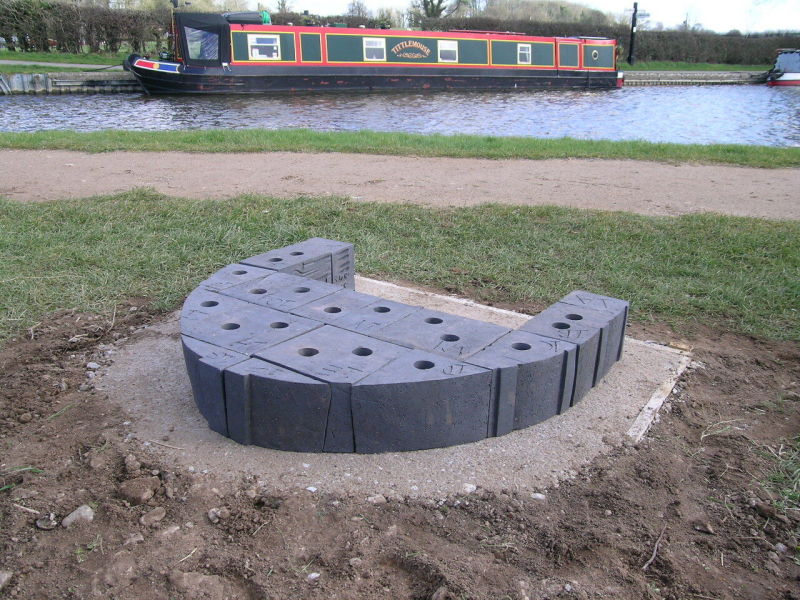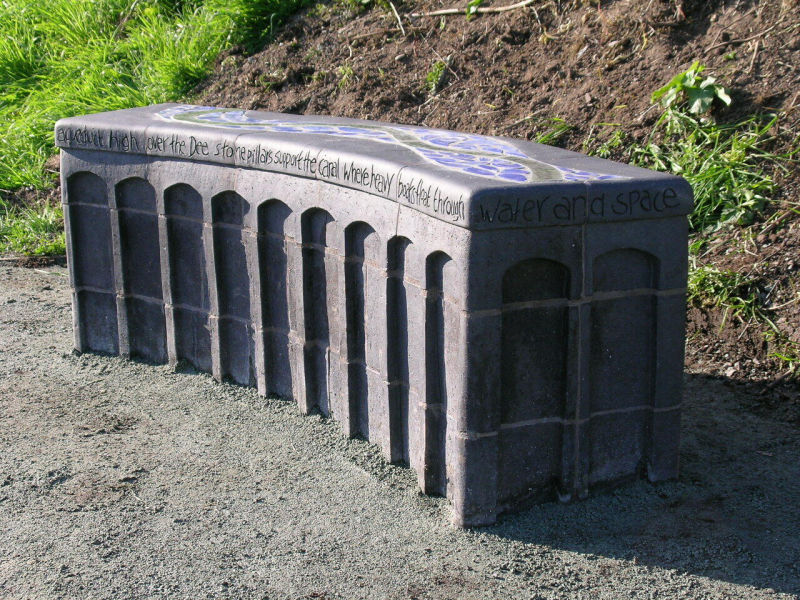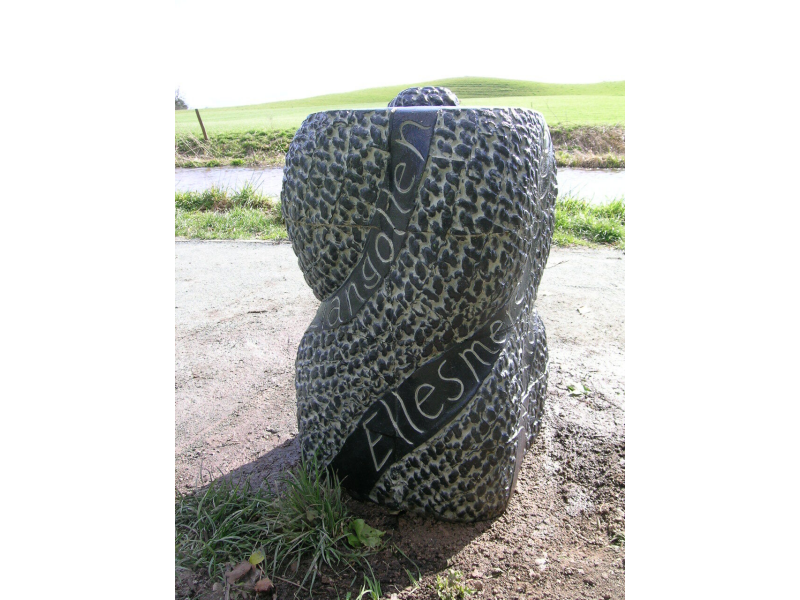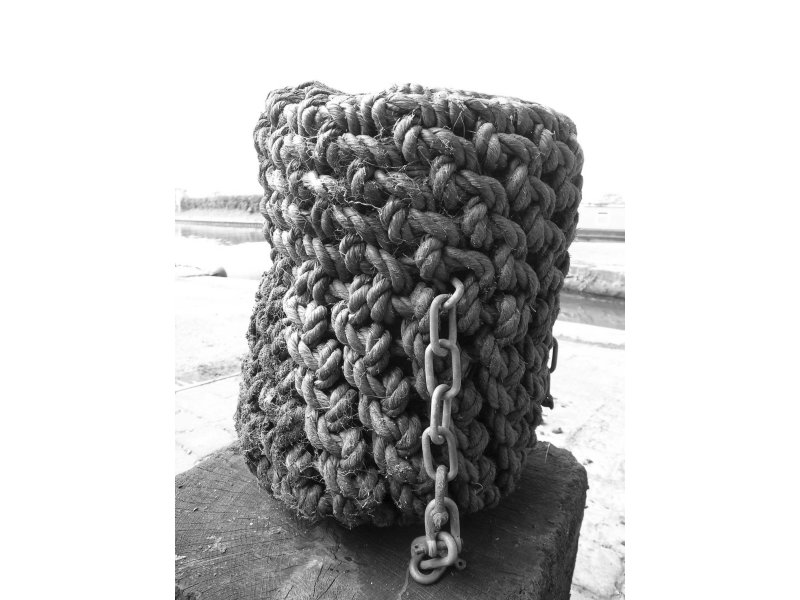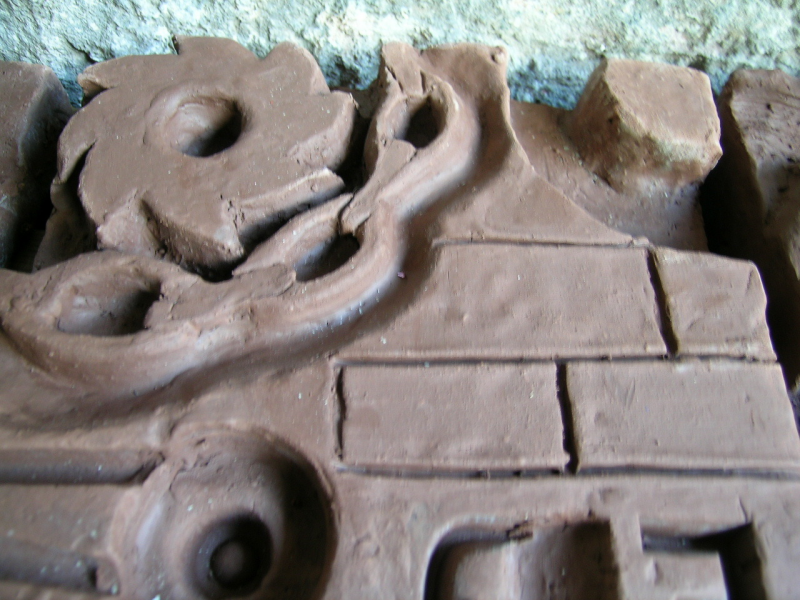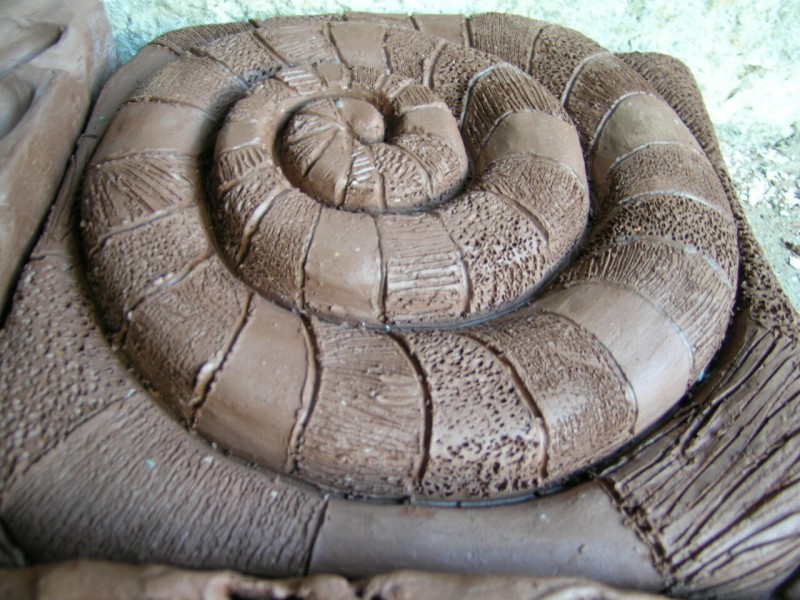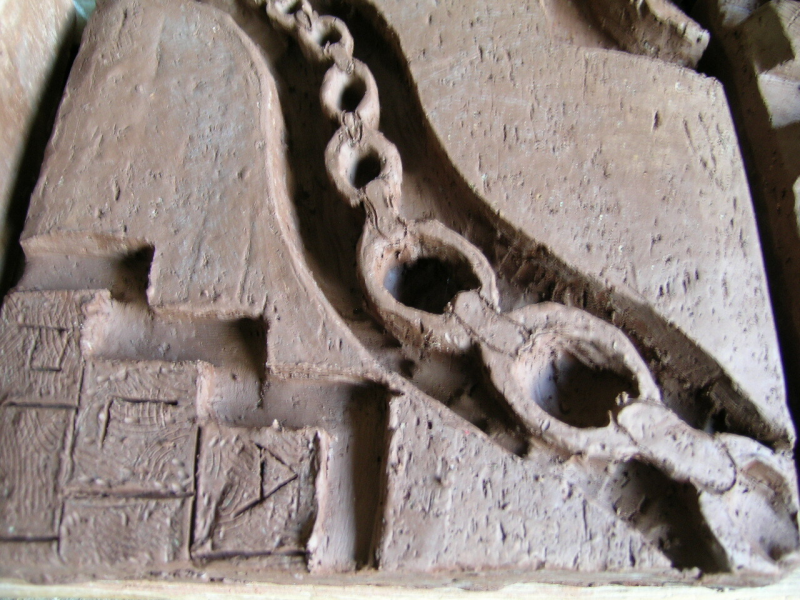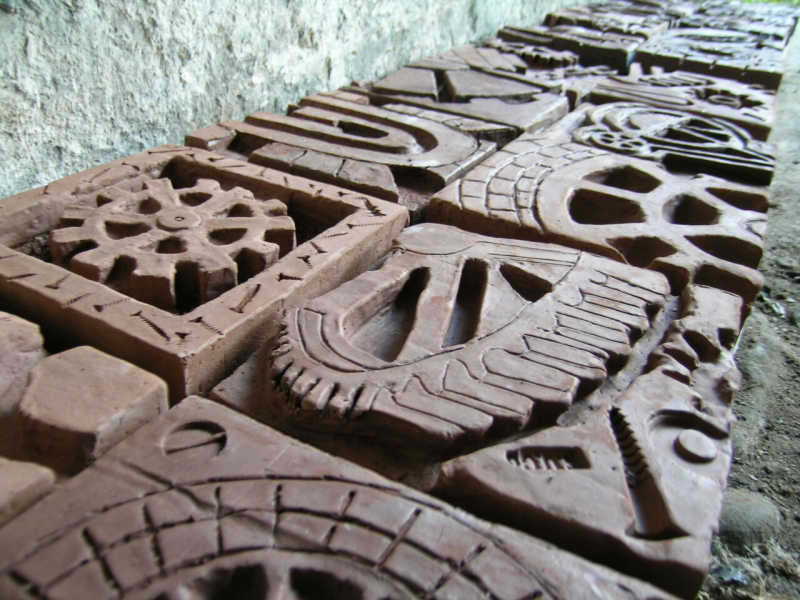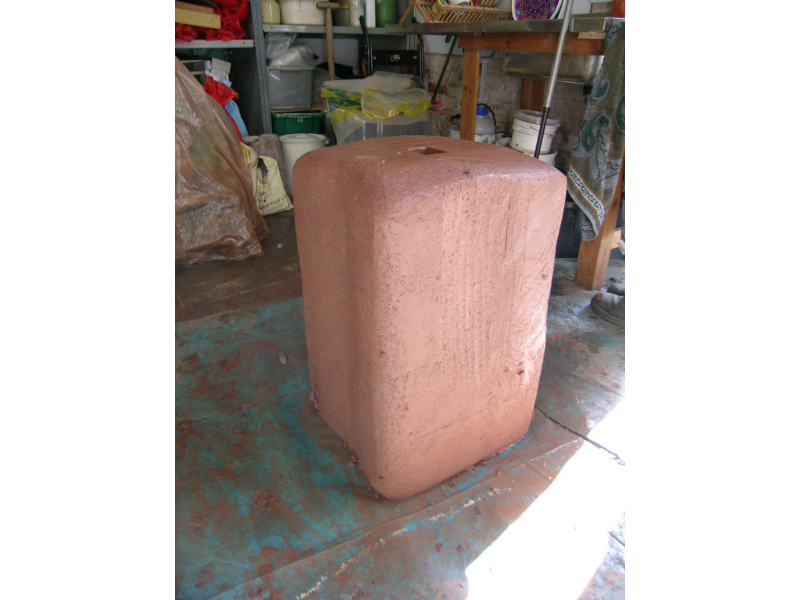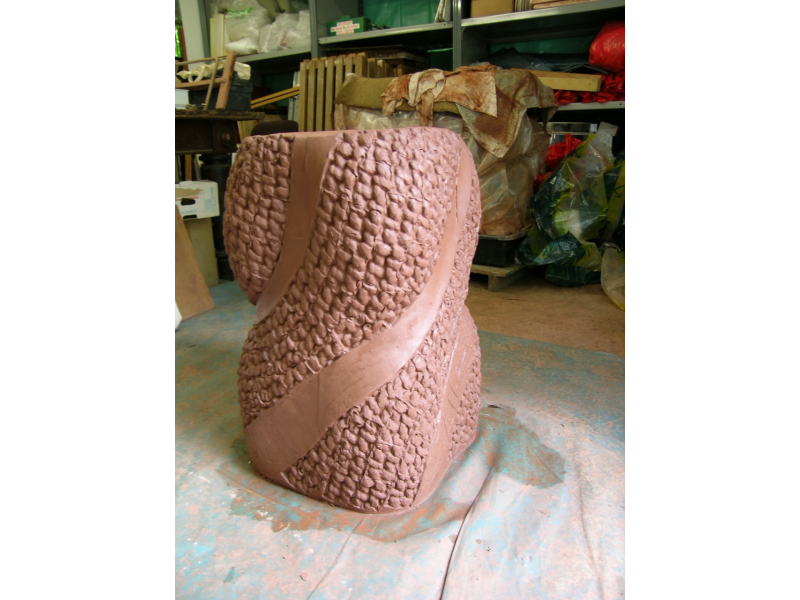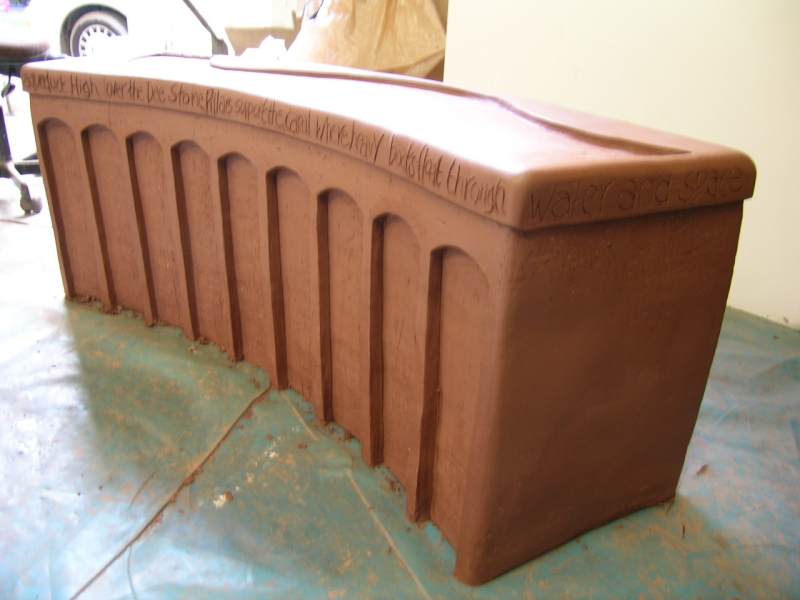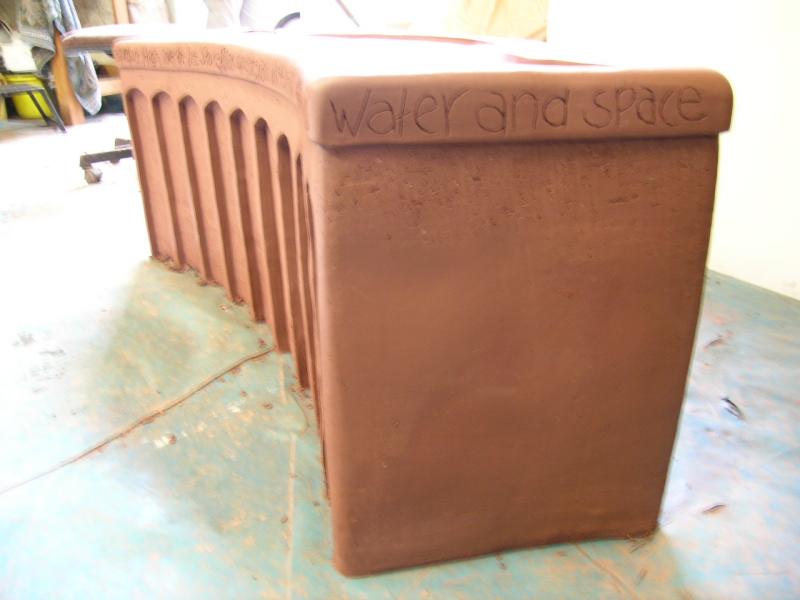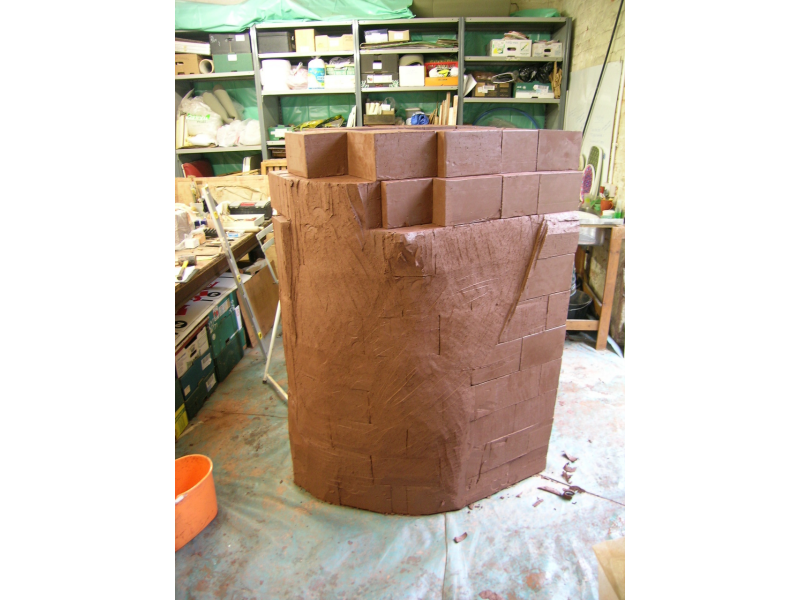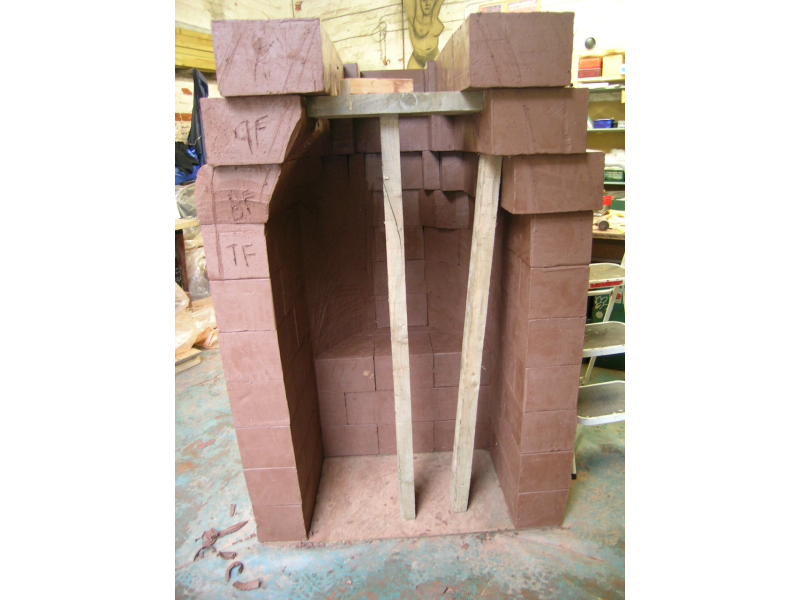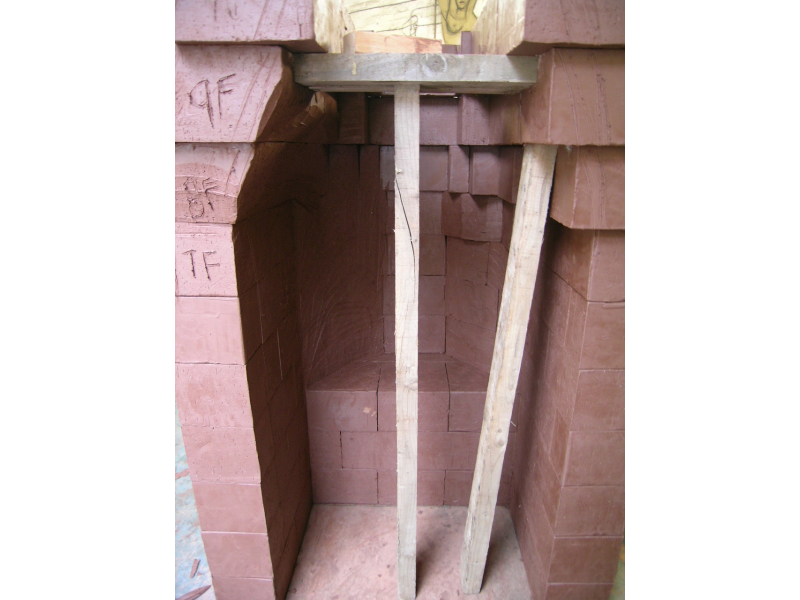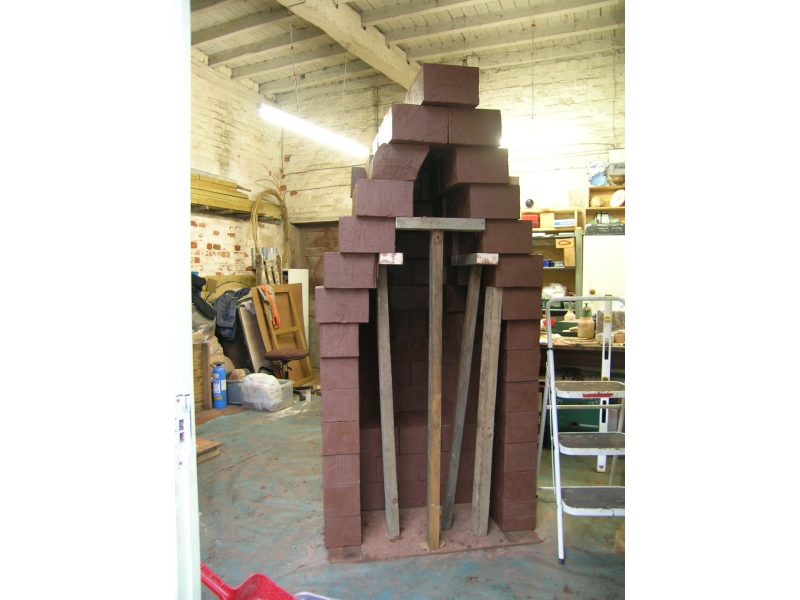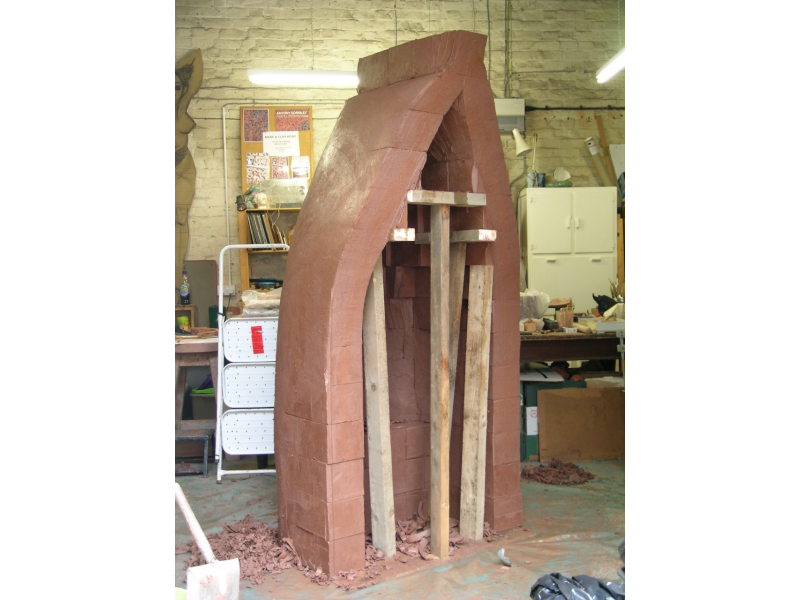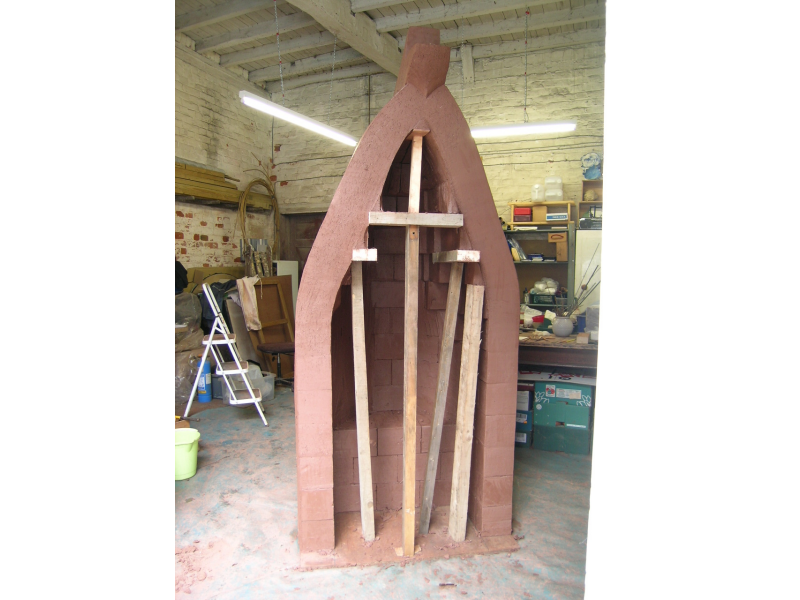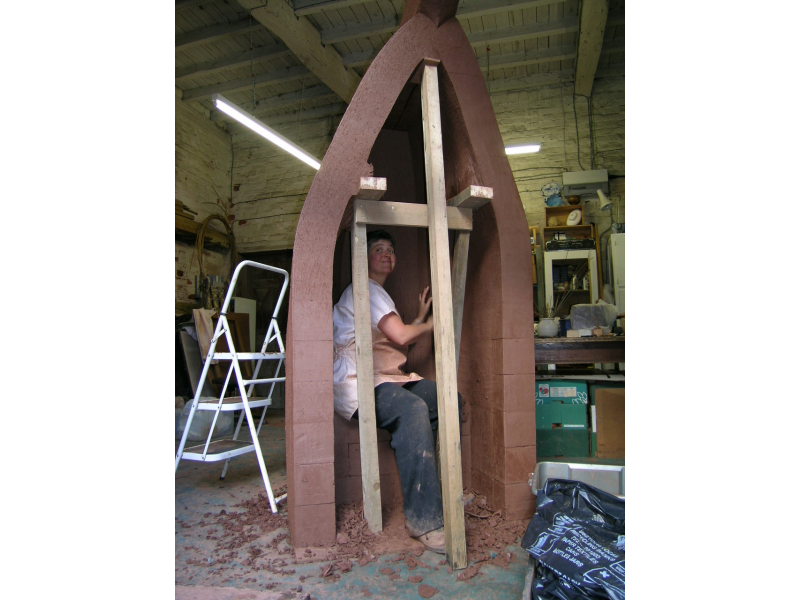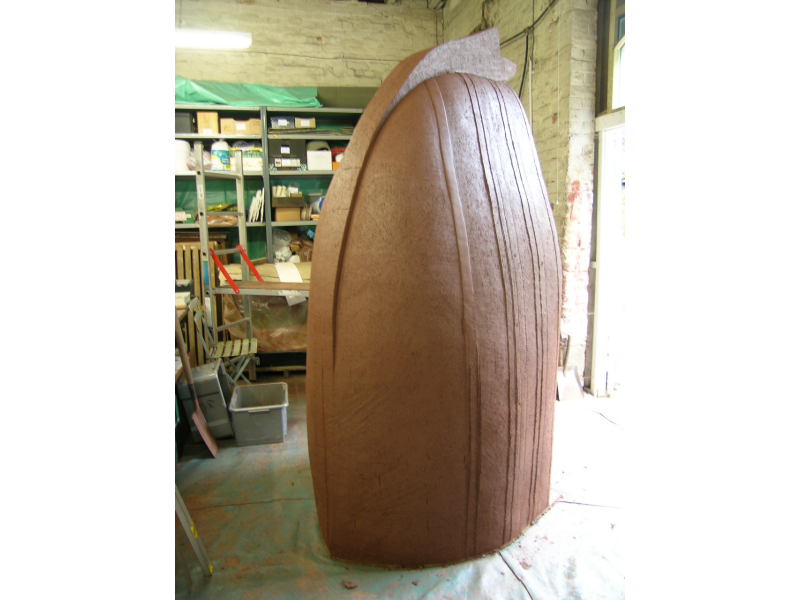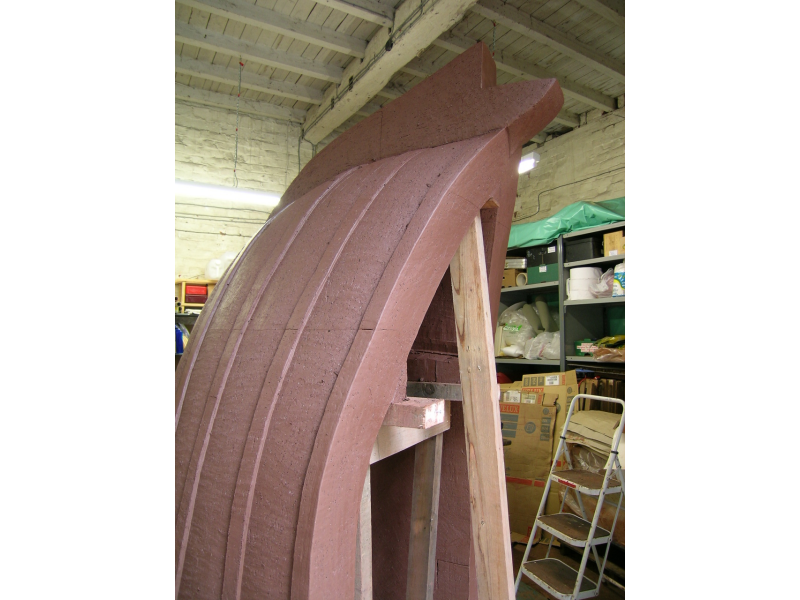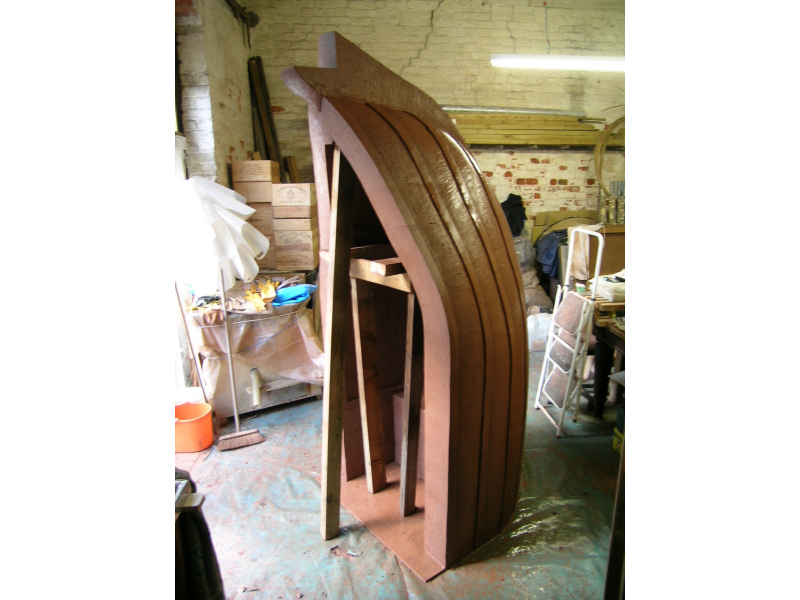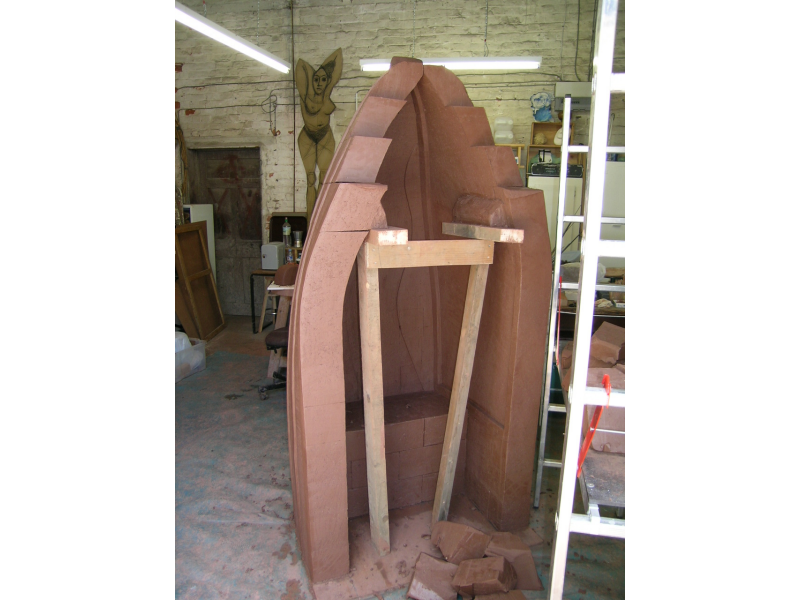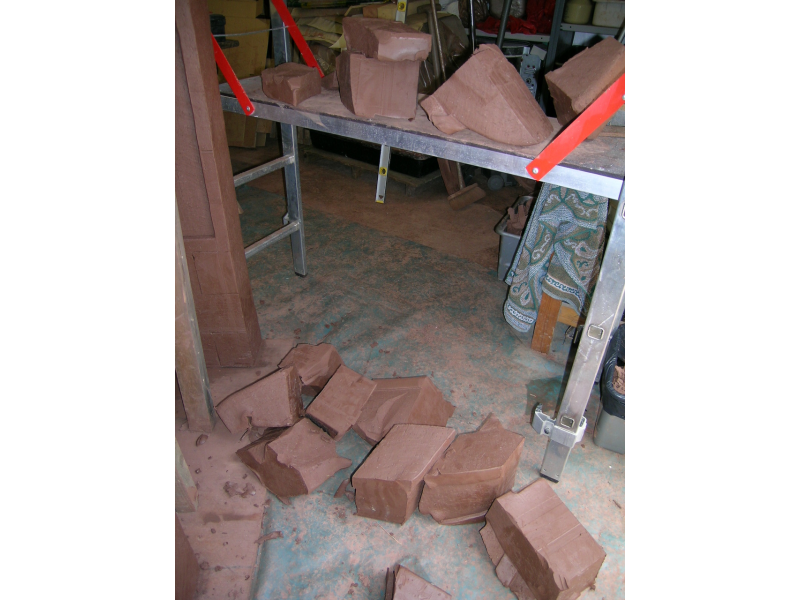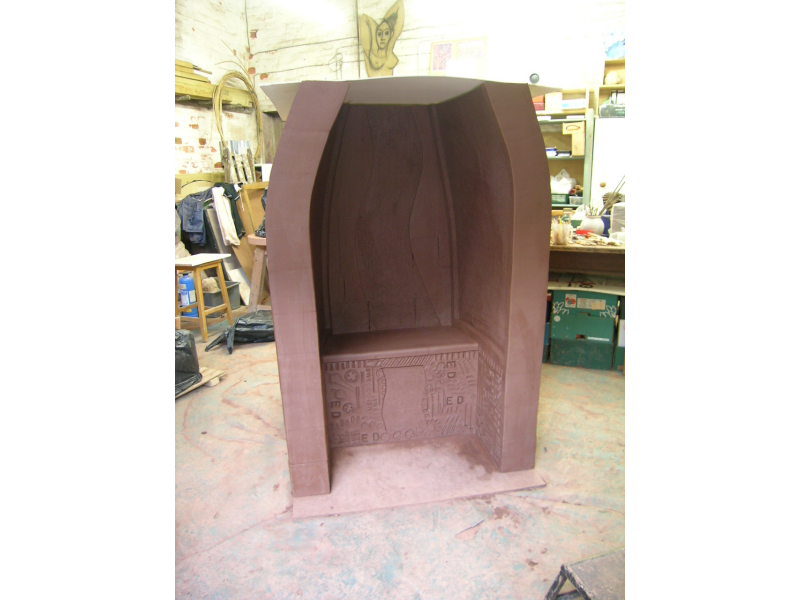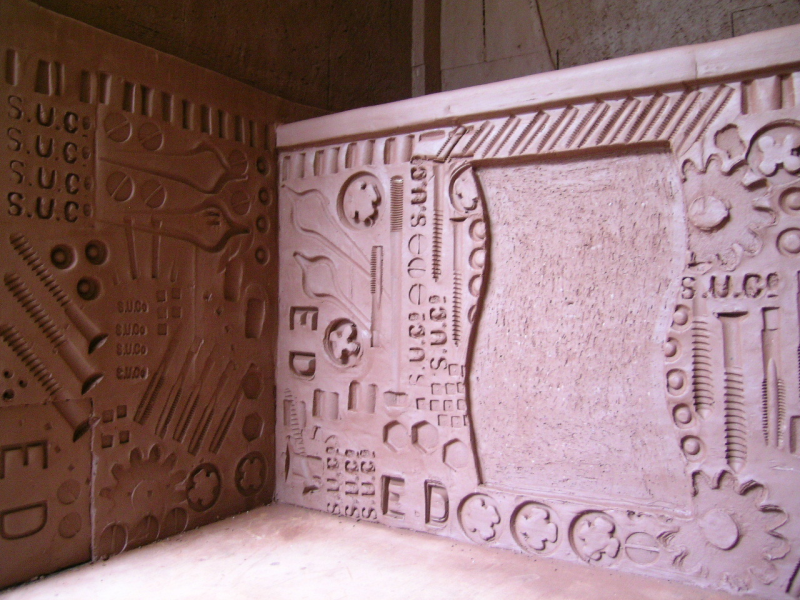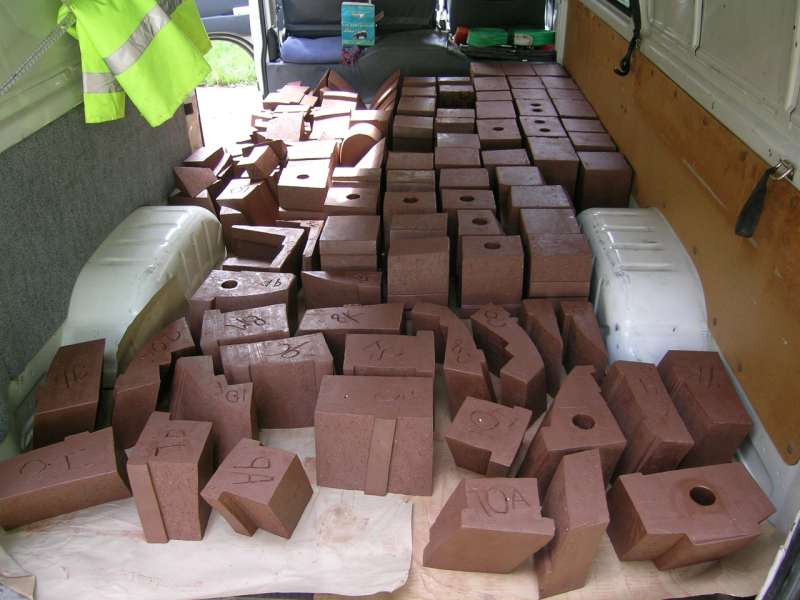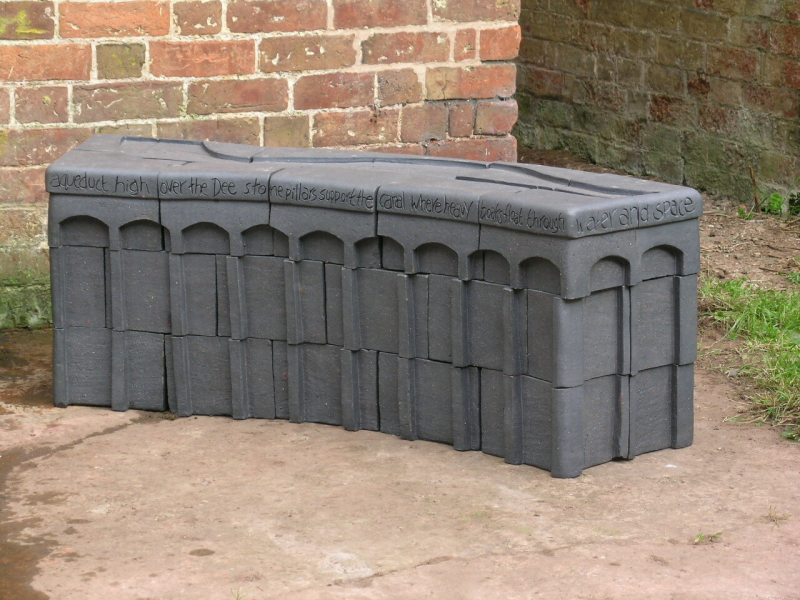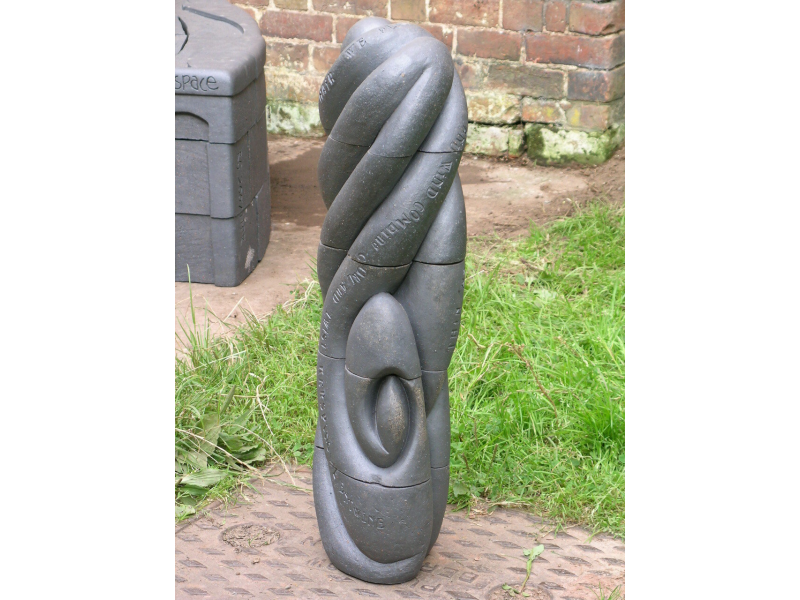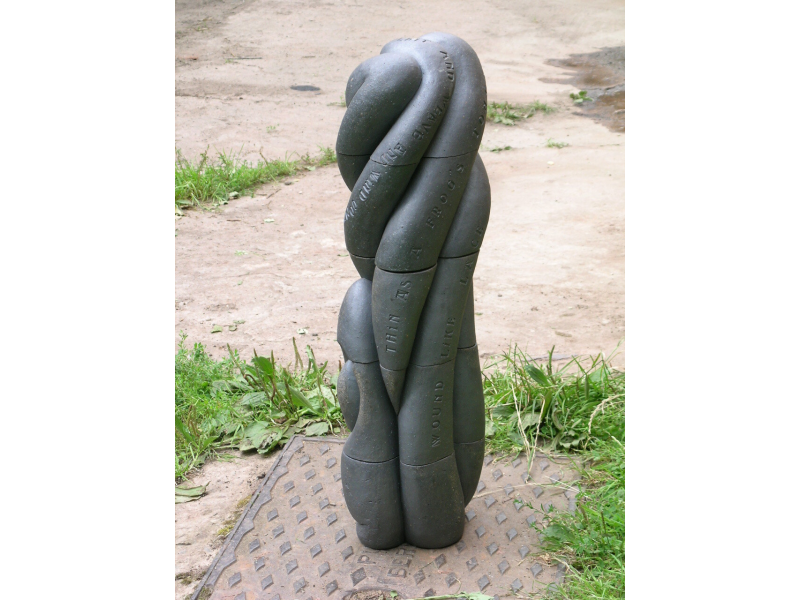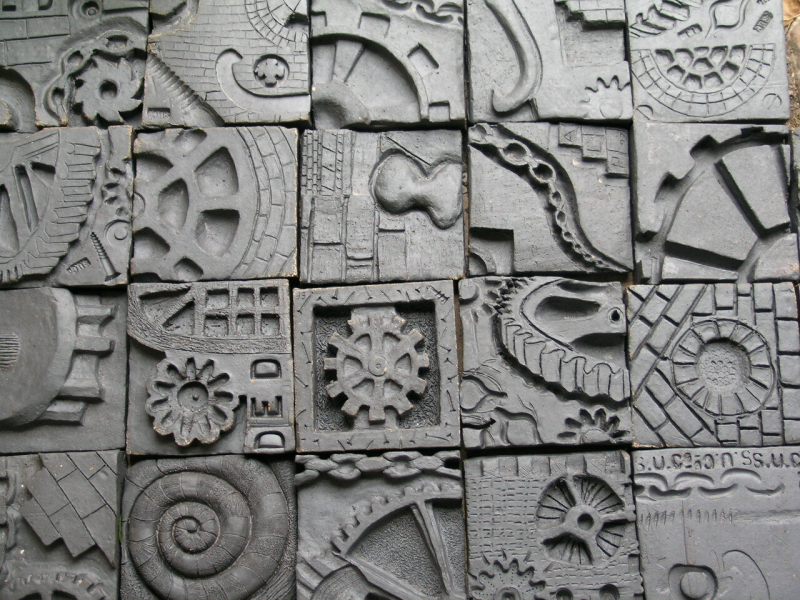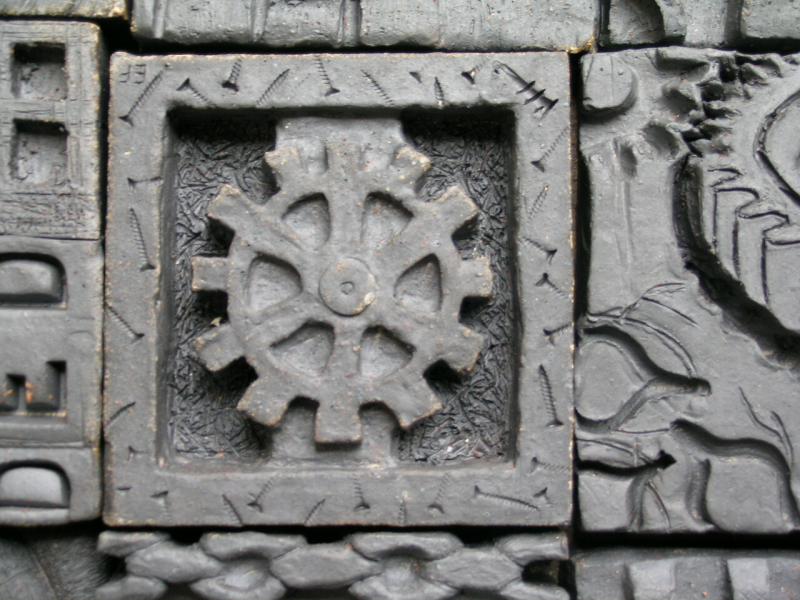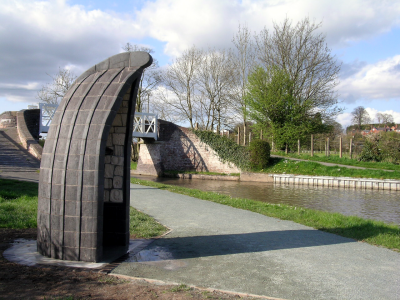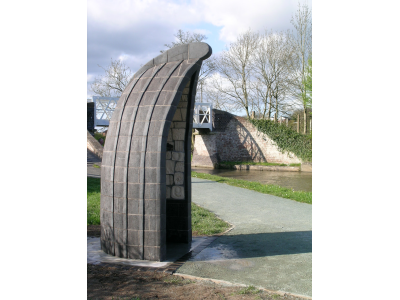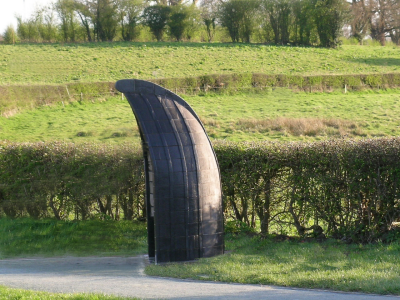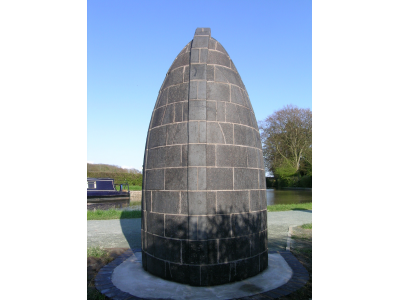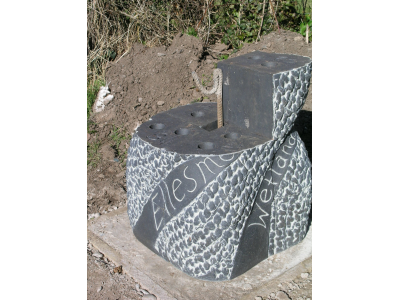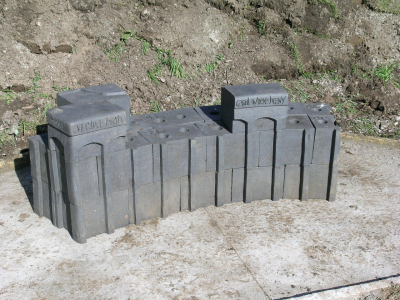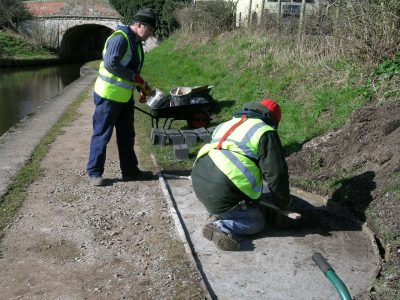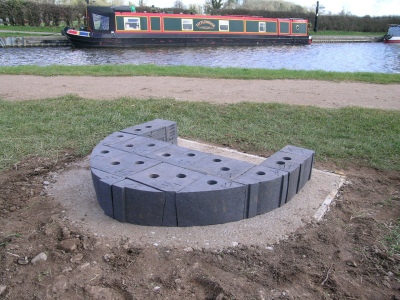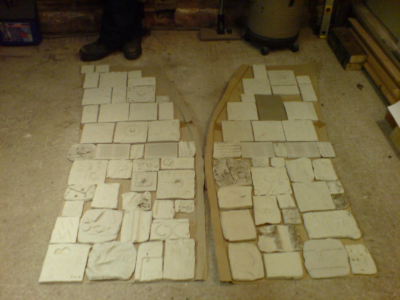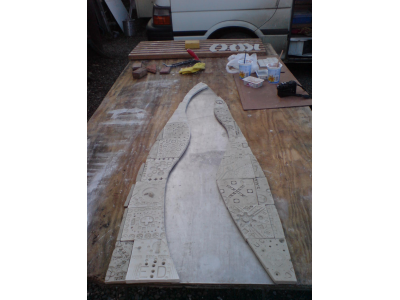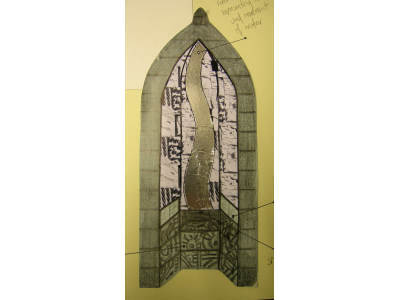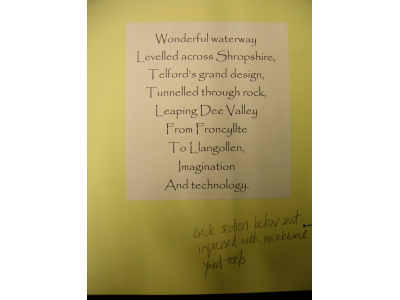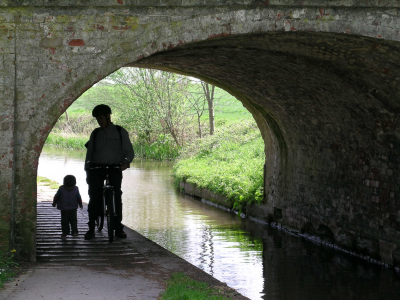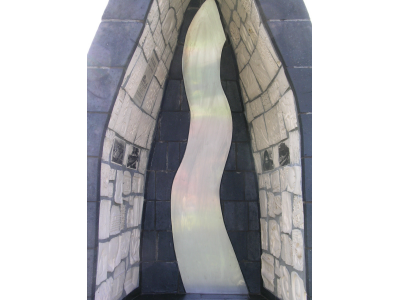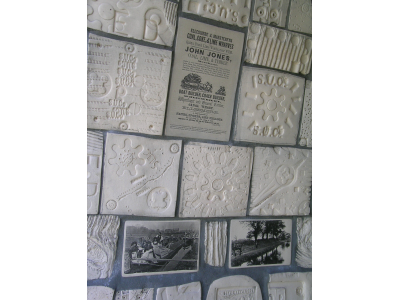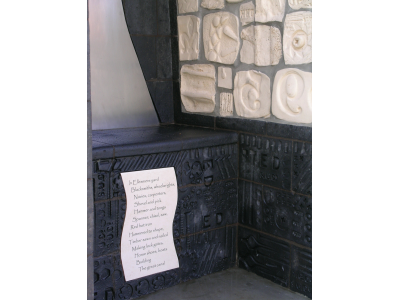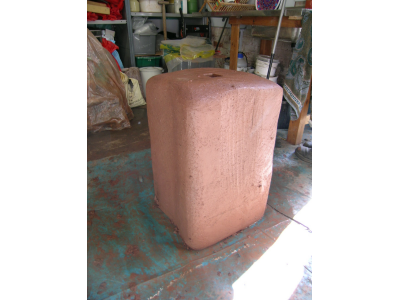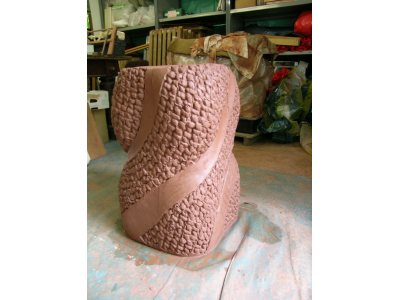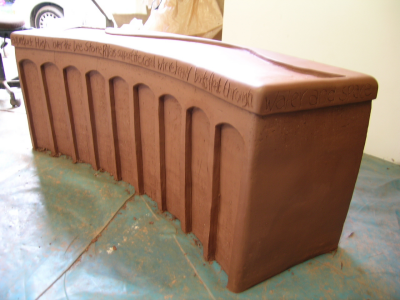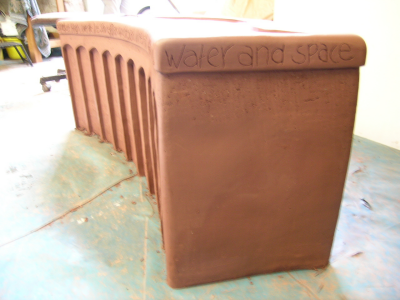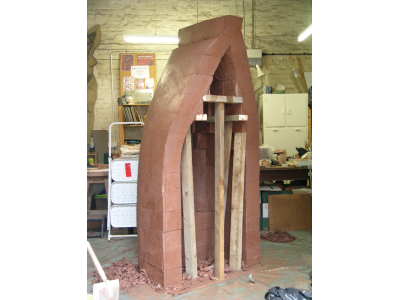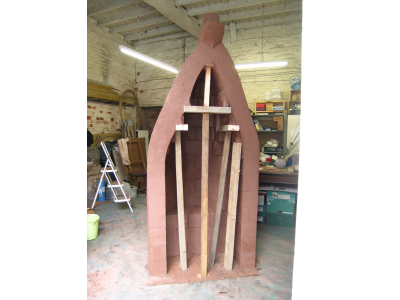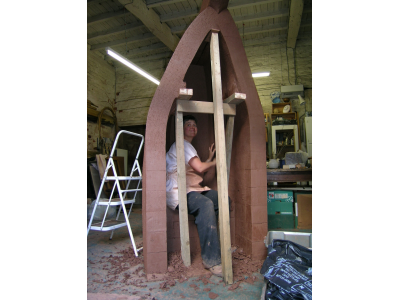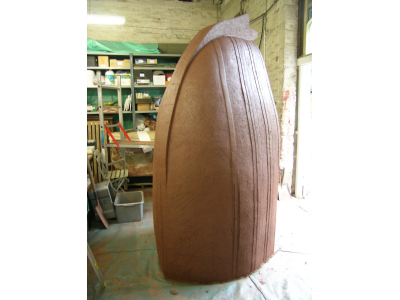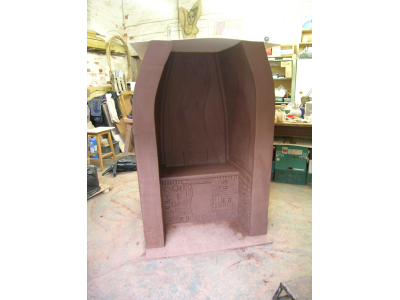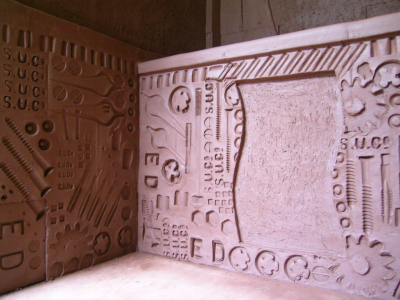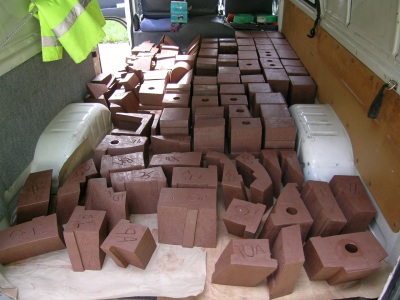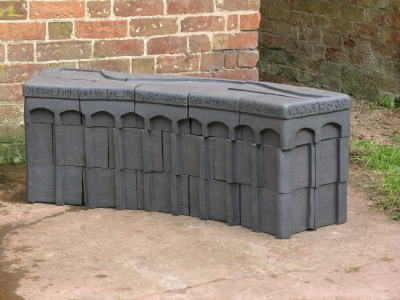
- Ellesmere Gateway Sculpture Commison - British Waterways 2007 - 2008
- PRESS RELEASE
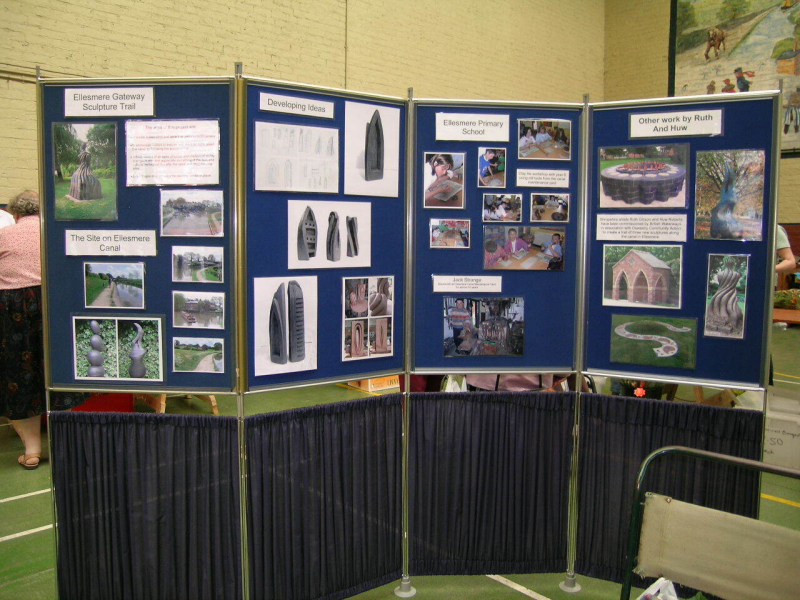
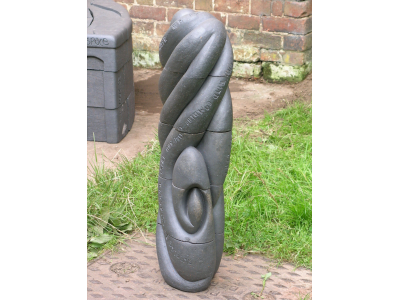
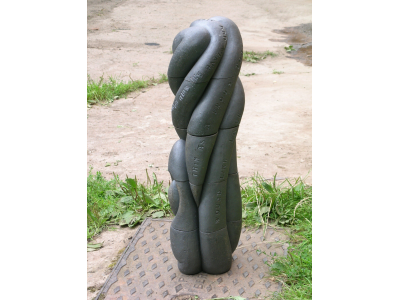
- New Sculpture Commission for Ellesmere – The Ellesmere Gateway
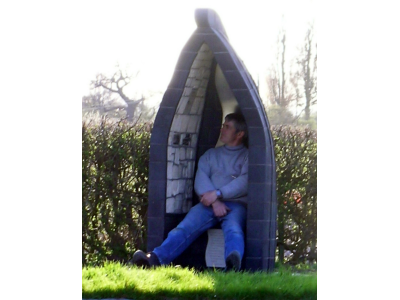
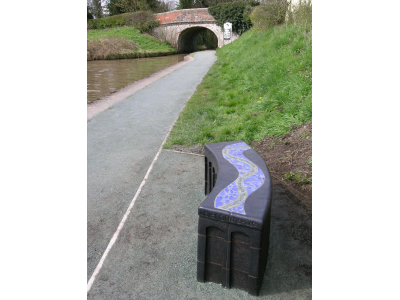
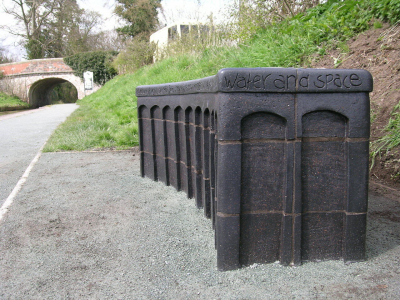
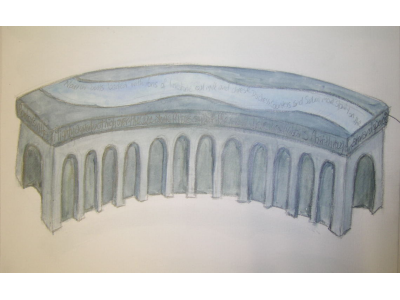
- Following the successful Extramuros exhibition at the Mere in Ellesmere 3 new sculptures have been commissioned for the town.
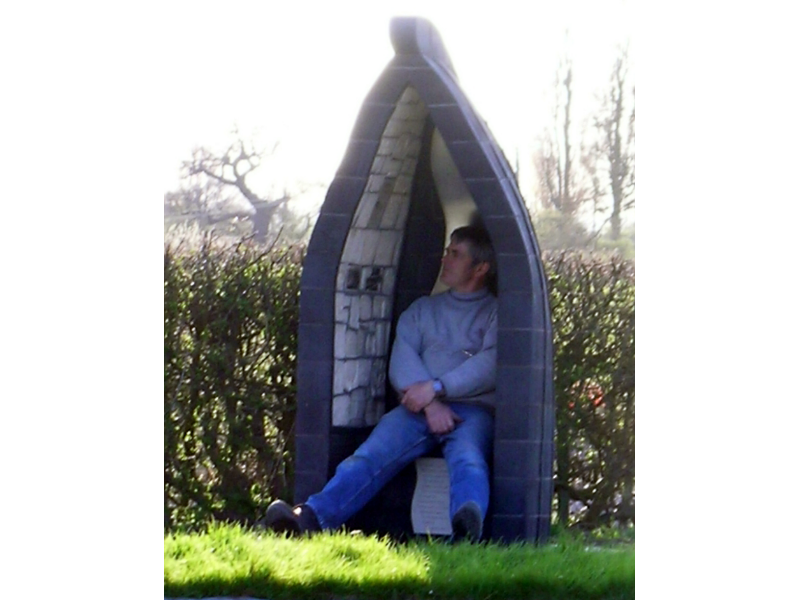
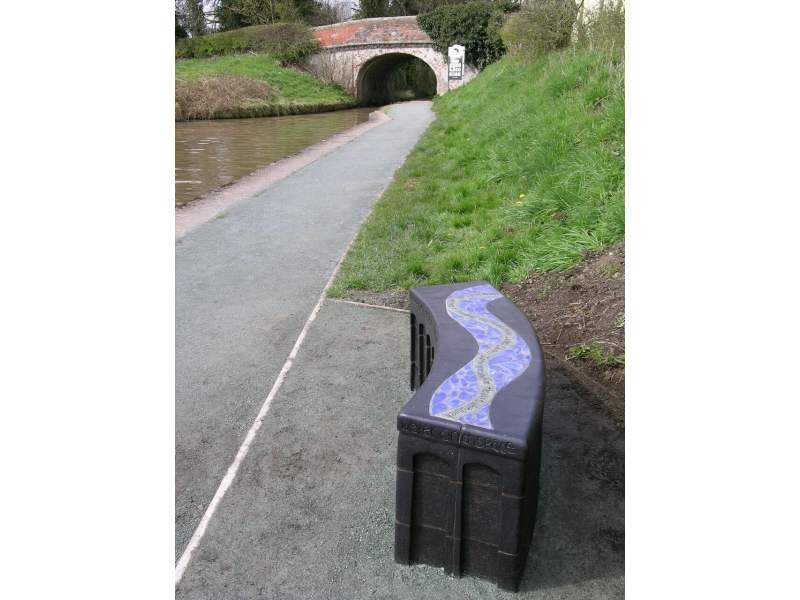
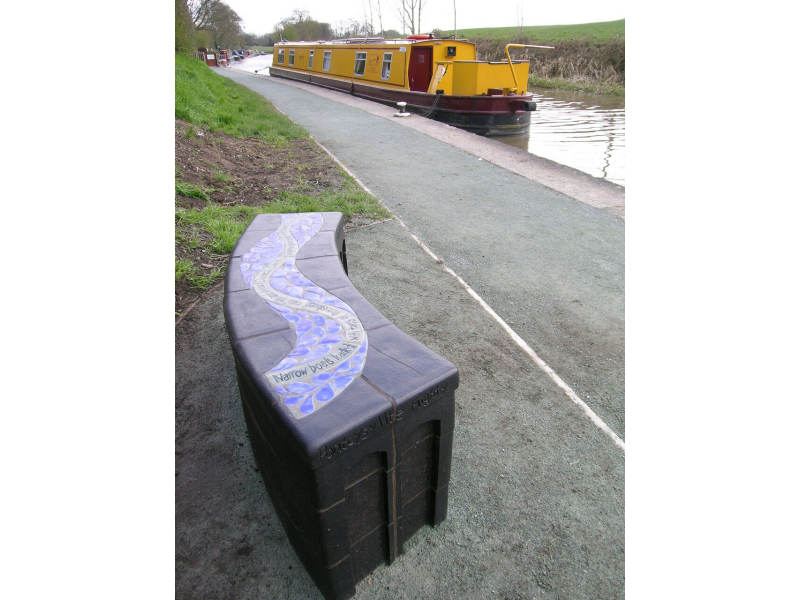
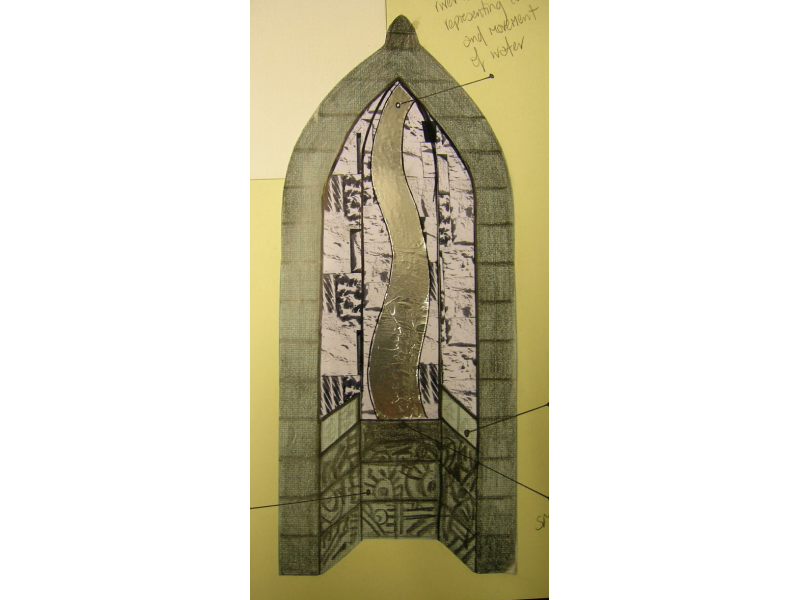
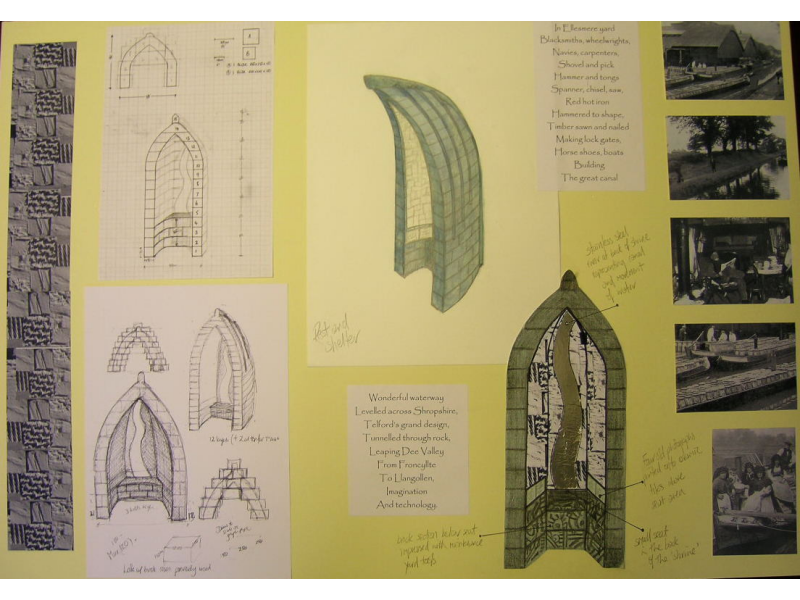
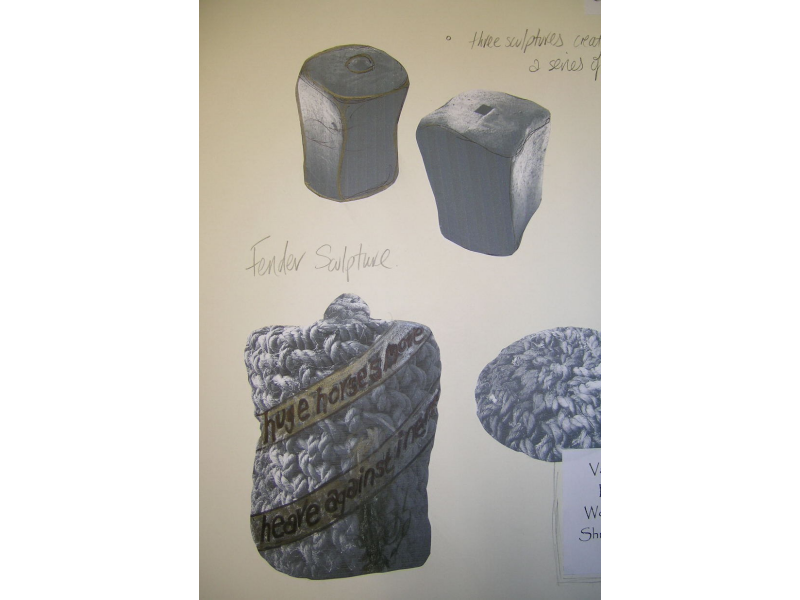
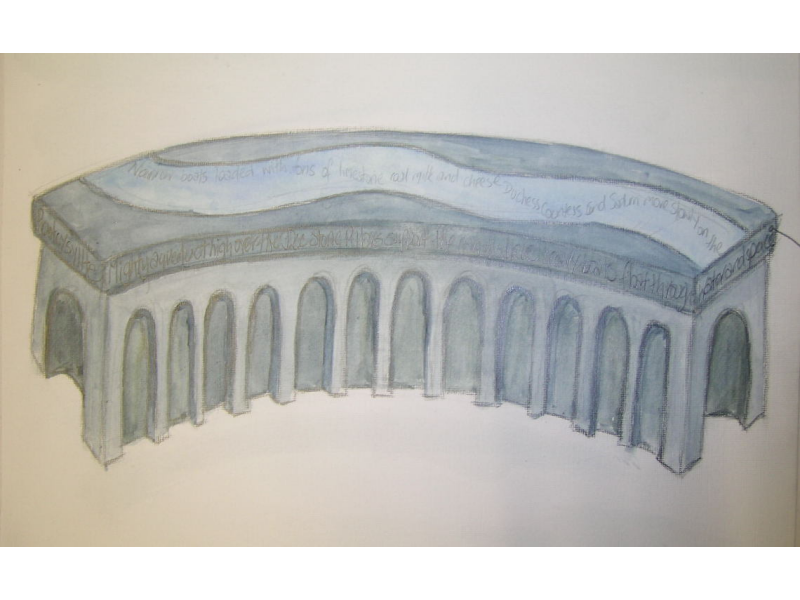
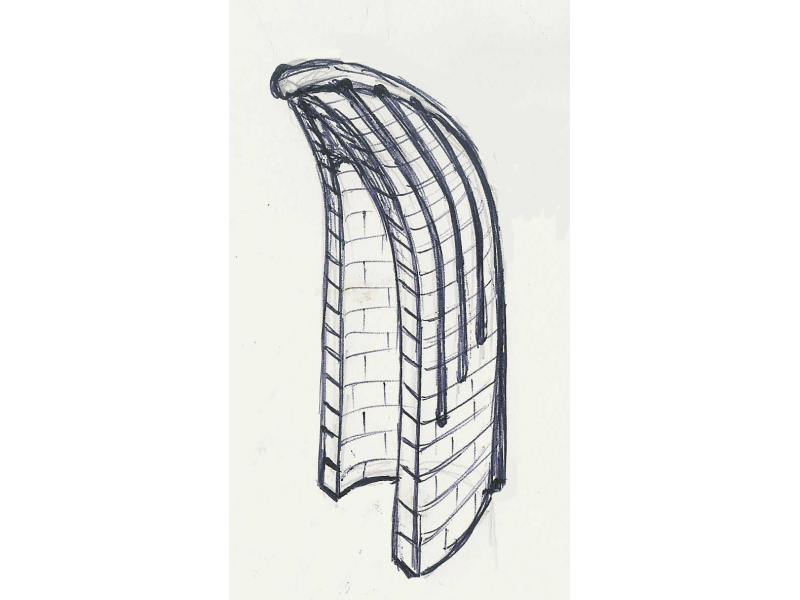
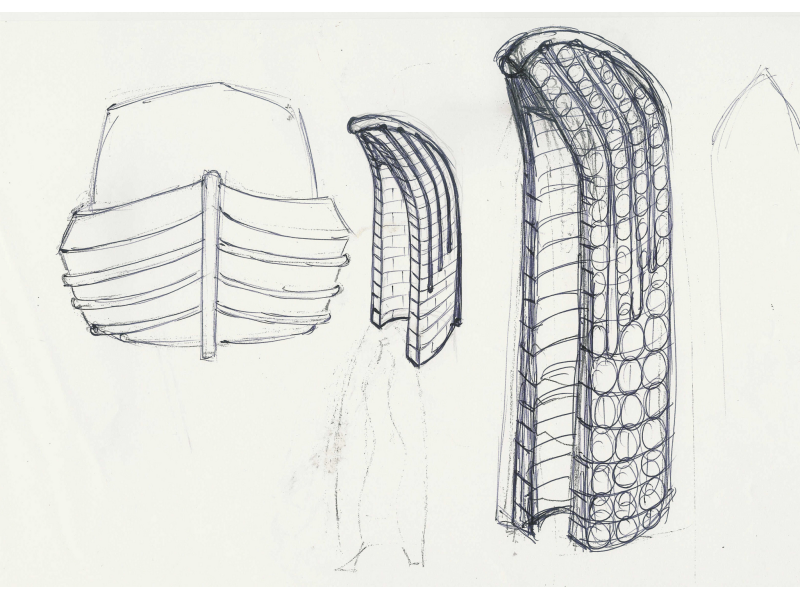
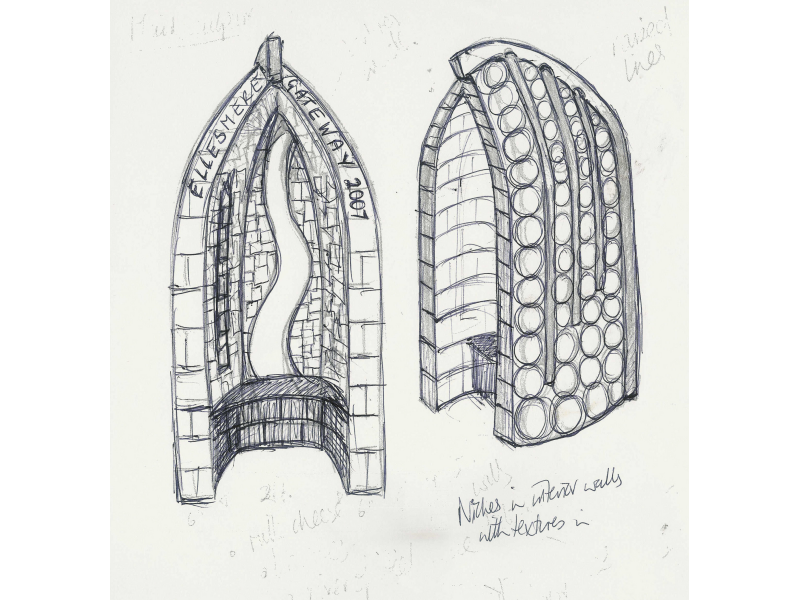
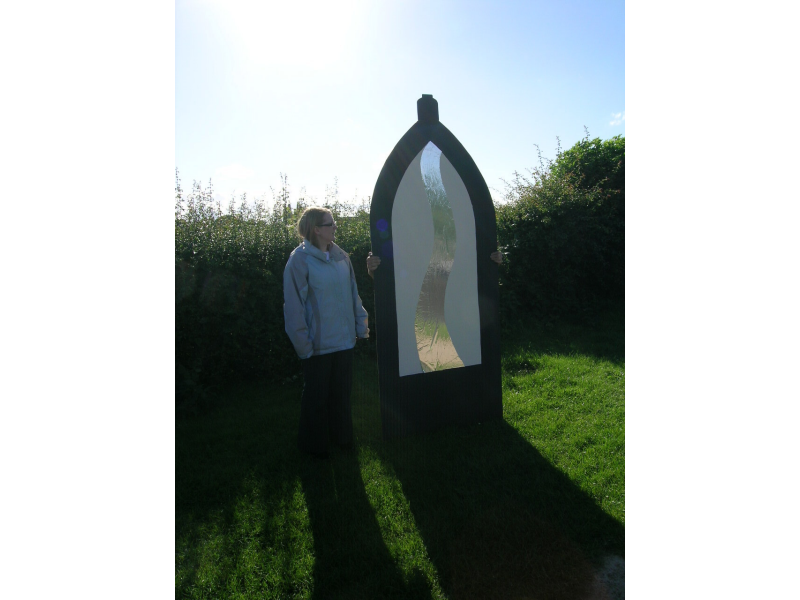
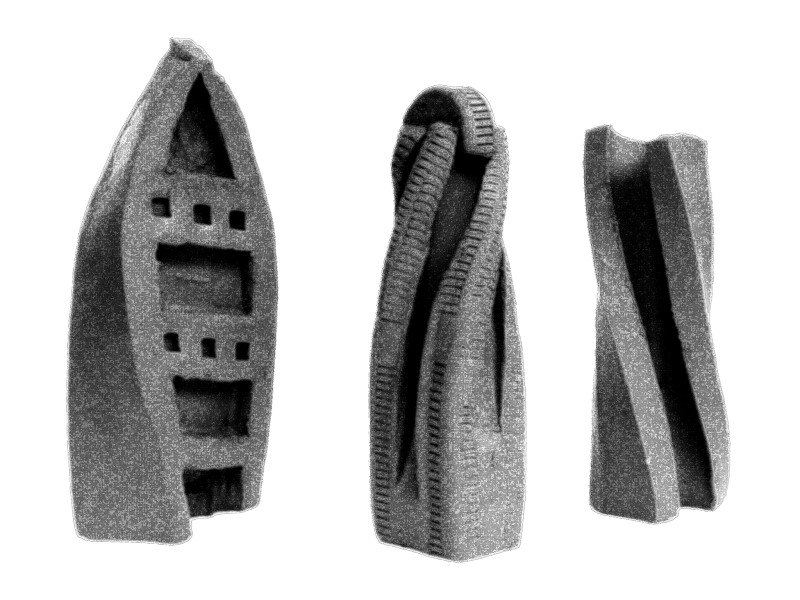
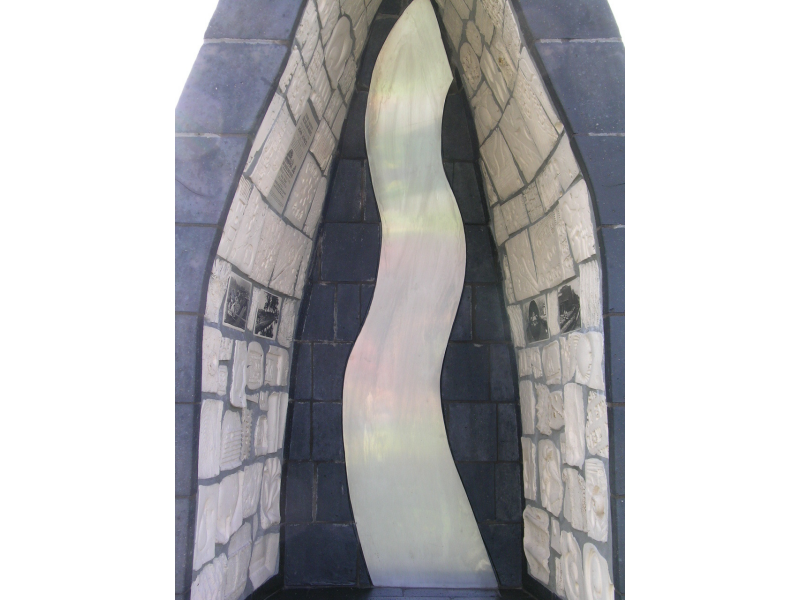
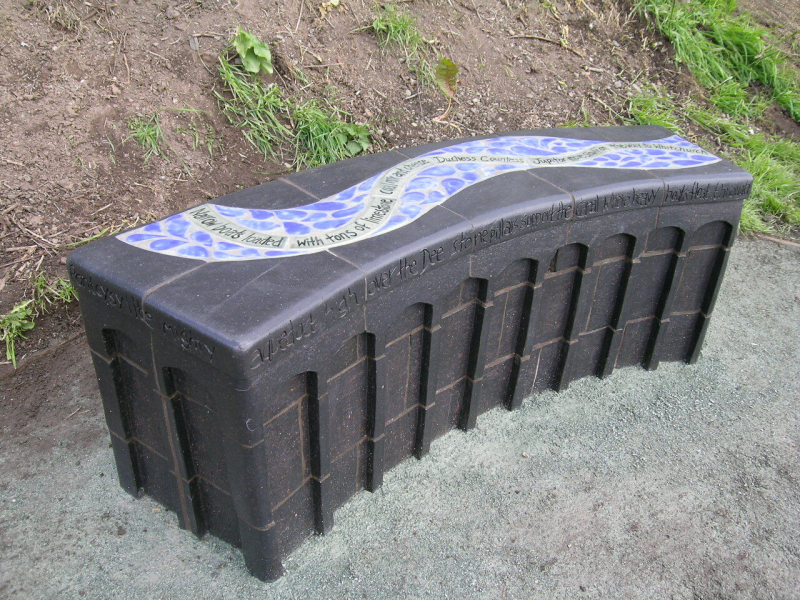
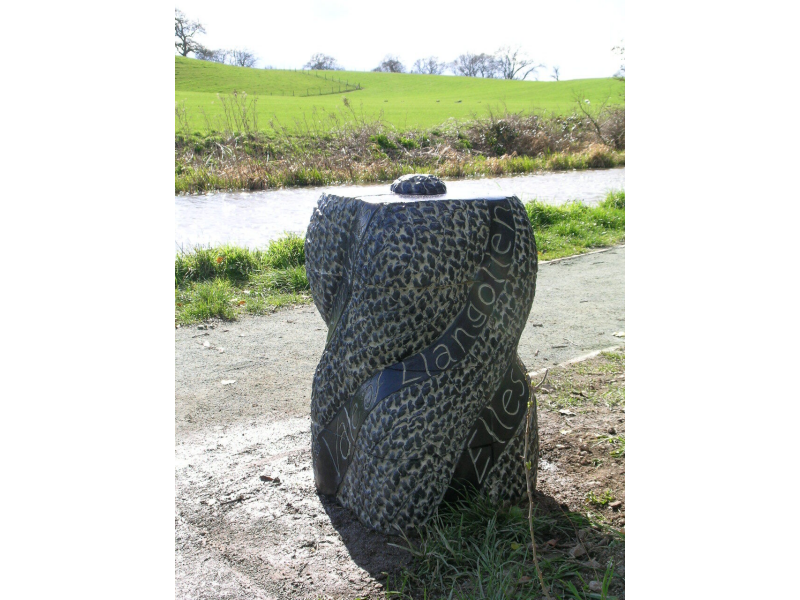
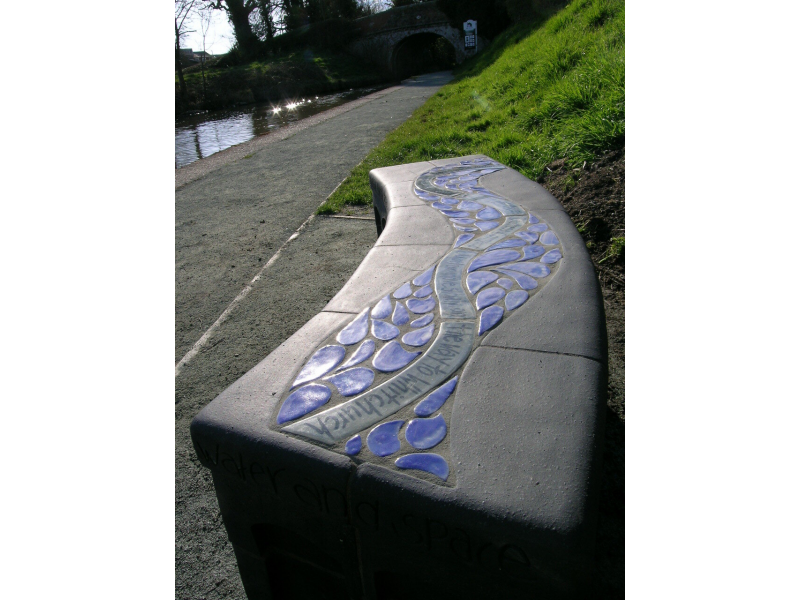
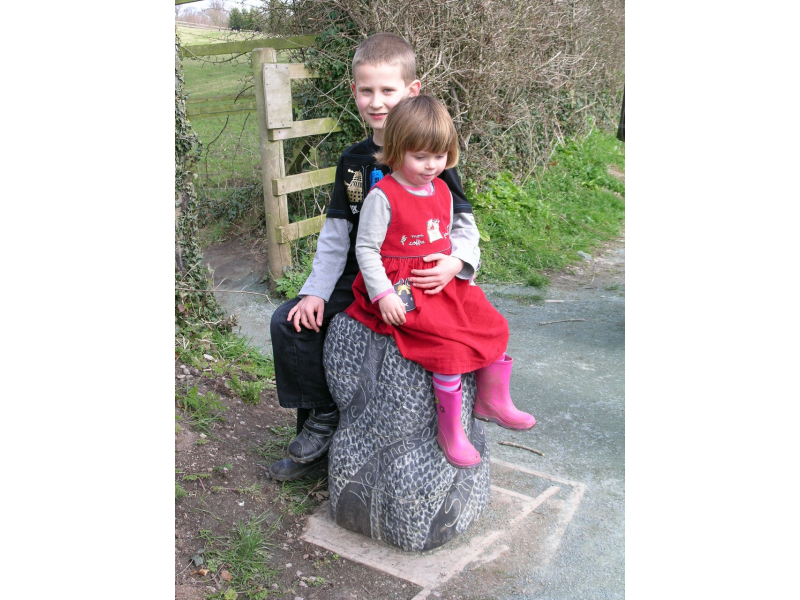
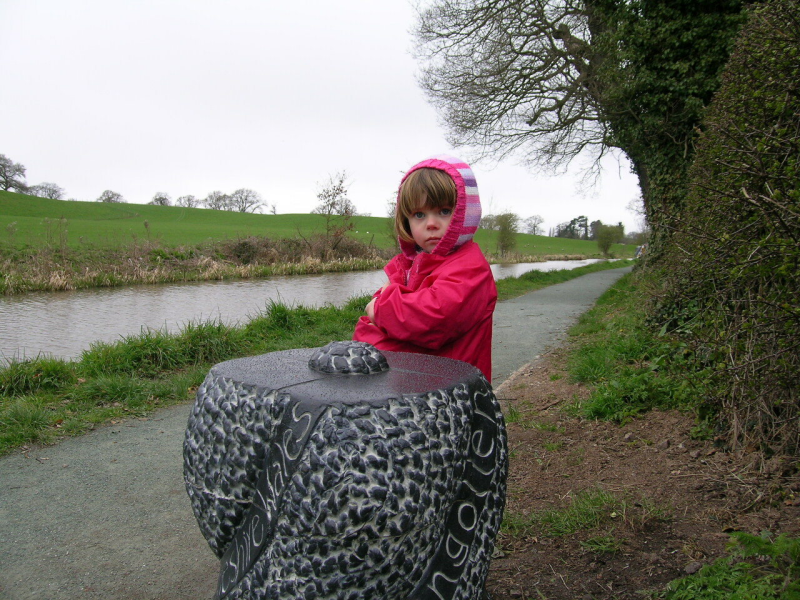
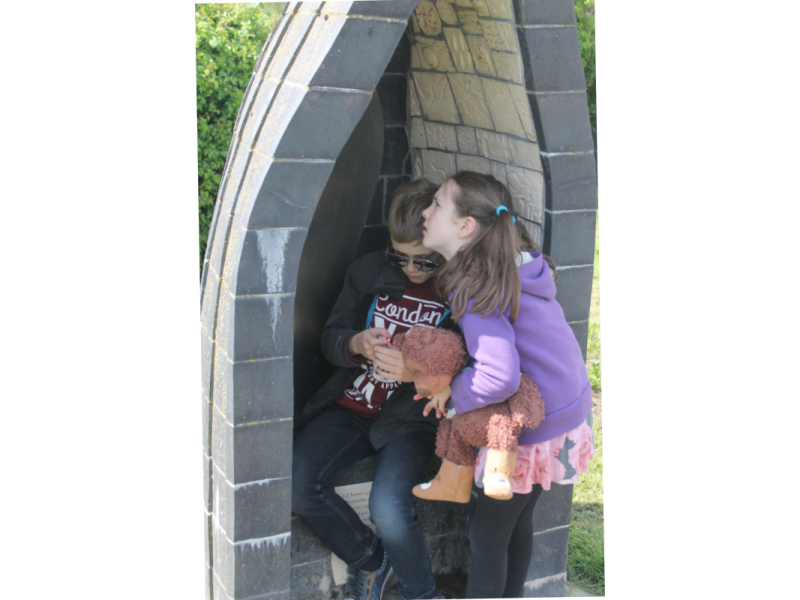
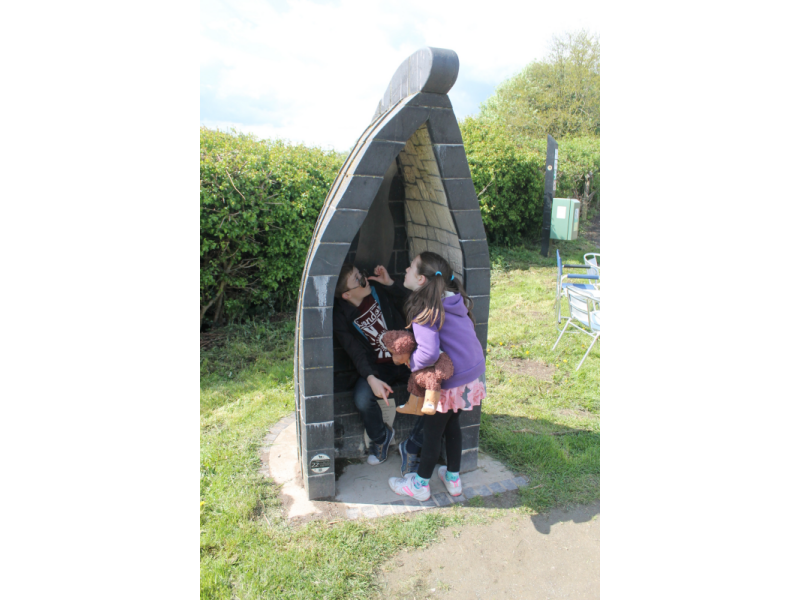
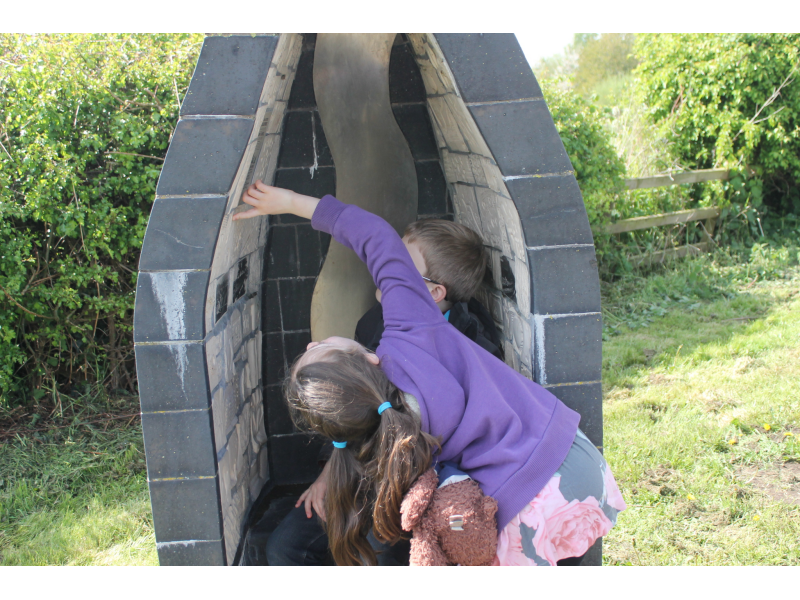
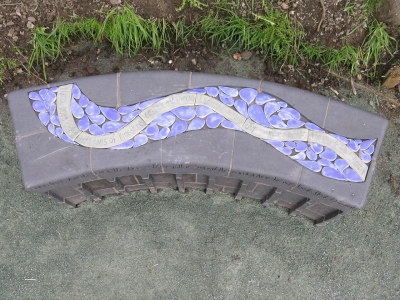
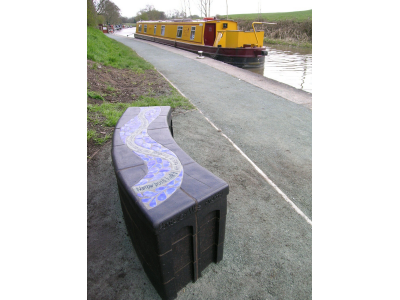
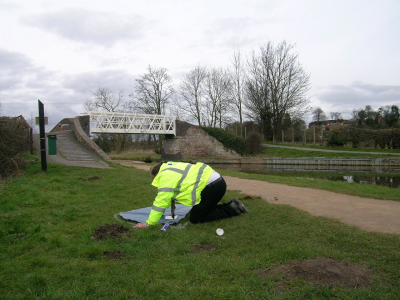
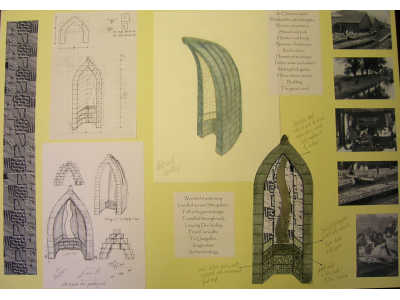
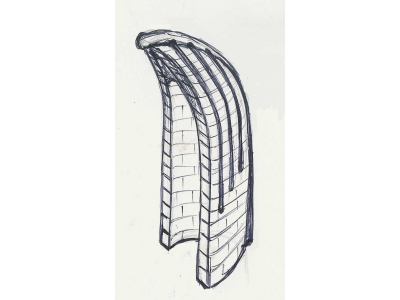
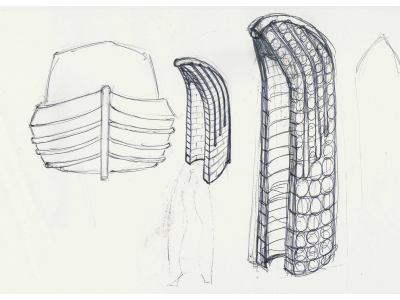
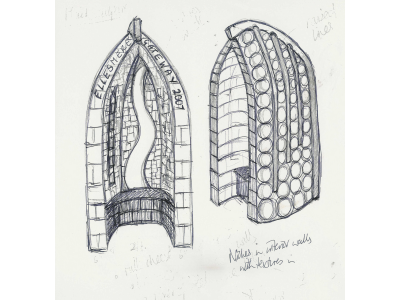
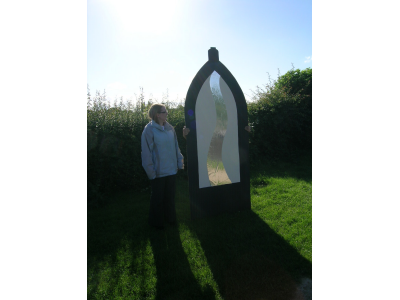
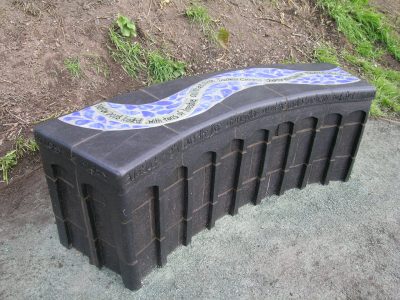
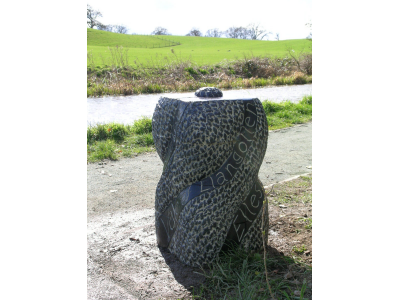
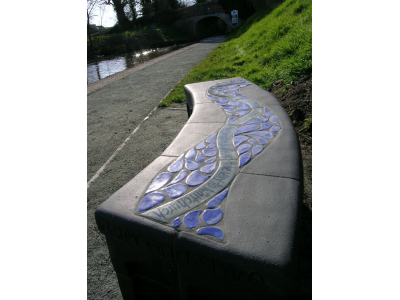
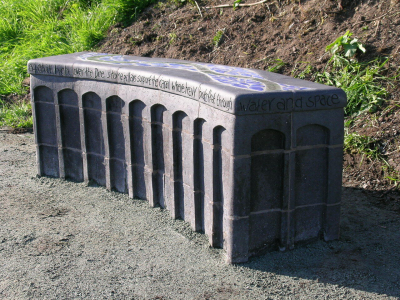
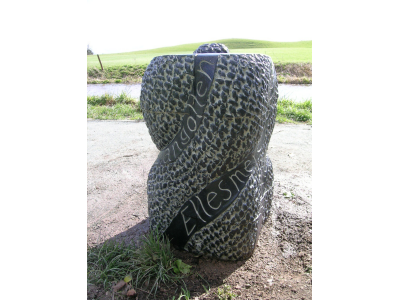
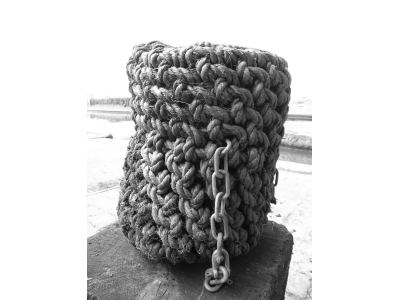
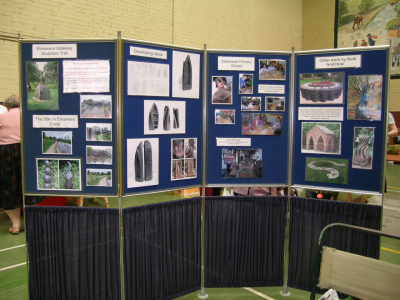
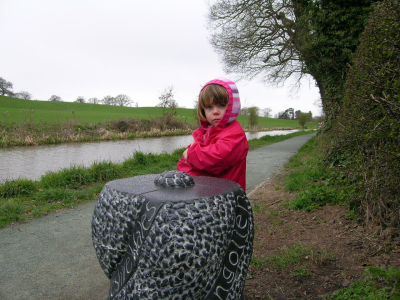
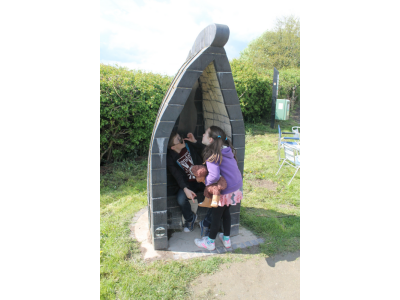
- The commission is for one large gateway sculpture and for two smaller visually linked pieces, to be sited along the canal forming a short sculpture trail.
- British Waterways is the commissioning body working in partnership with Oswestry Community Action.
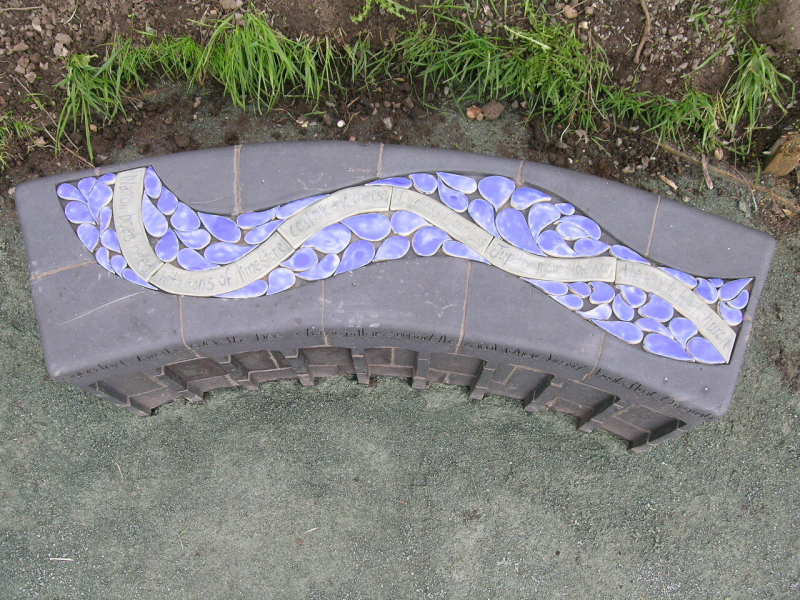
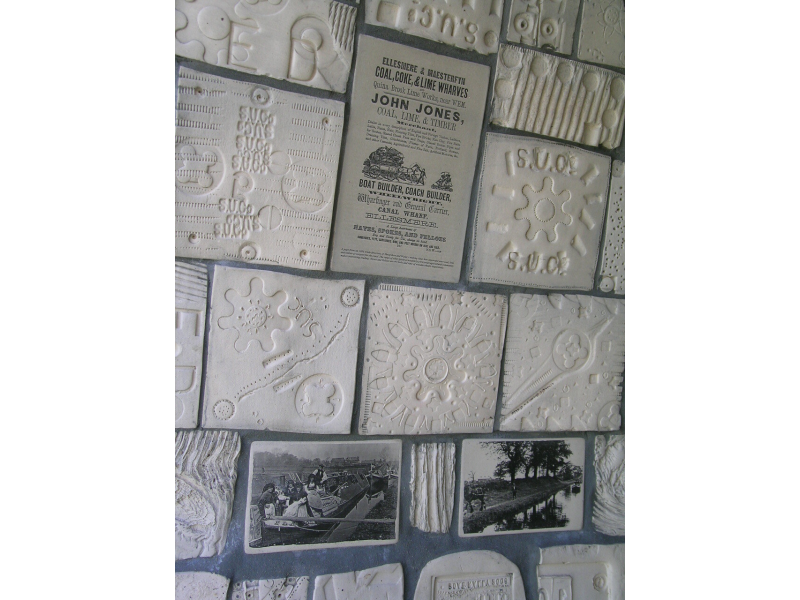
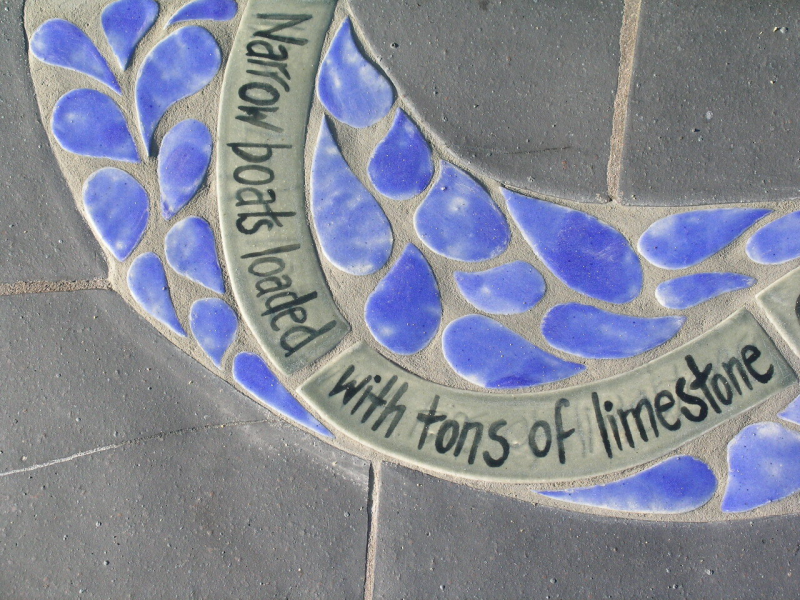
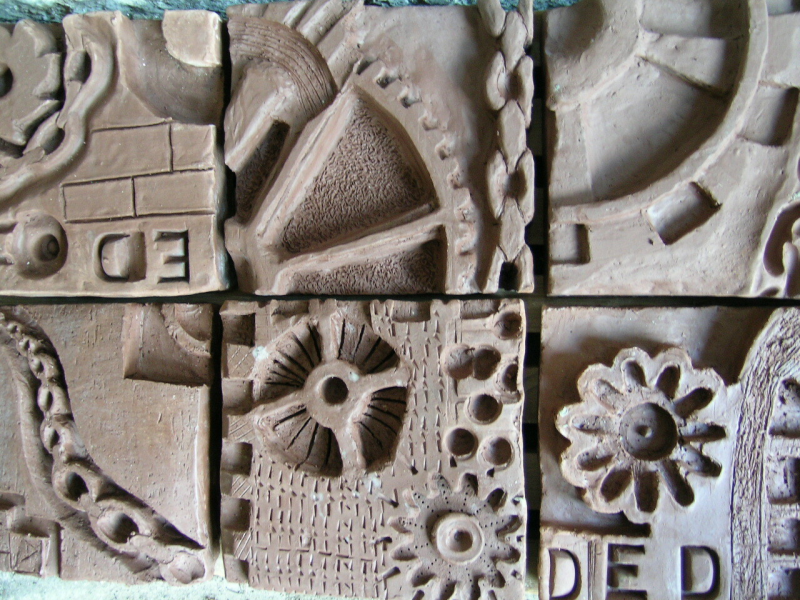
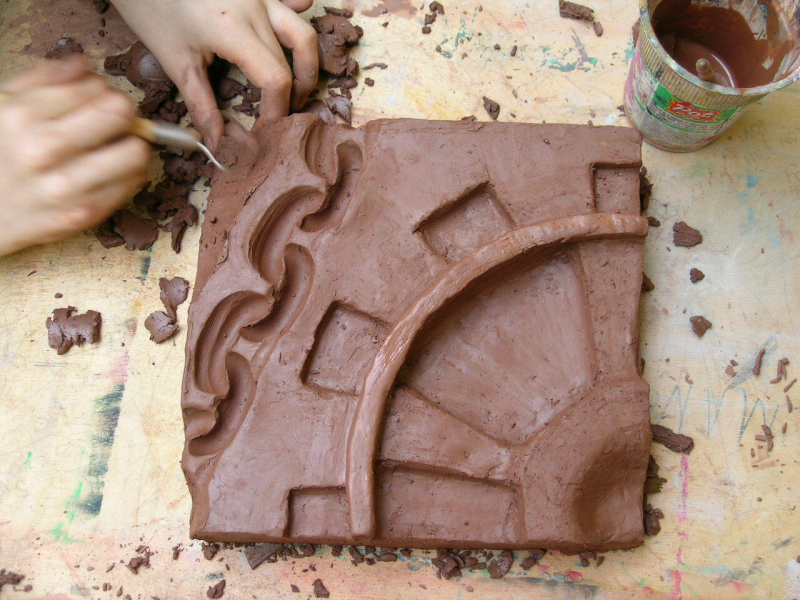
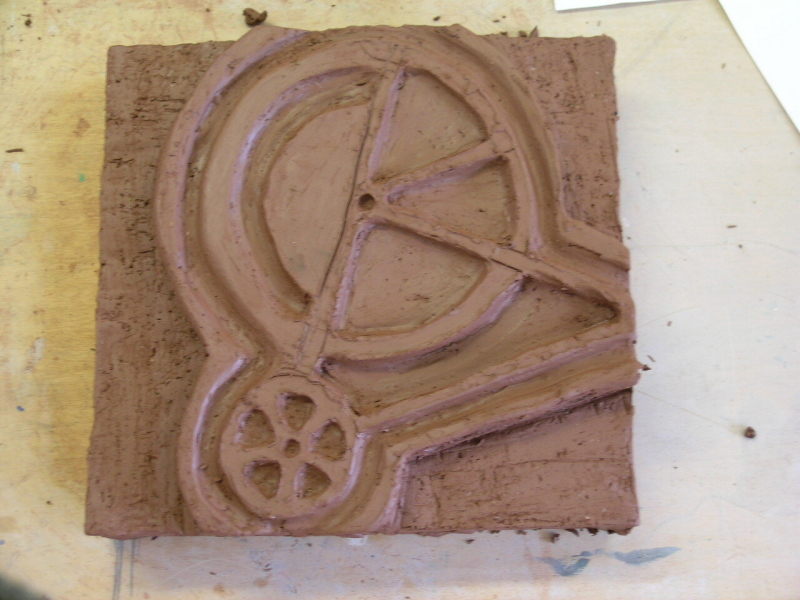
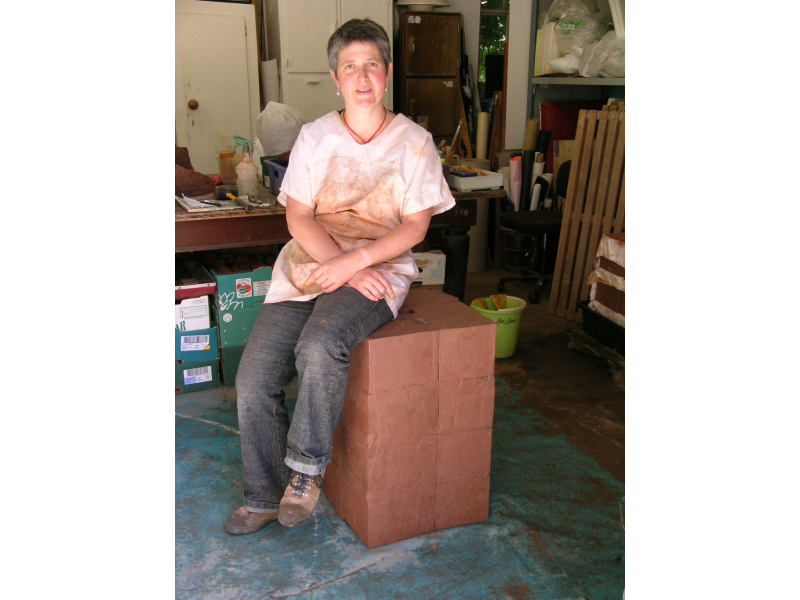
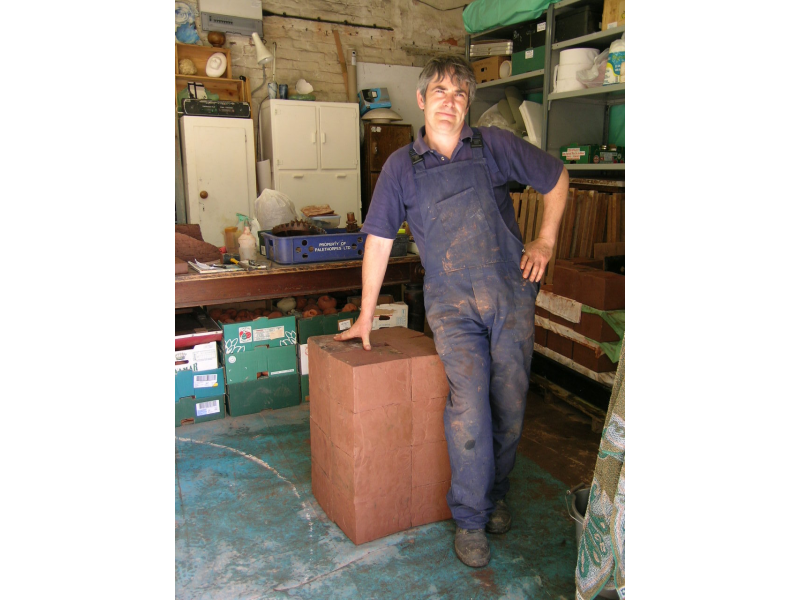
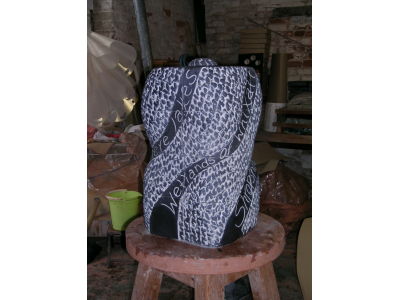
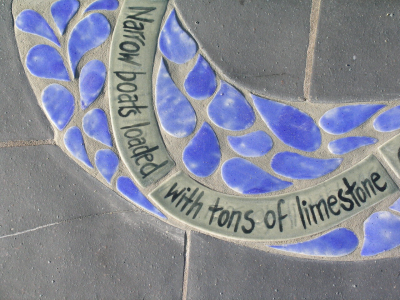
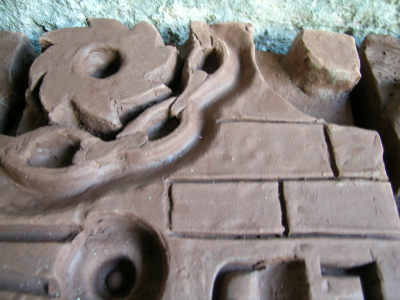
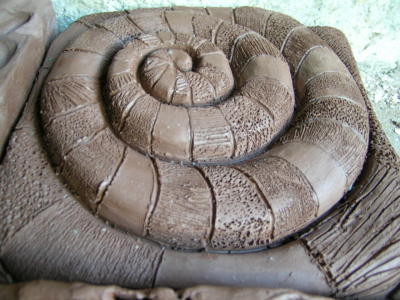
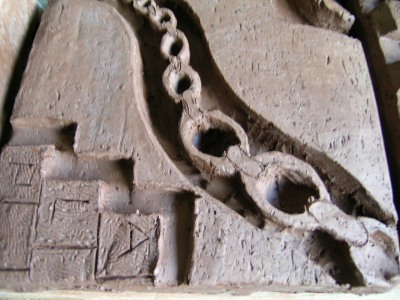
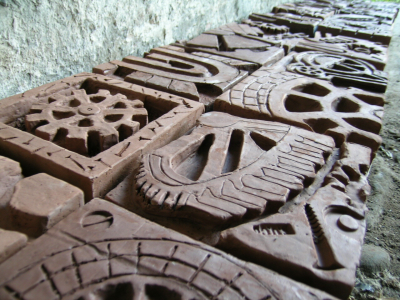
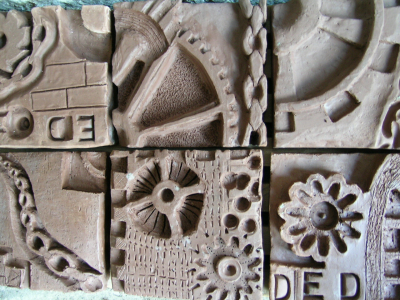
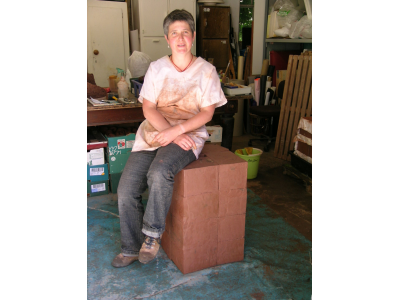
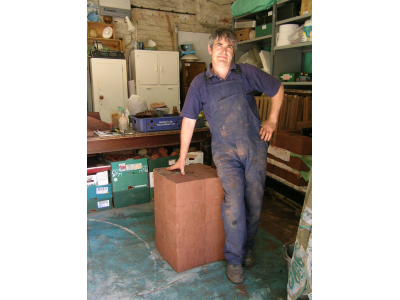
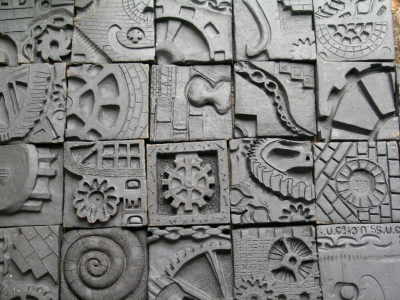
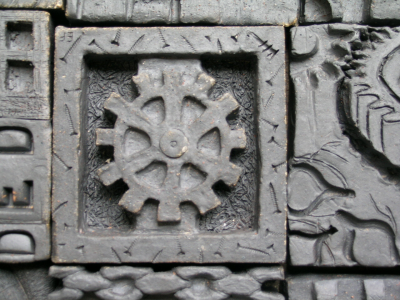
- Local Public Artists Ruth Gibson and Huw Powell Roberts have been awarded the commissions which have many opportunities for community involvement. The design for each of the sculpture has been inspired by the canal and the old industries that it served.
- Ruth and Huw are experienced ceramic artists and workshop leaders. They have collaborated on many public art projects including the Benchart project at Cross Houses, Shropshire
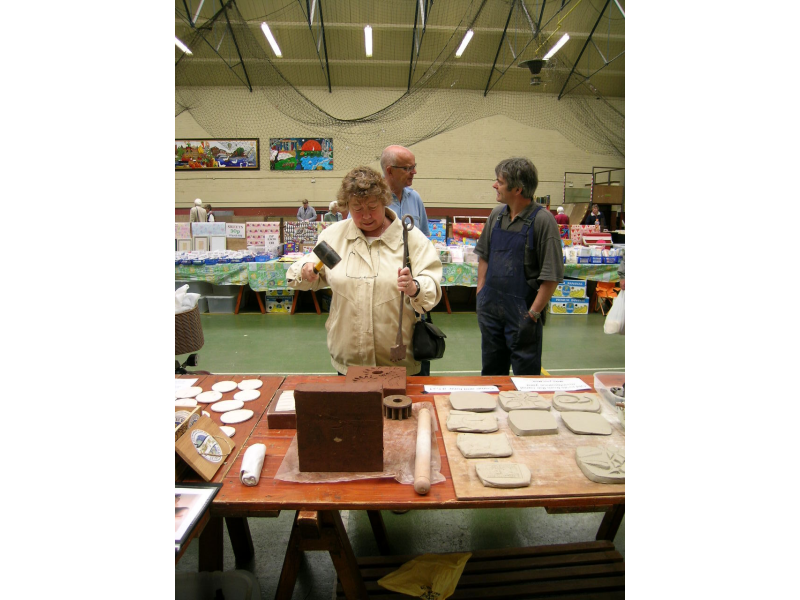
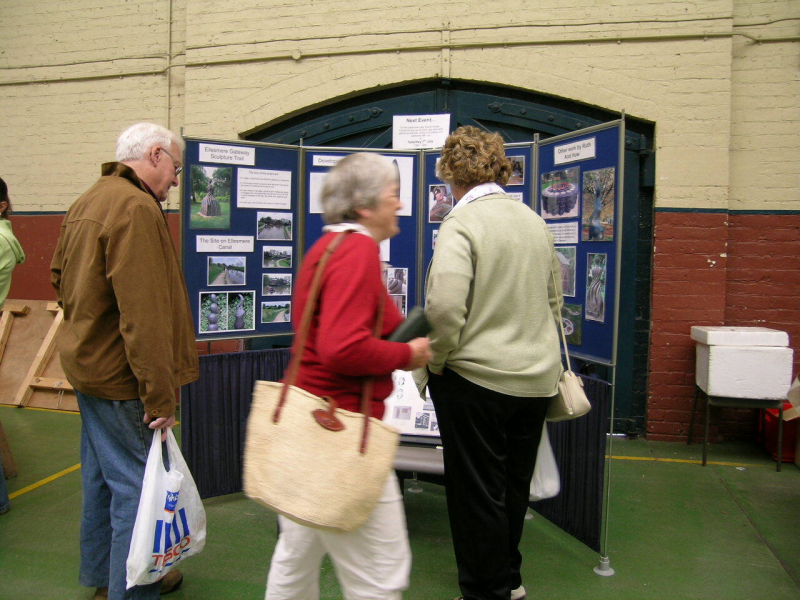
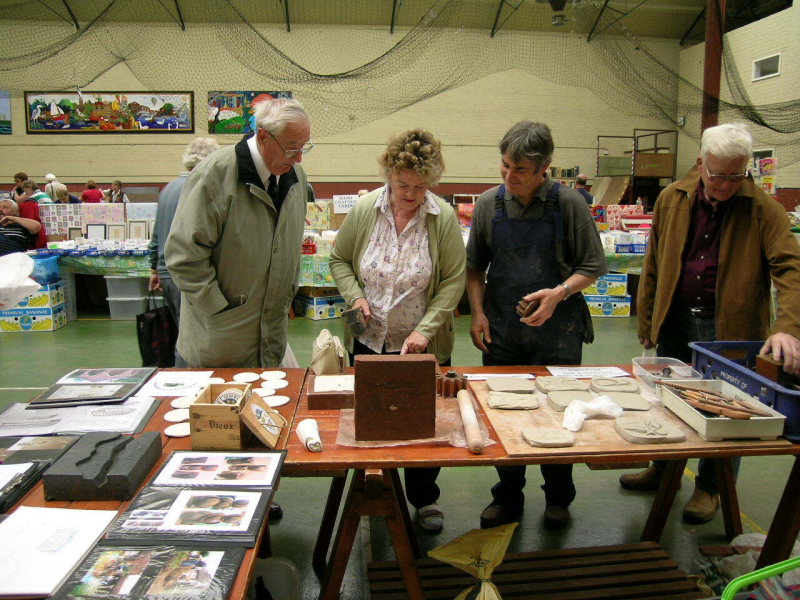
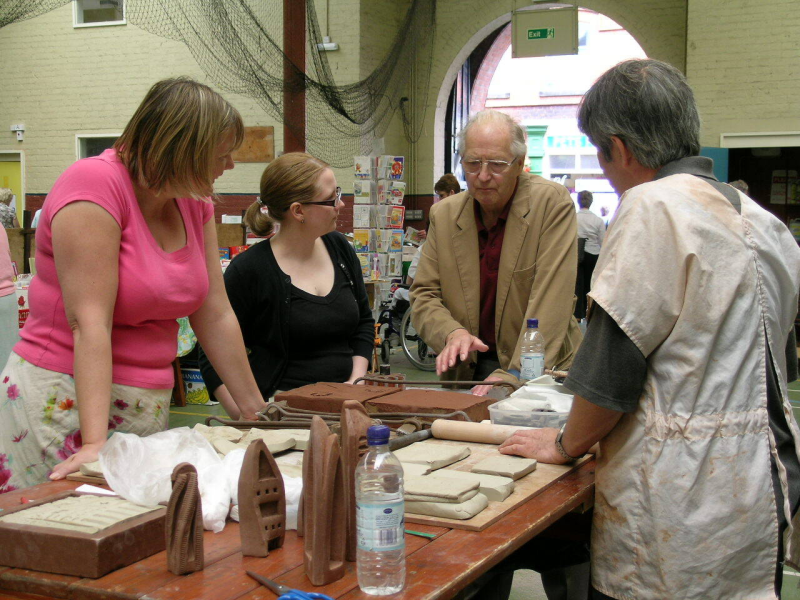
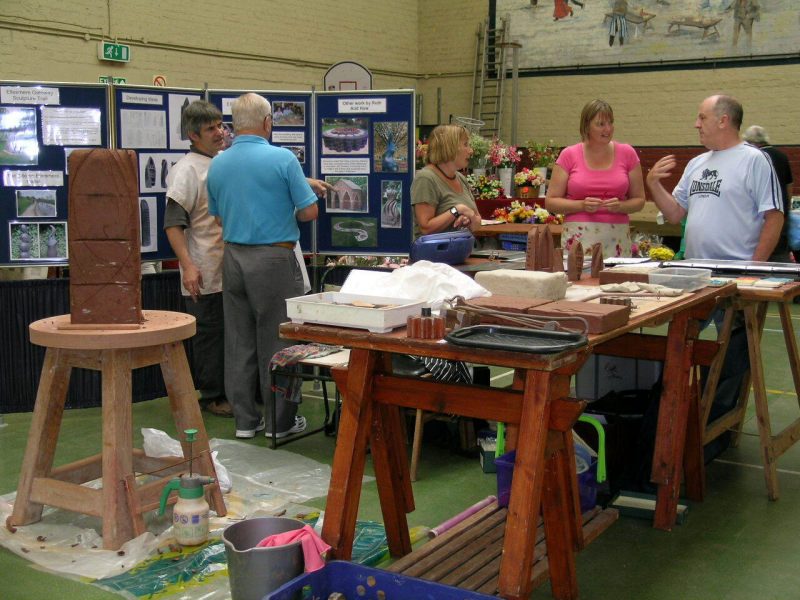
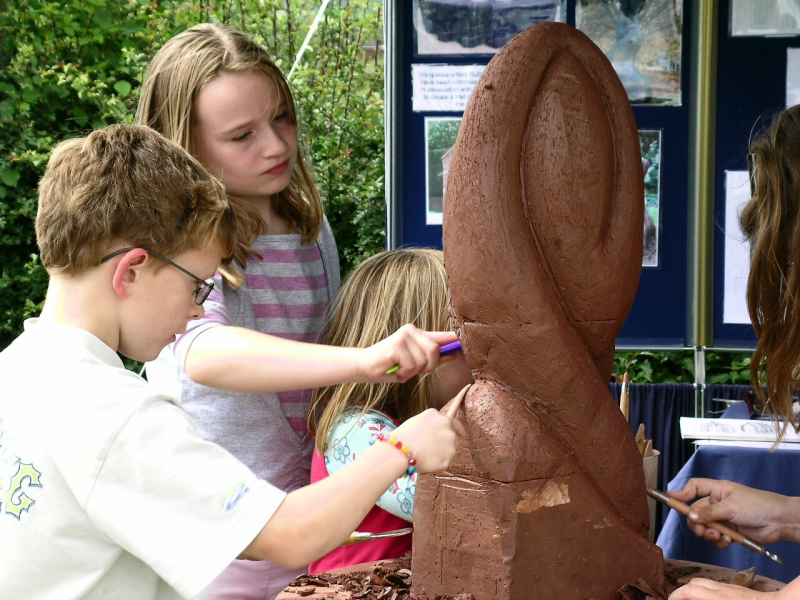
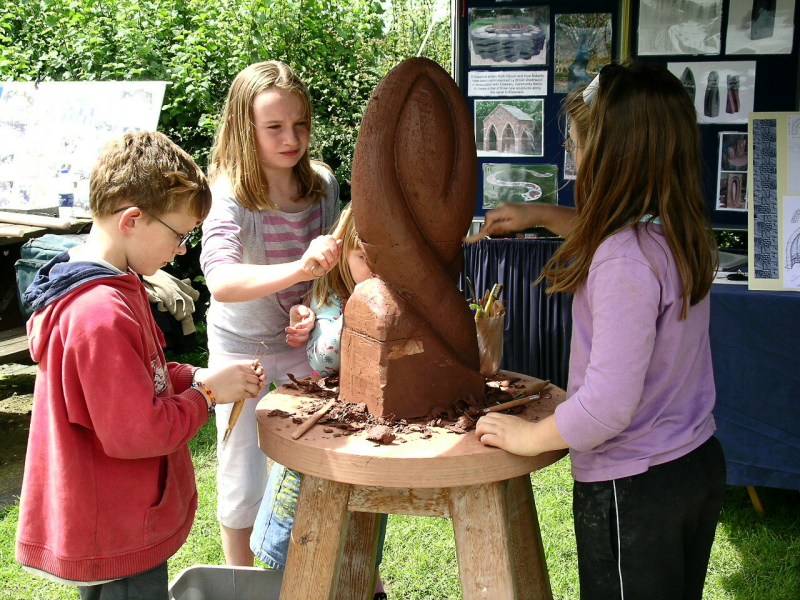
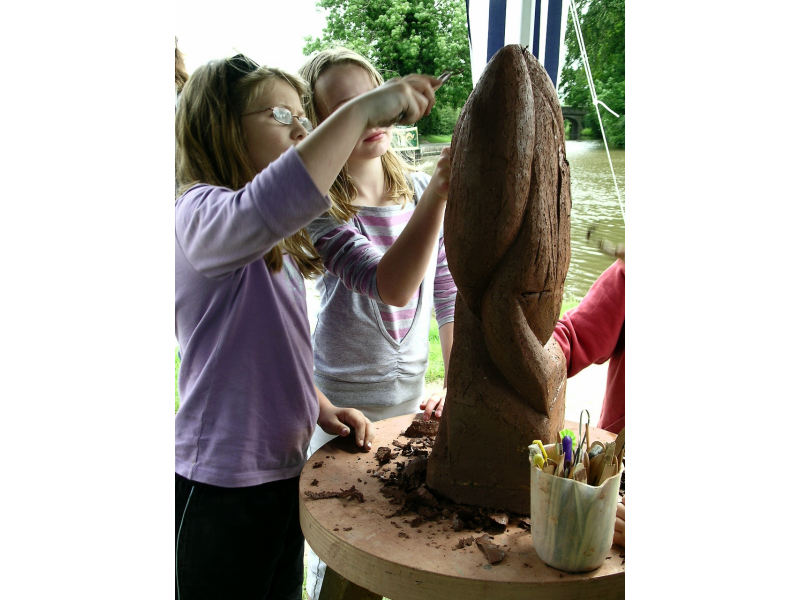
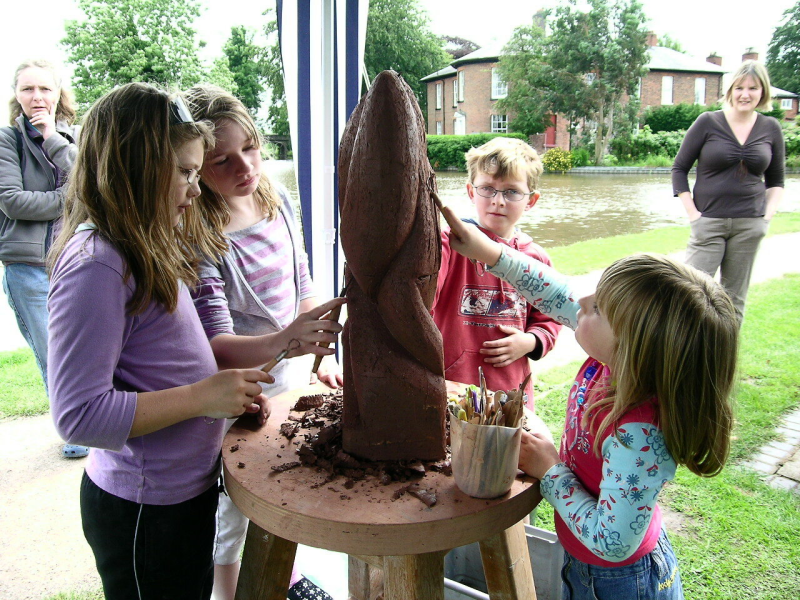
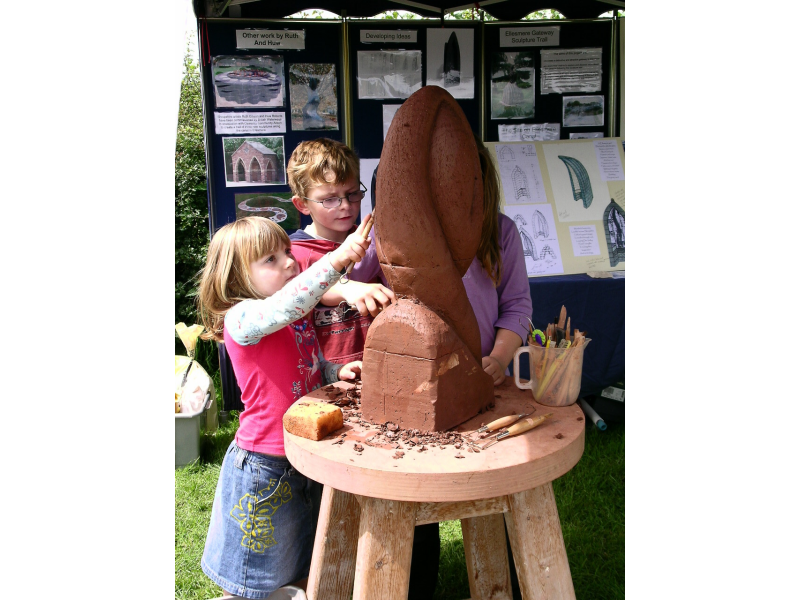
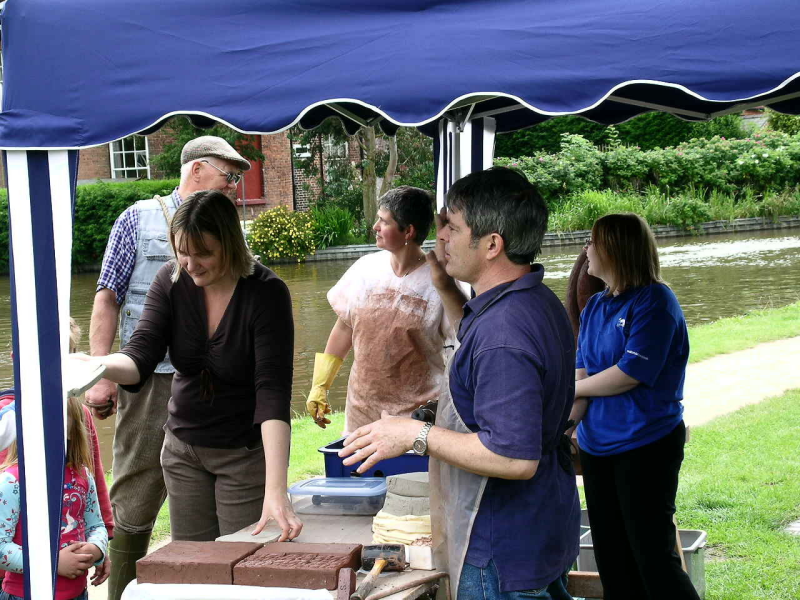
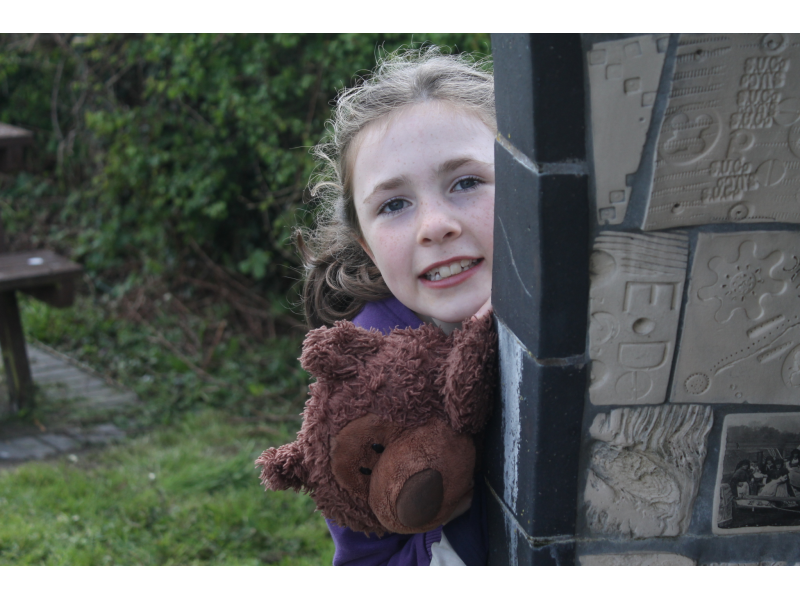
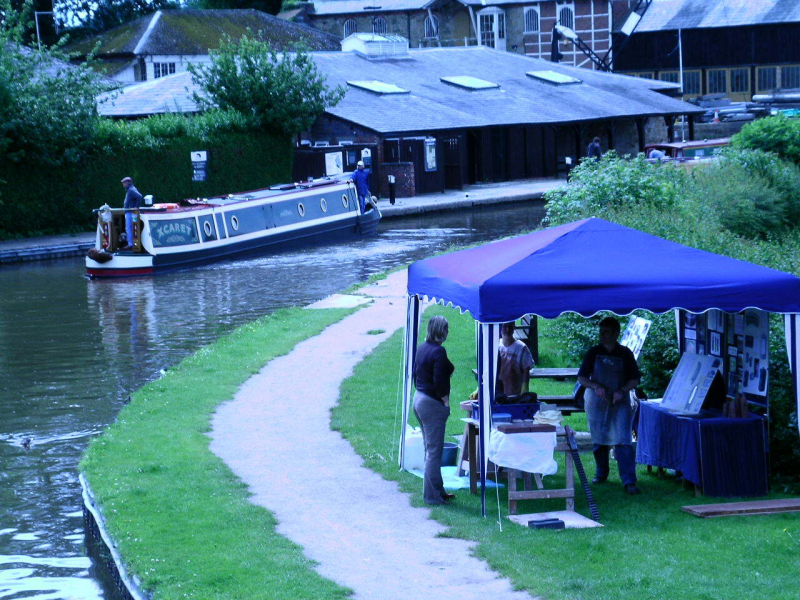
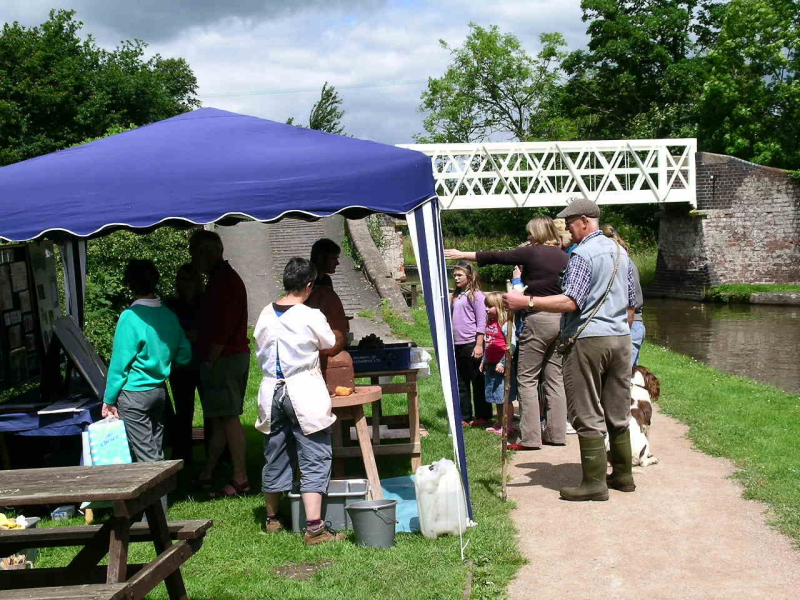
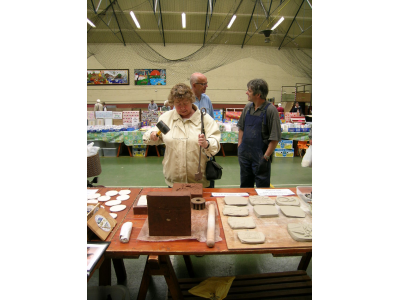
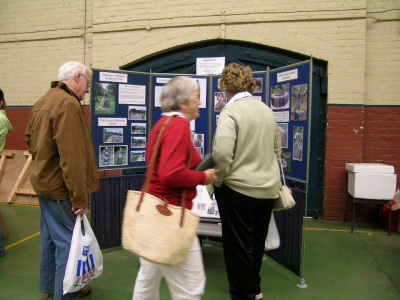
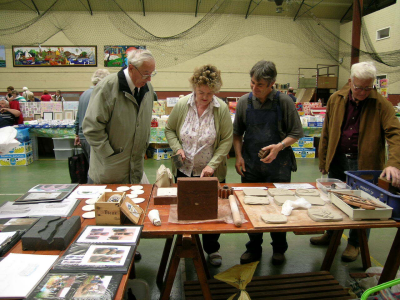
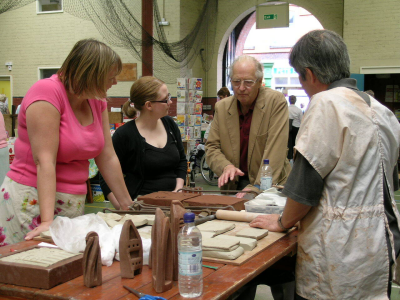
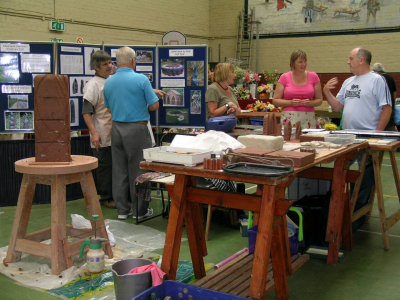
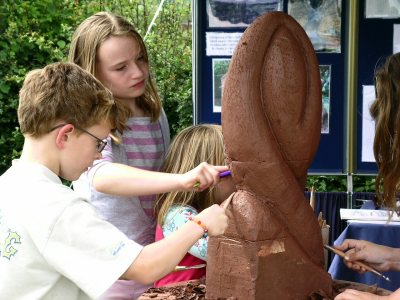
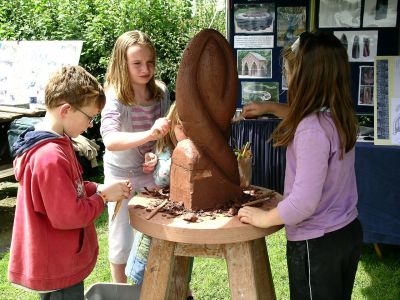
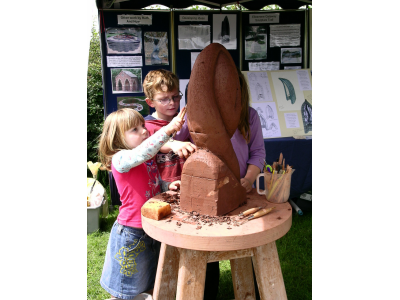
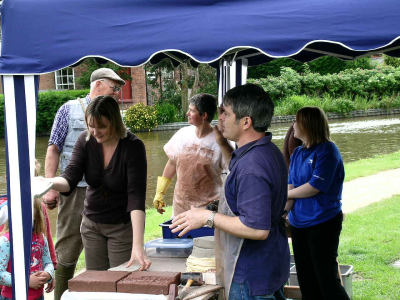
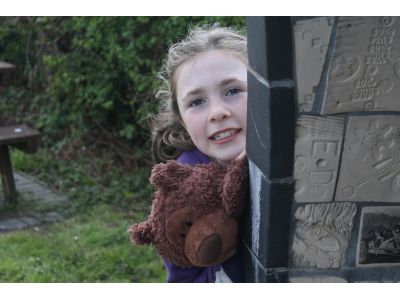
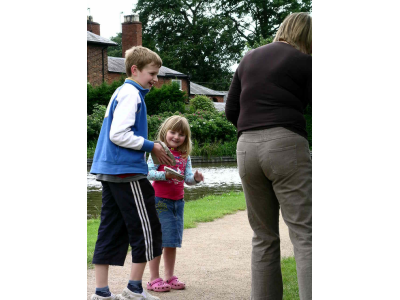
- To influence the final detail in the sculptures Ruth and Huw are asking for people to give them memories and old photographs. They will be at the Ellesmere Market on Tuesday 12th and 19th June to record these and also show their plans and give the market customers a chance to work with the sculptures key material - clay.
- Ruth Gibson said
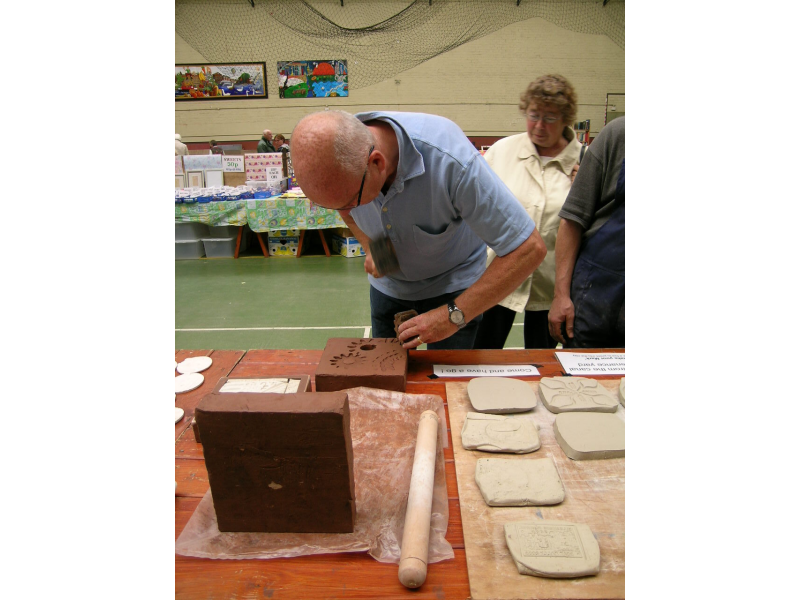
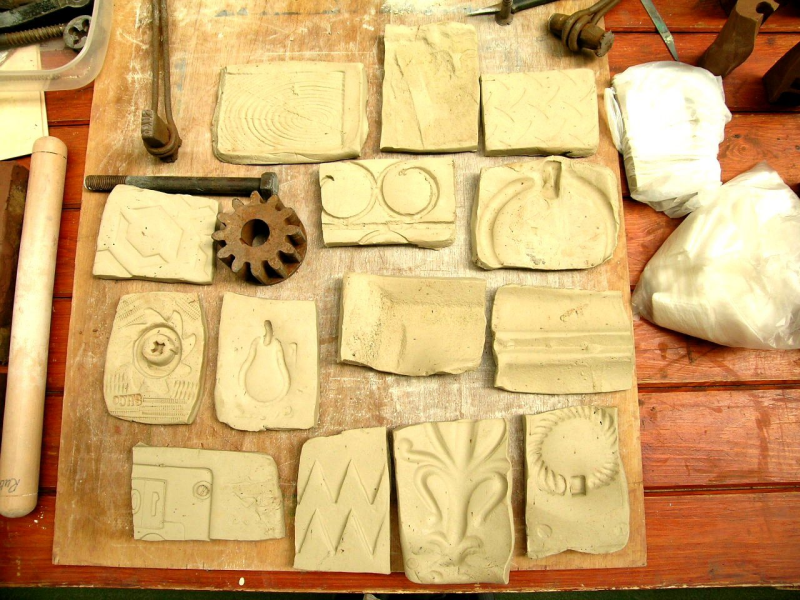
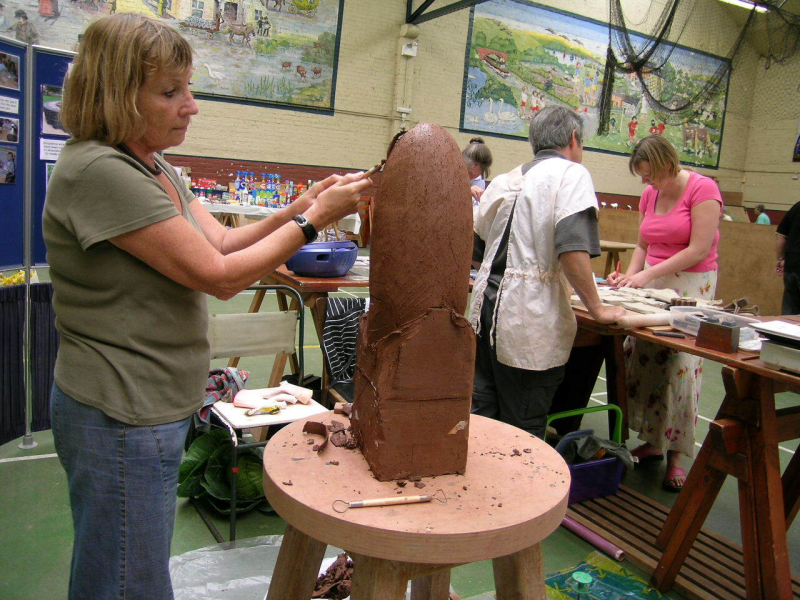
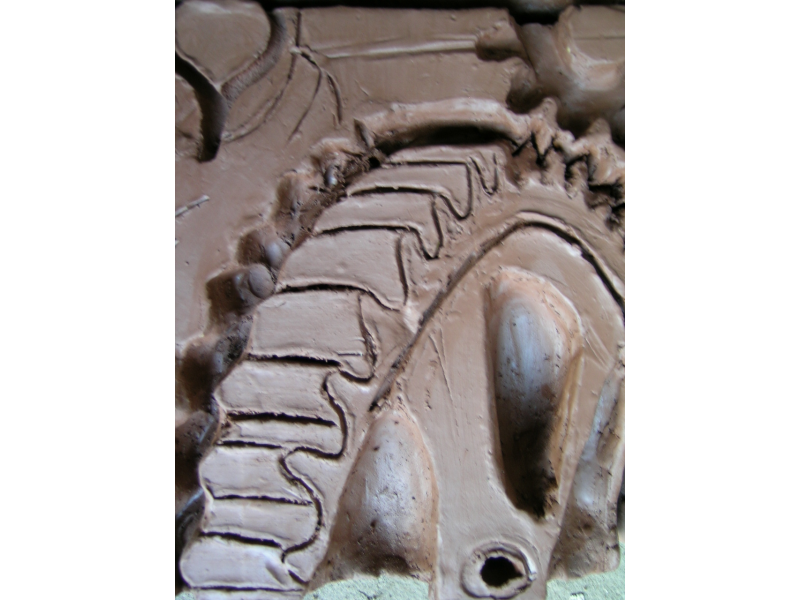
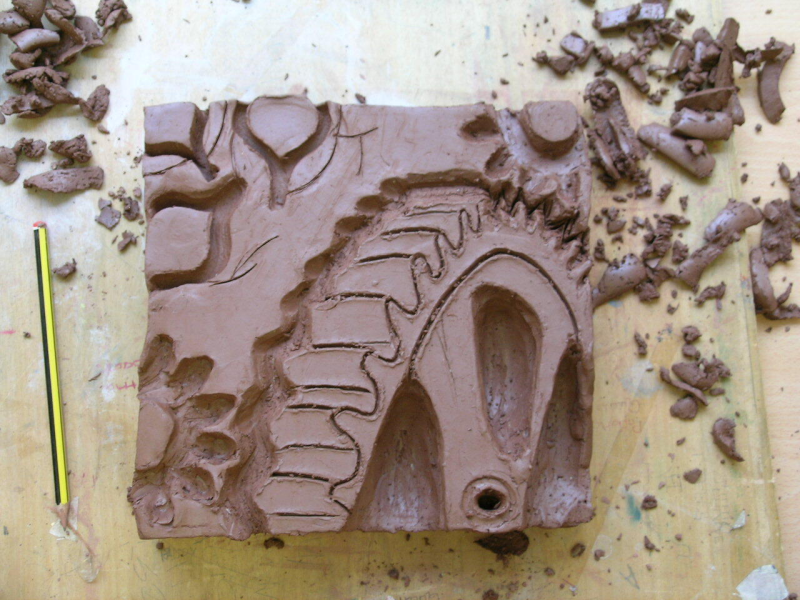
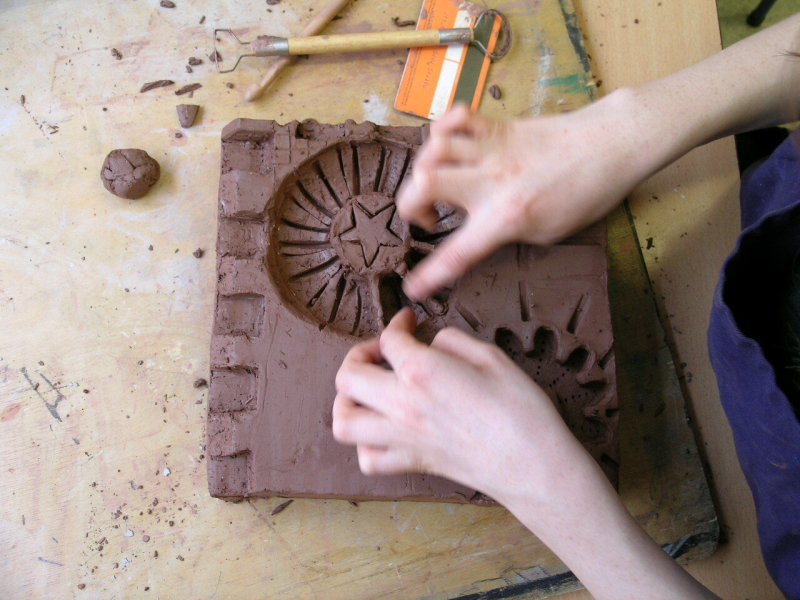
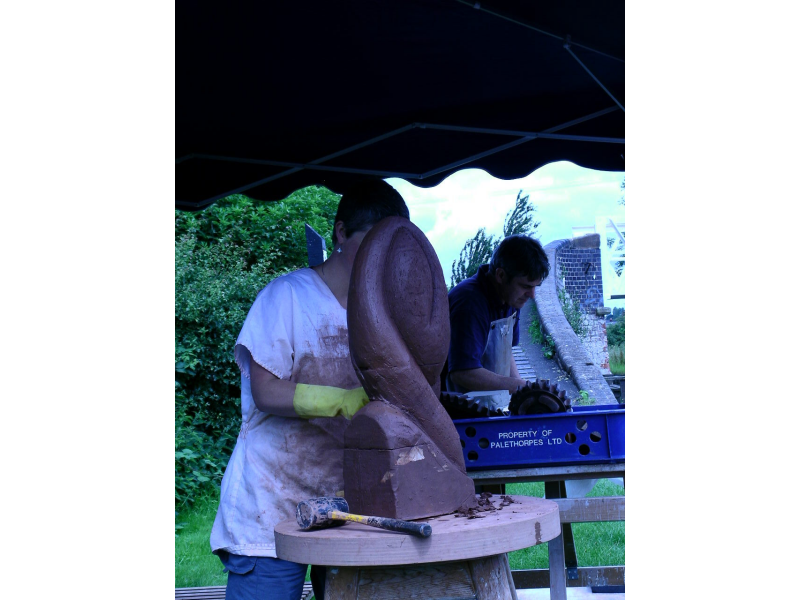
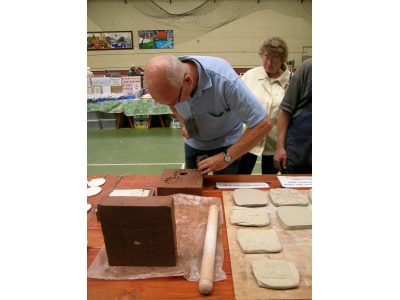
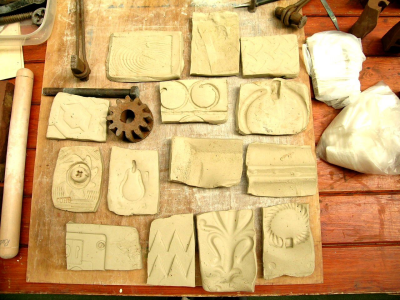
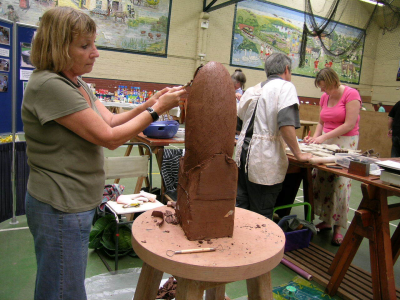
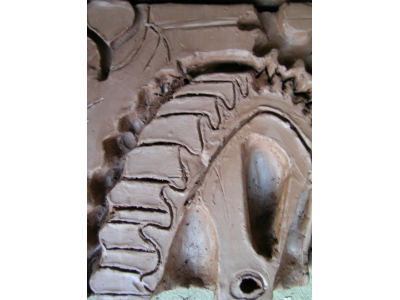
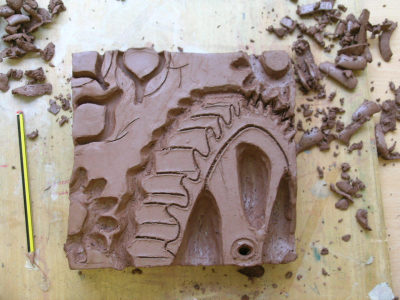
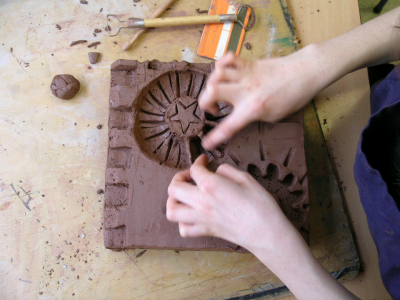
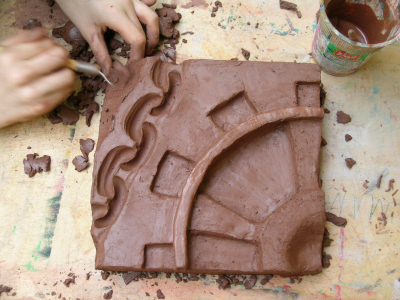
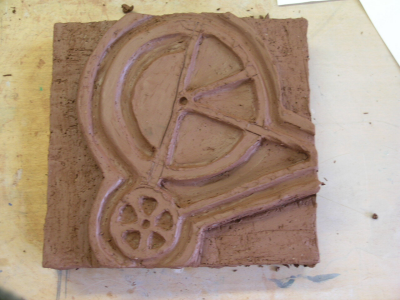
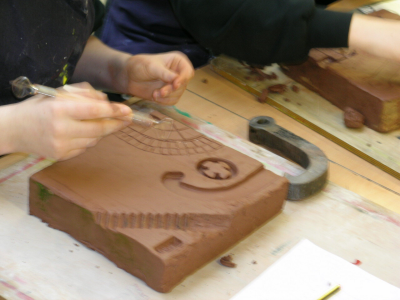
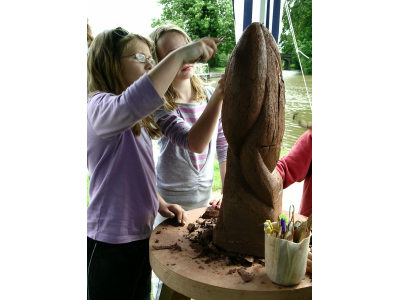
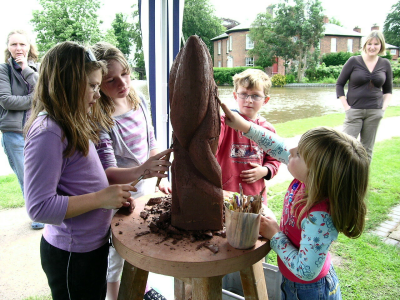
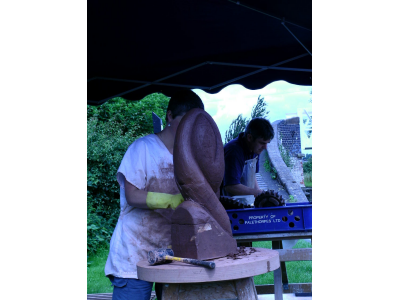
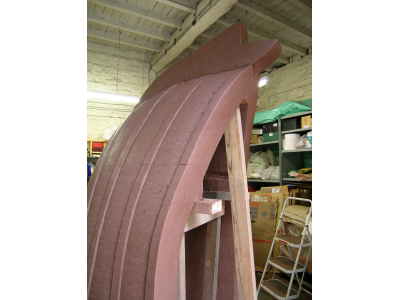
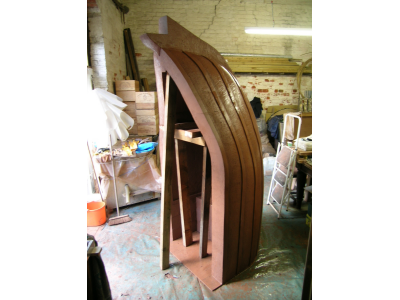
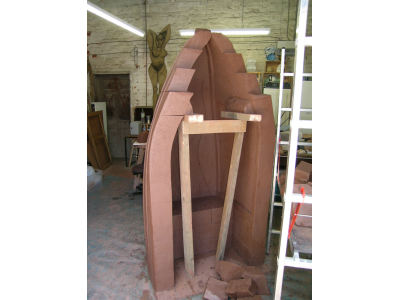
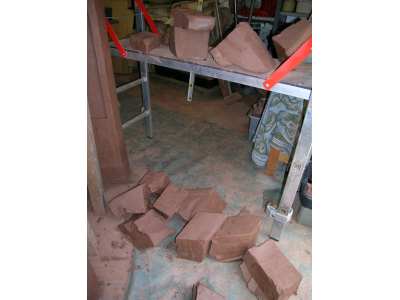
- ‘In the market hall there will be a display of ideas and work in progress along with a demonstration of brick clay carving and an opportunity to have a go. Also there will be a chance to make clay tiles by gathering textures from in and around Ellesmere and the canal.’
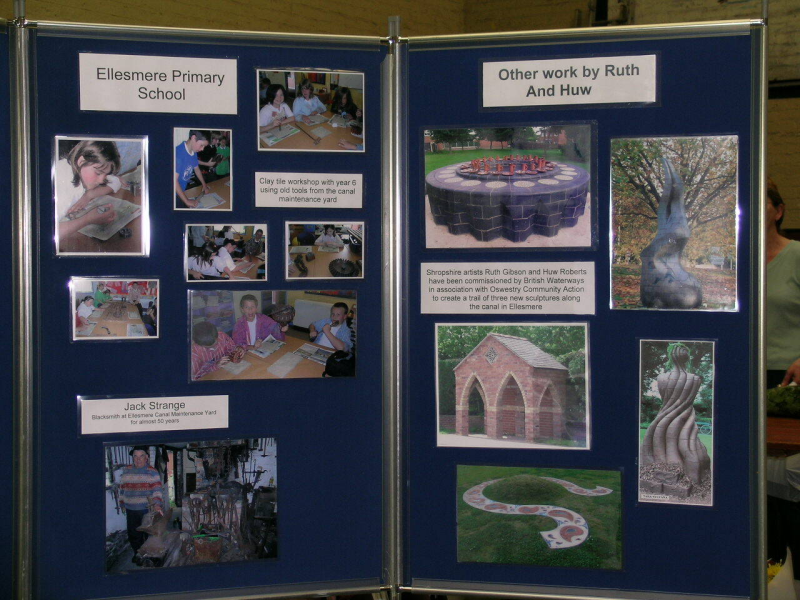
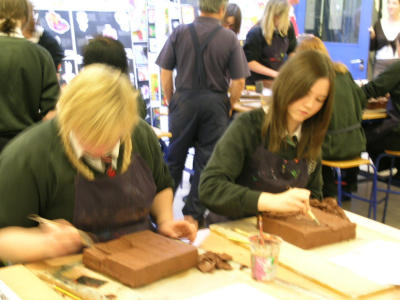
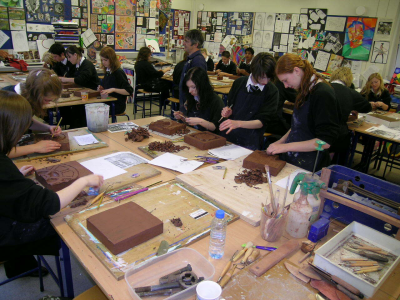
- They will be working with pupils at Ellesmere Primary School in the afternoon of Thursday 7th June and at Lakelands School in the afternoon Wednesday 20th June.
- Ruth Gibson said
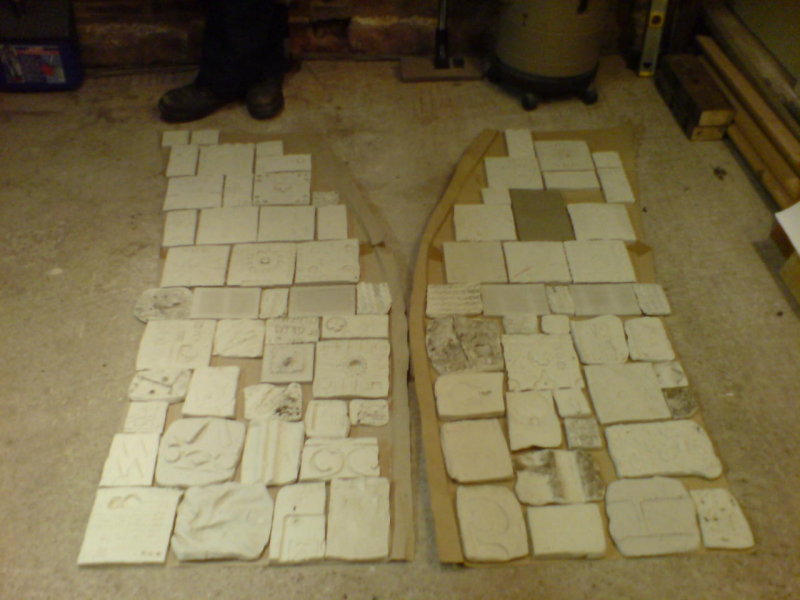
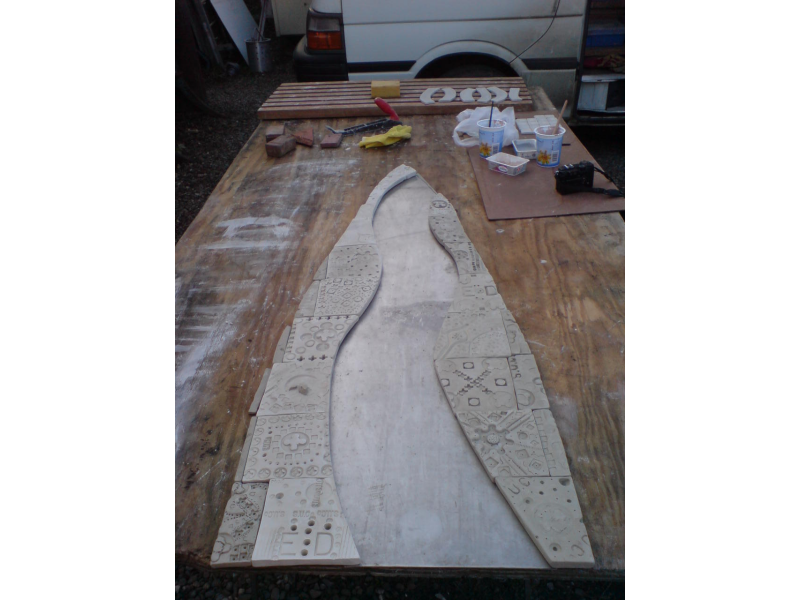
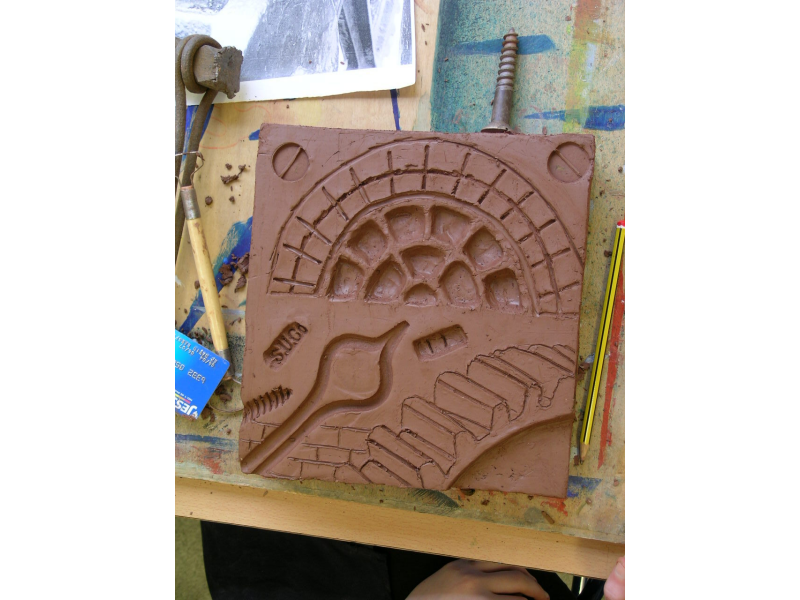
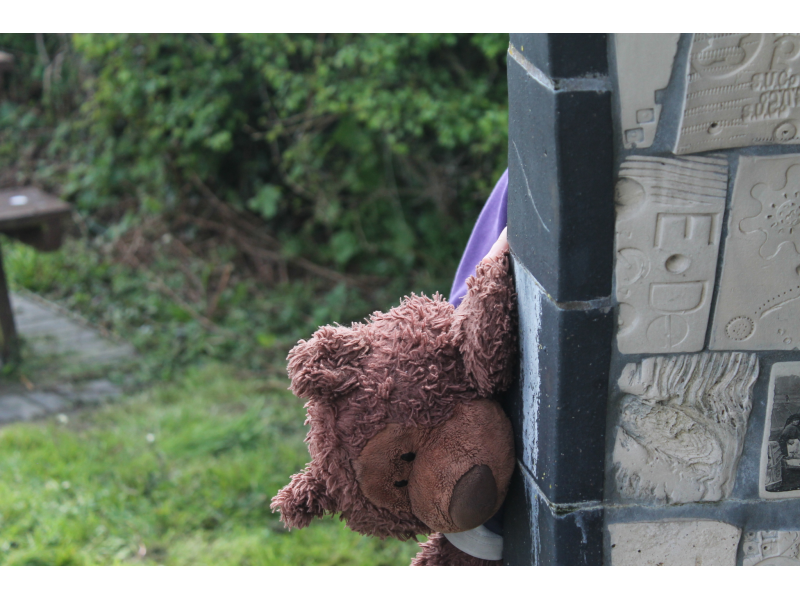
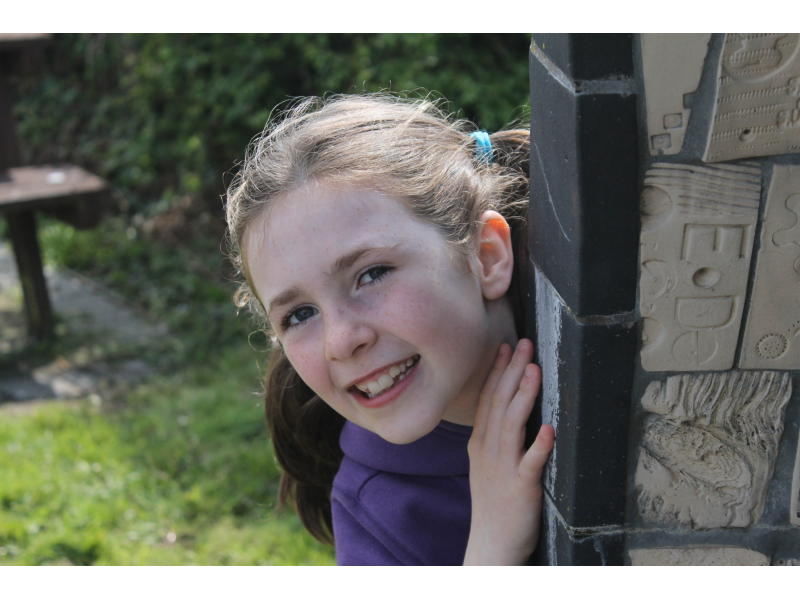
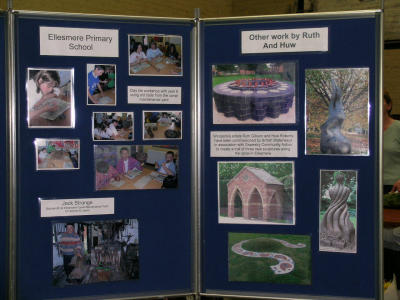
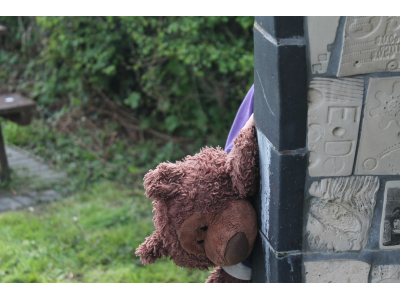
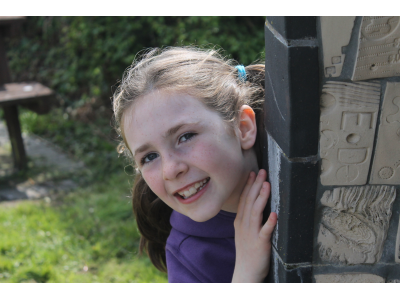
- ‘In the primary school we will be looking at various industrial artefacts borrowed from the maintenance yard, and using these we will be making decorative clay tiles to be incorporated into the new sculptures on the canal.
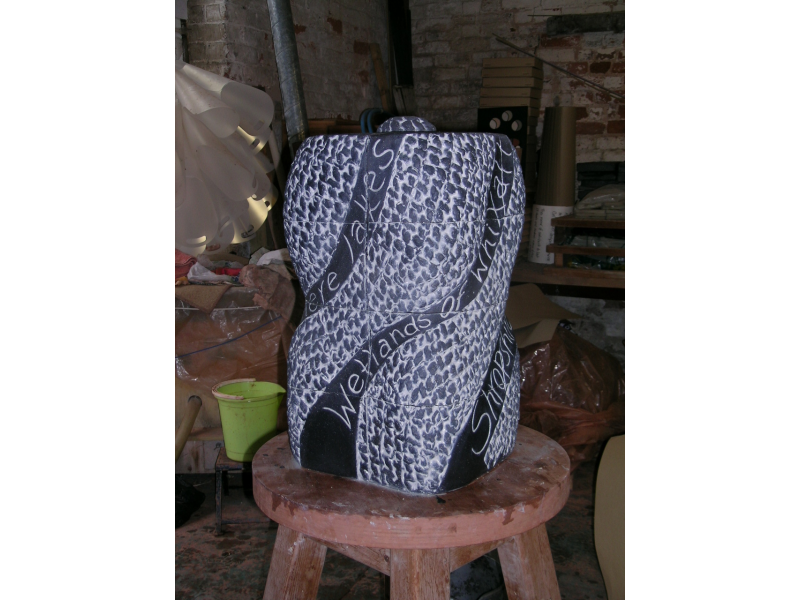
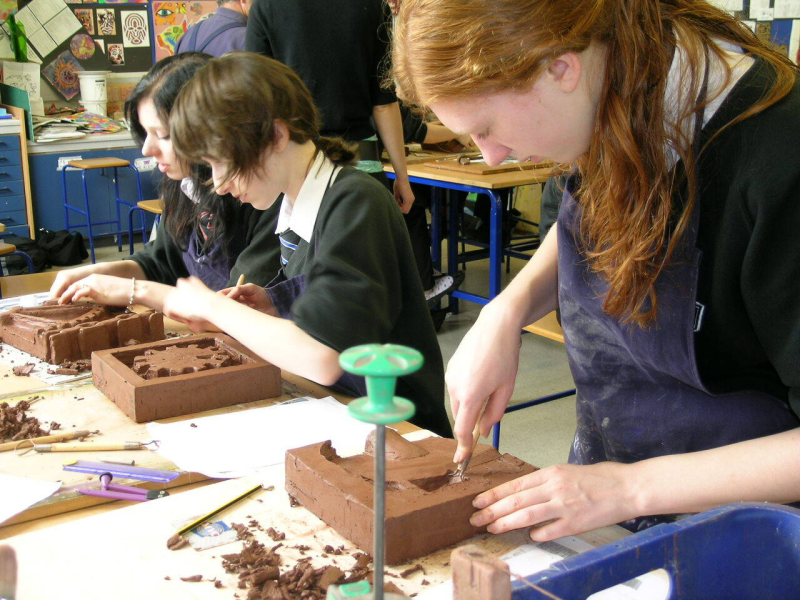
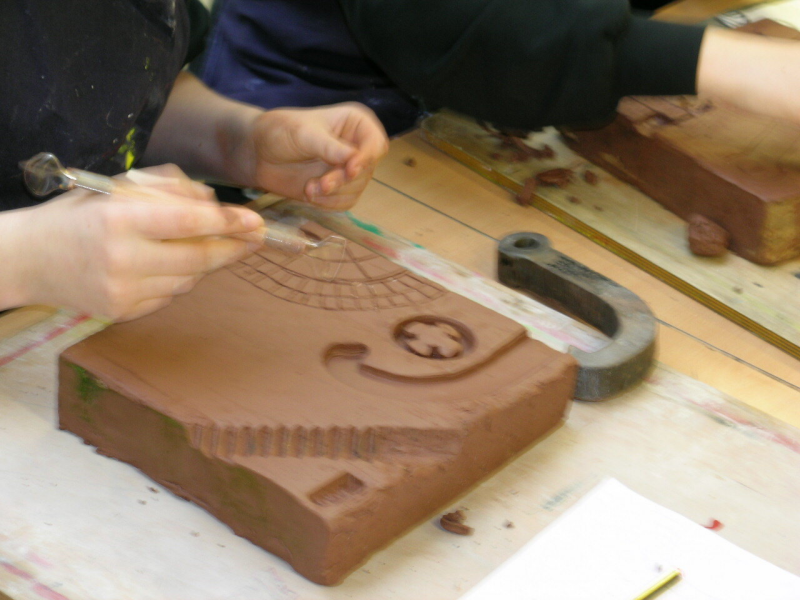
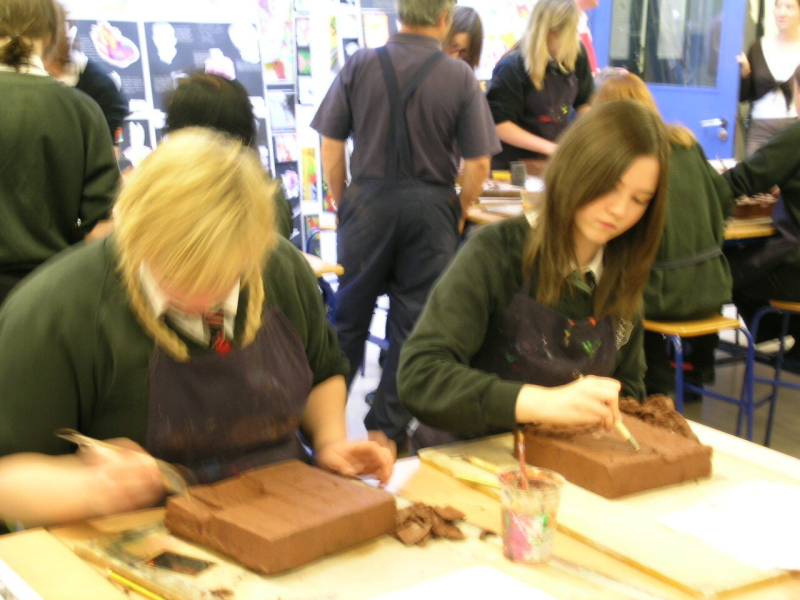
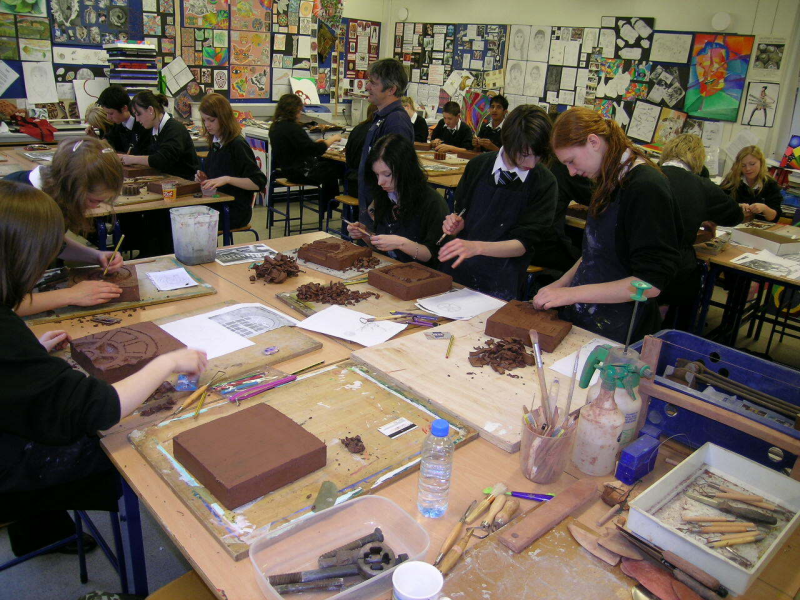
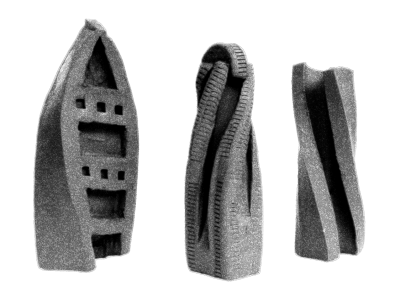
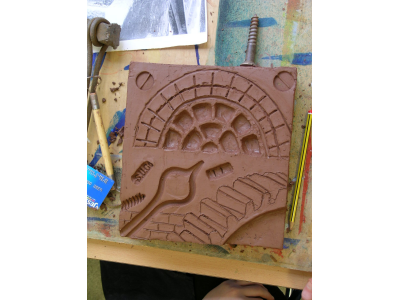
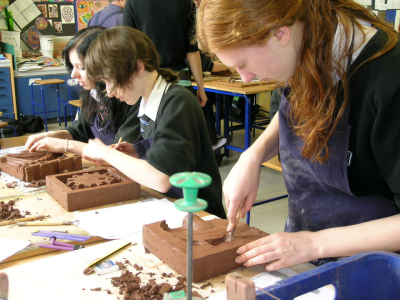
- In the secondary school we will be working with older children teaching the art of brick clay carving and the children will carve brick paviers using images of the canal architecture. This could be made into a permanent ceramic sculpture for the school.‘
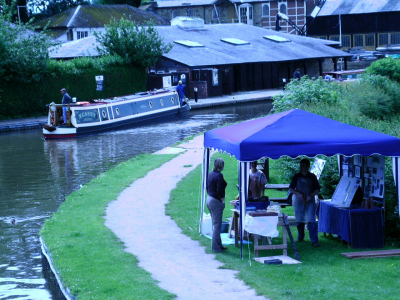
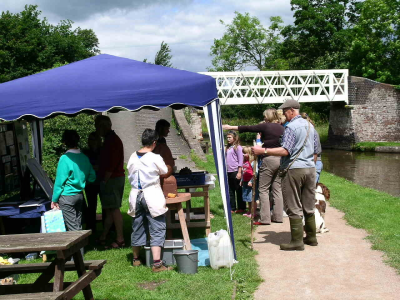
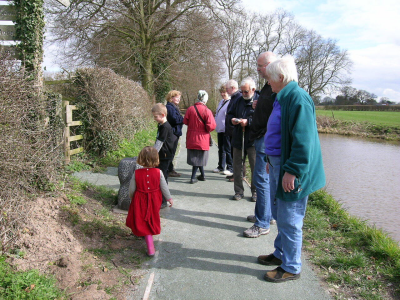
- On Saturday 7th July 11am – 3pm there will be an information and events day along the canal.
- Other events are being planned running up to the sculpture unveiling at the Ellesmere Boat Festival on Sunday 9th September 2007.
Method Statement
Step-by-step plan of construction of sculptures
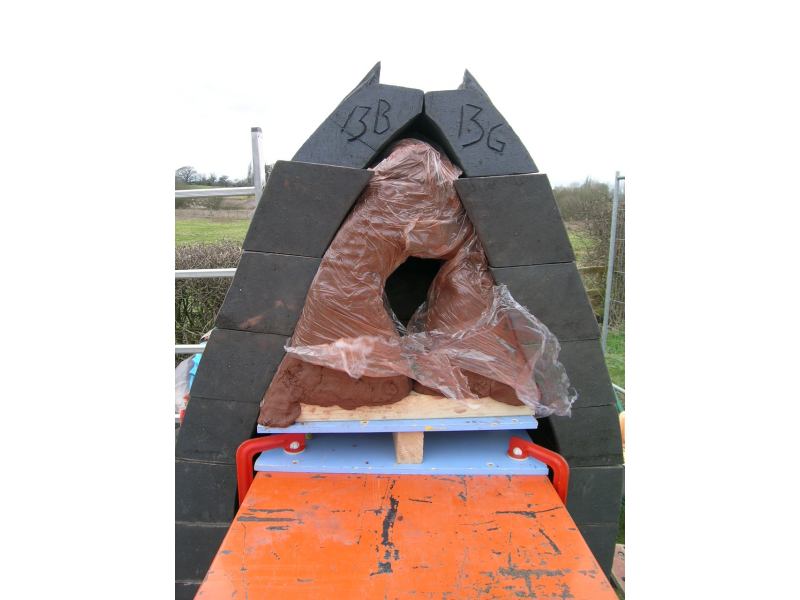
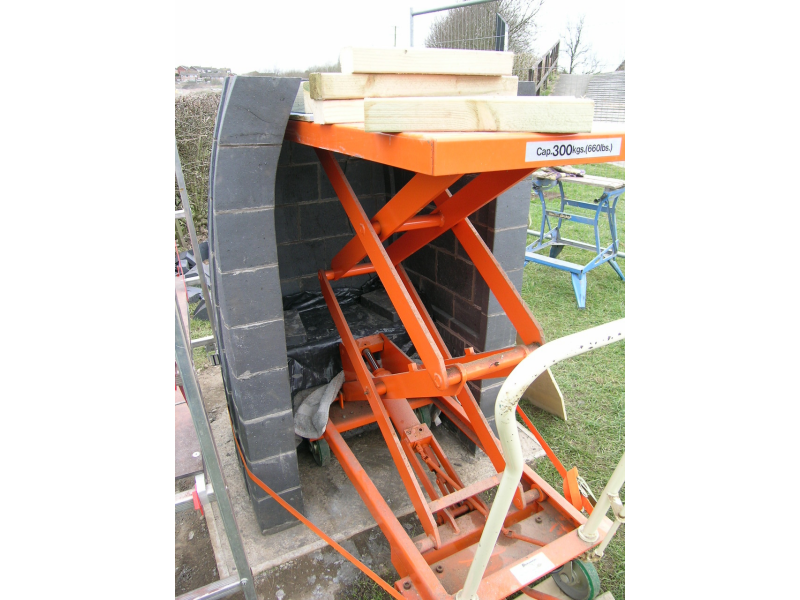
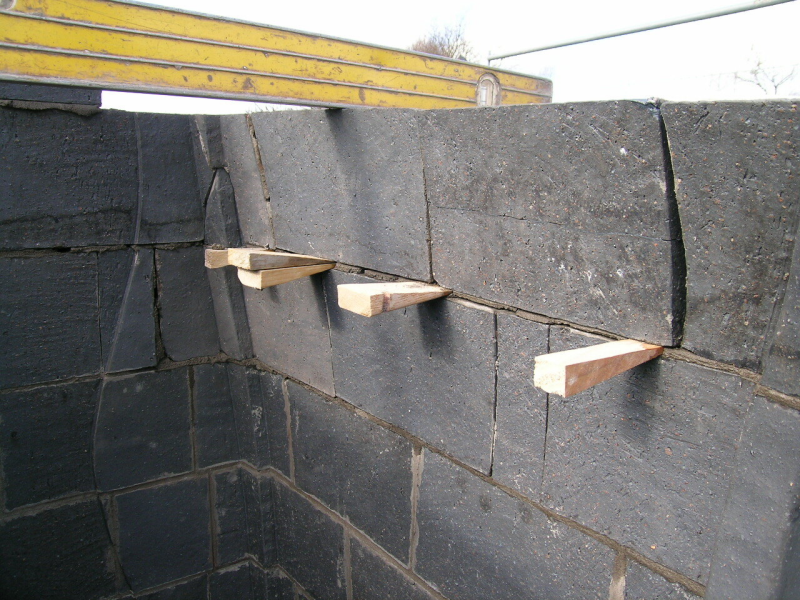
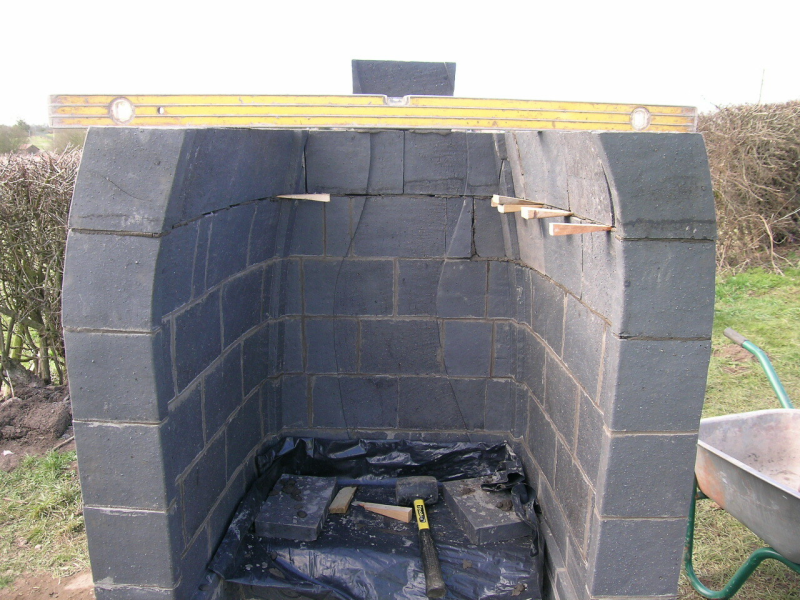
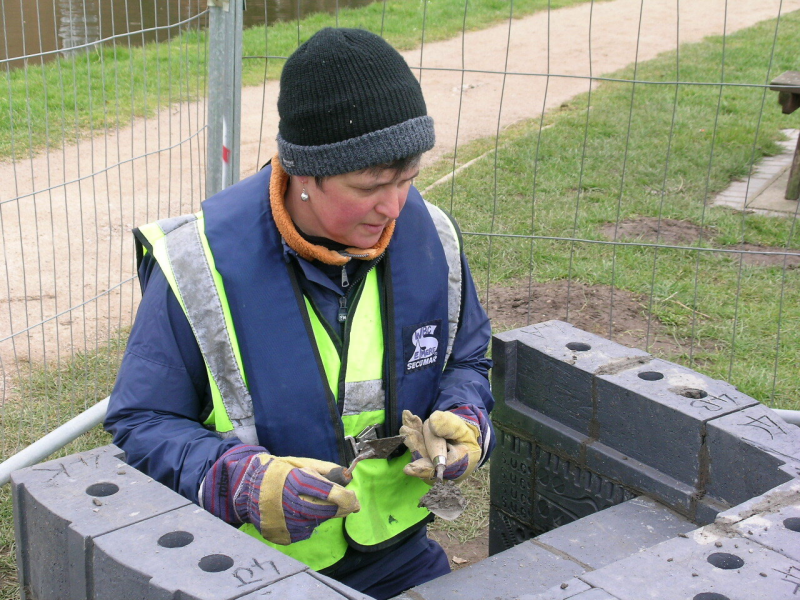
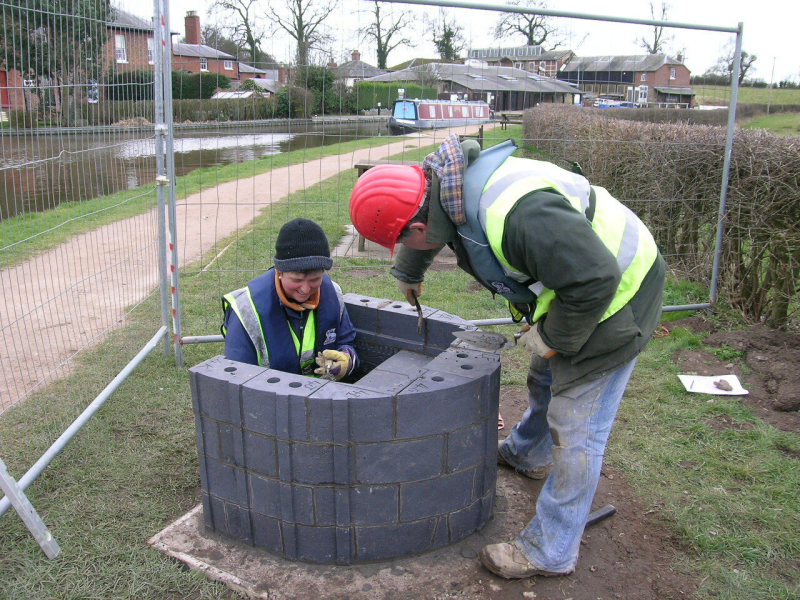
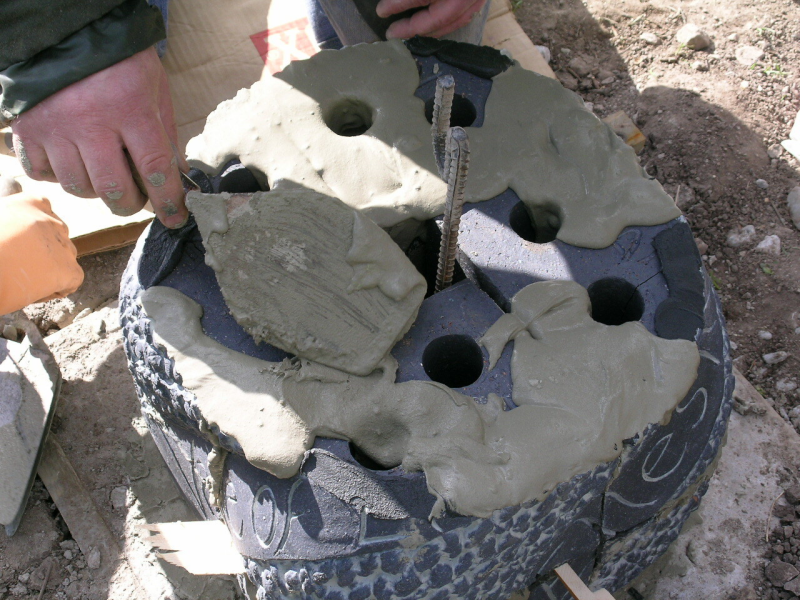
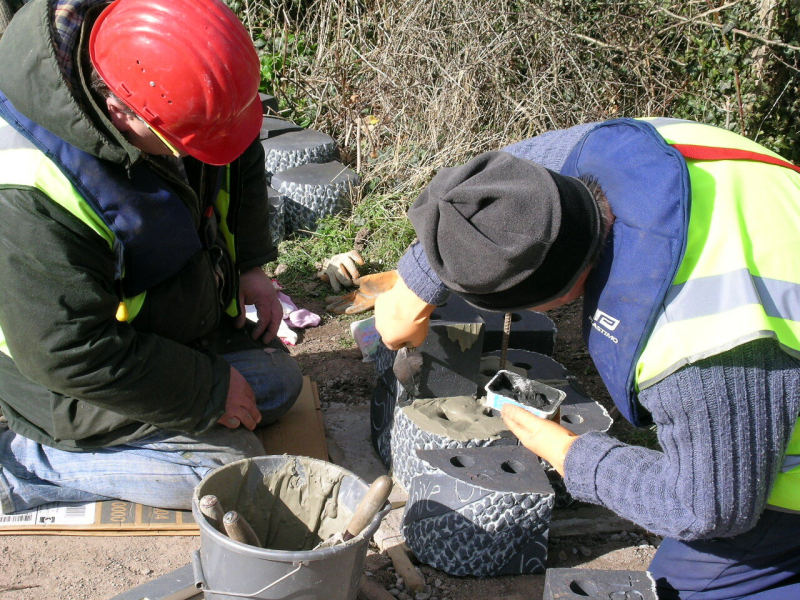
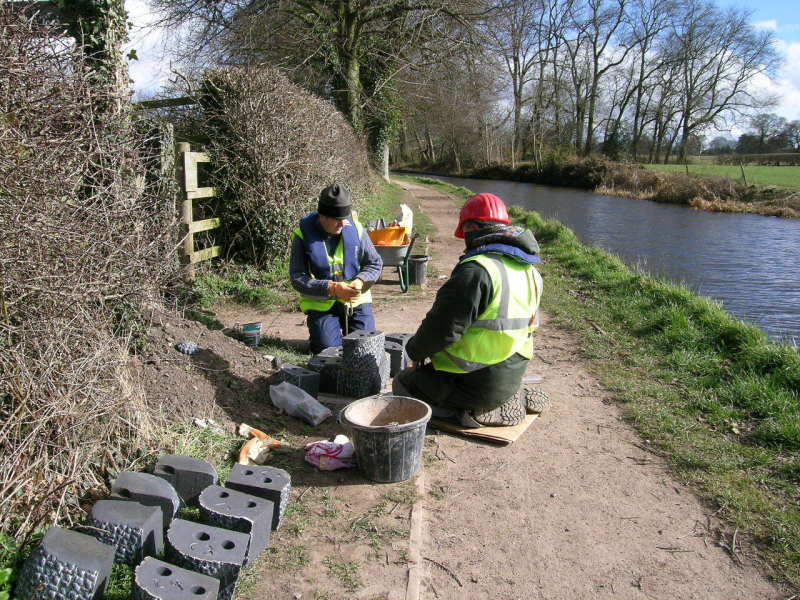
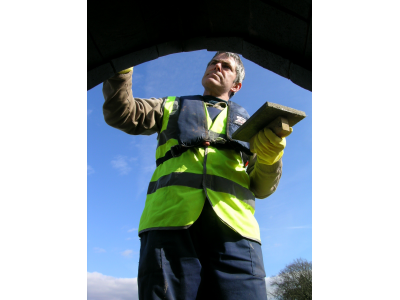
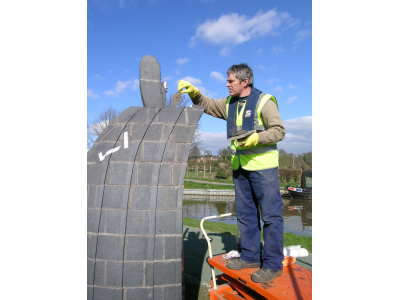
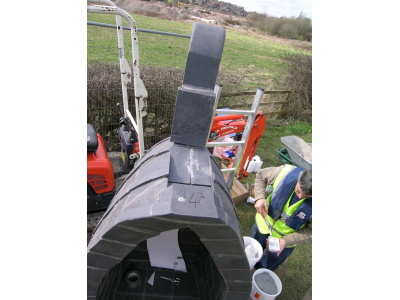
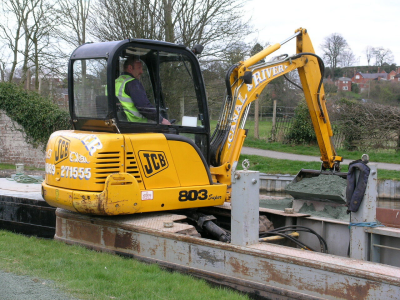
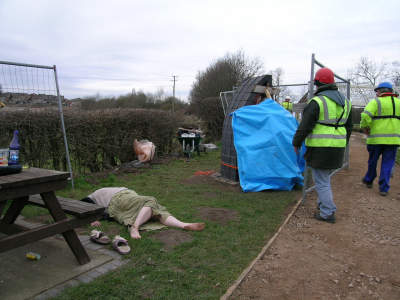
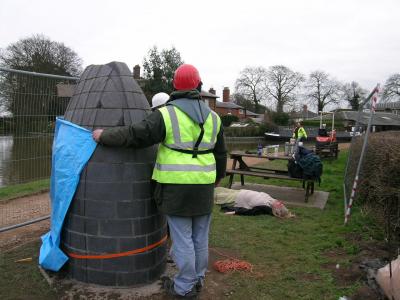
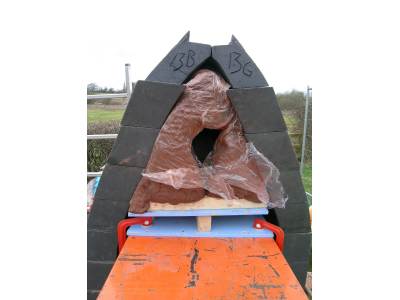
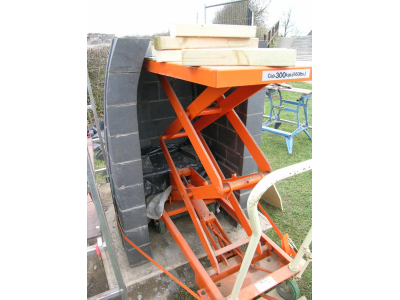
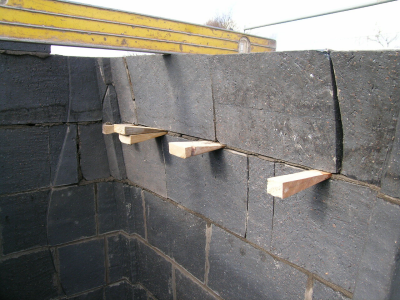
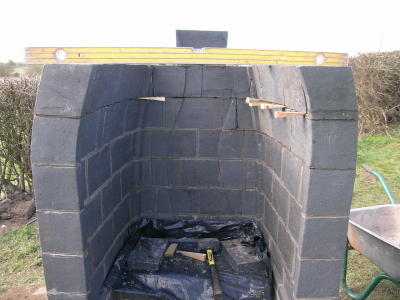
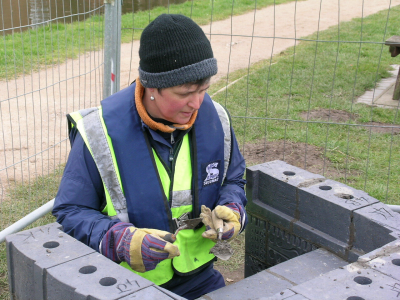
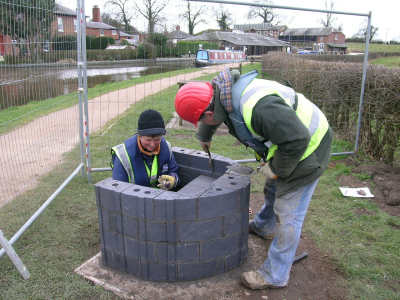
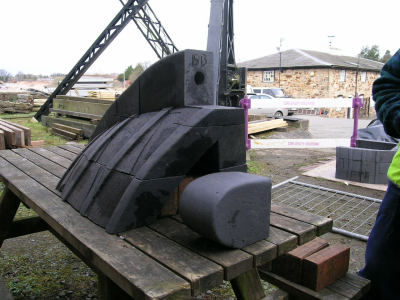
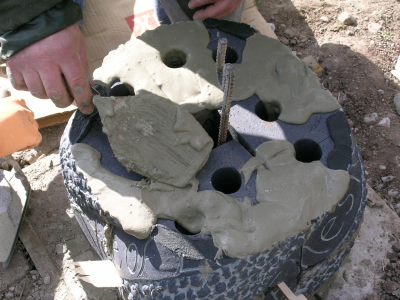
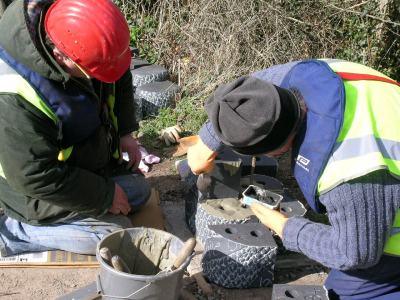
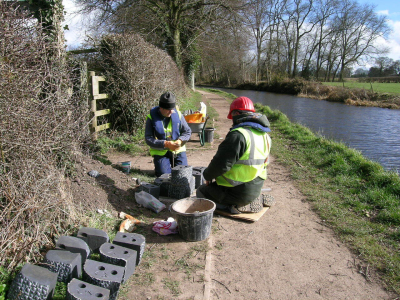
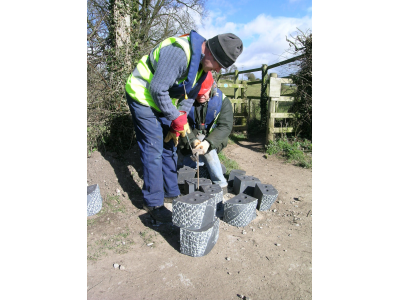
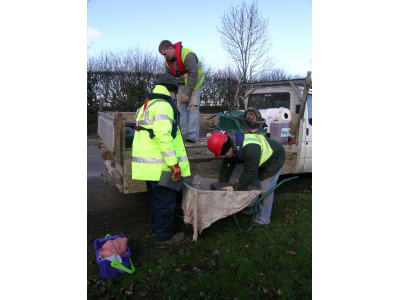
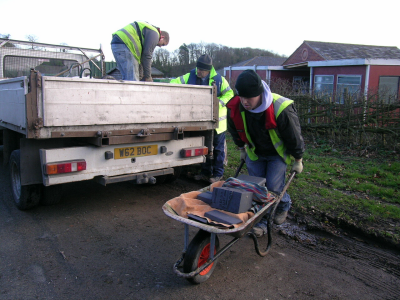
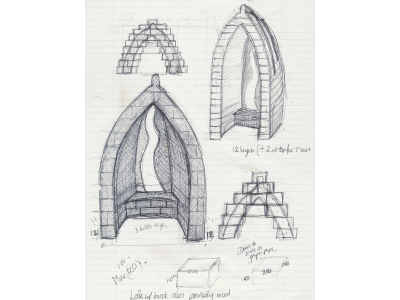
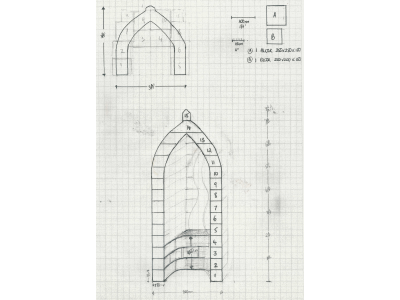
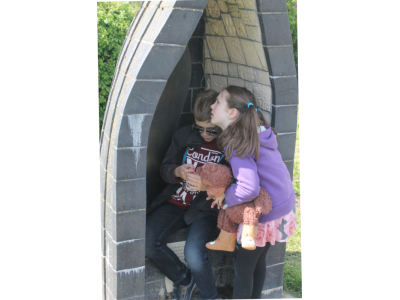
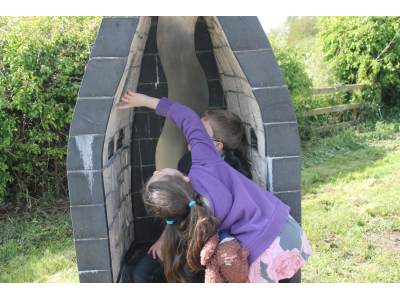
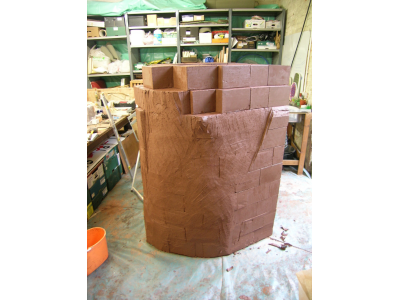
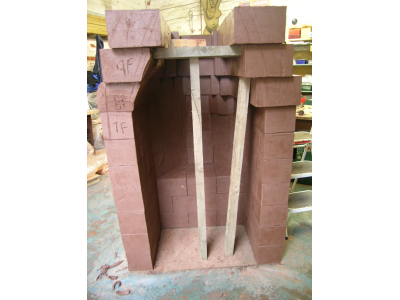
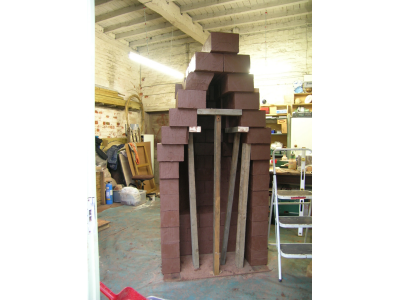
Three separate sculptures will be built over a period of approximately one - two weeks, weather dependent. Each piece will vary slightly due to complexity and additional elements in the design such as inlaid mosaic tiles.
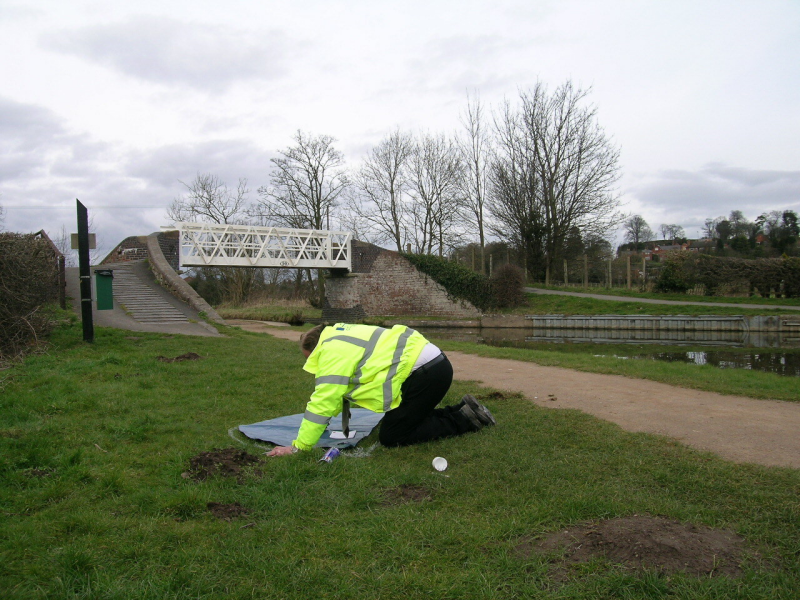
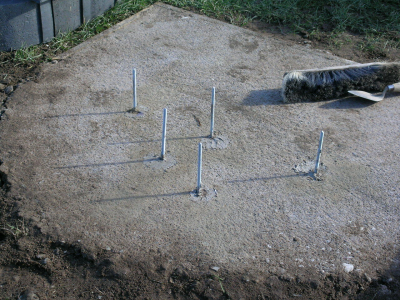
· Site and foundations prepared and dry ready for building.
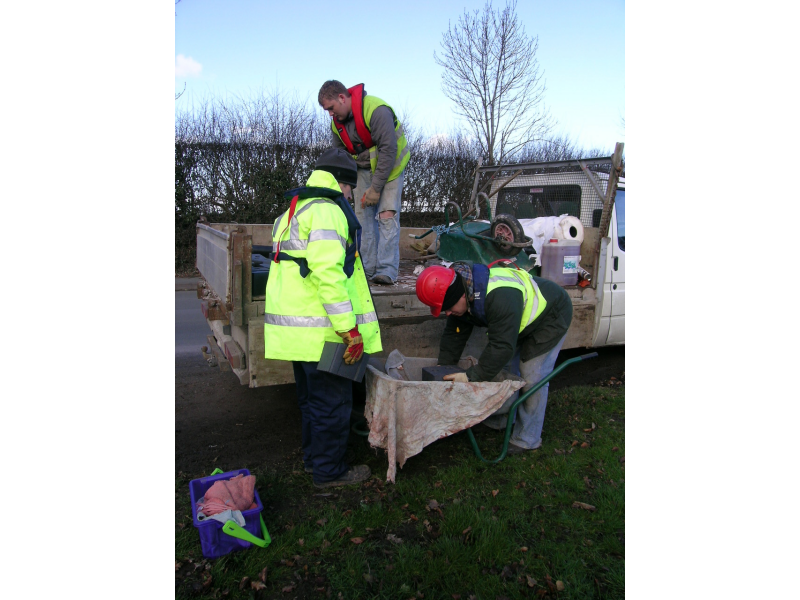
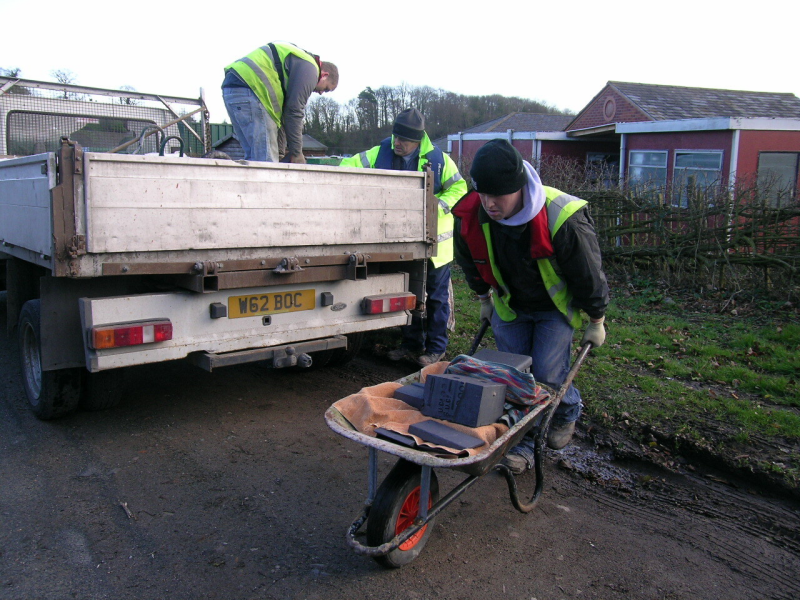
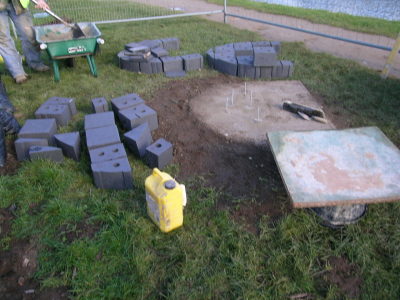
· Fired bricks delivered to site along with all other materials.
· Materials needed…buckets, water, sand, cement, trowels, sponges, spade, wheelbarrow, hammers, spirit level, angle grinder, chisel, extension lead.
· Tools will not be left on site at the end of each working day.
· Steel mesh security barriers to be supplied from British Waterways depot.
· May need temporary cover erecting such as a gazebo in poor weather conditions. This will not be left up overnight.
· Polythene sheets will cover the sculptures overnight during the construction process.
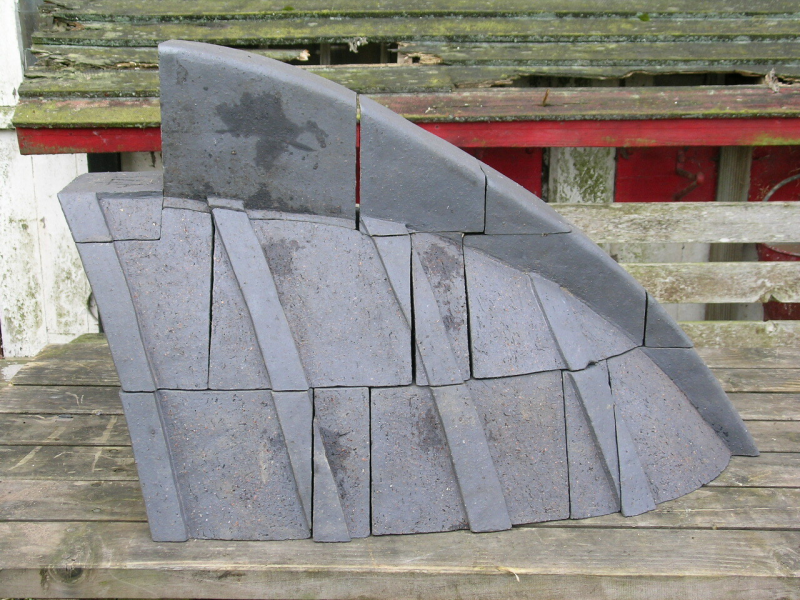
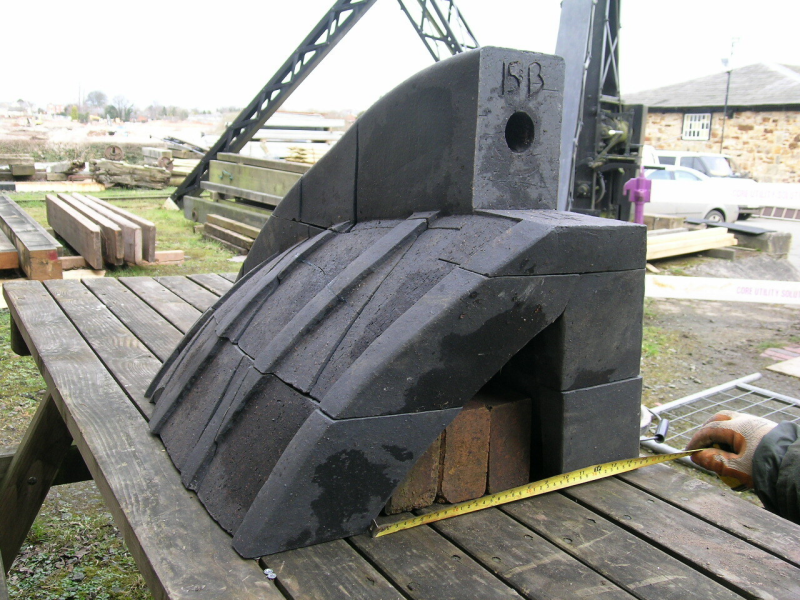
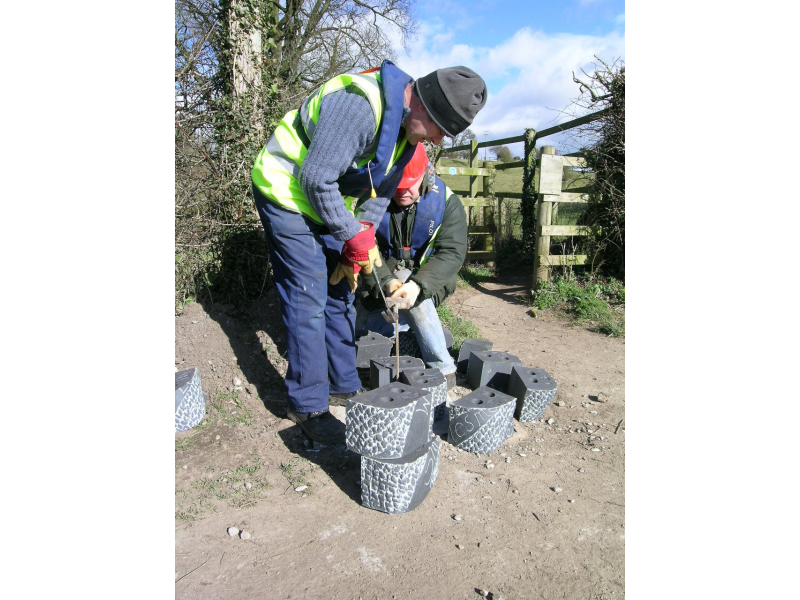
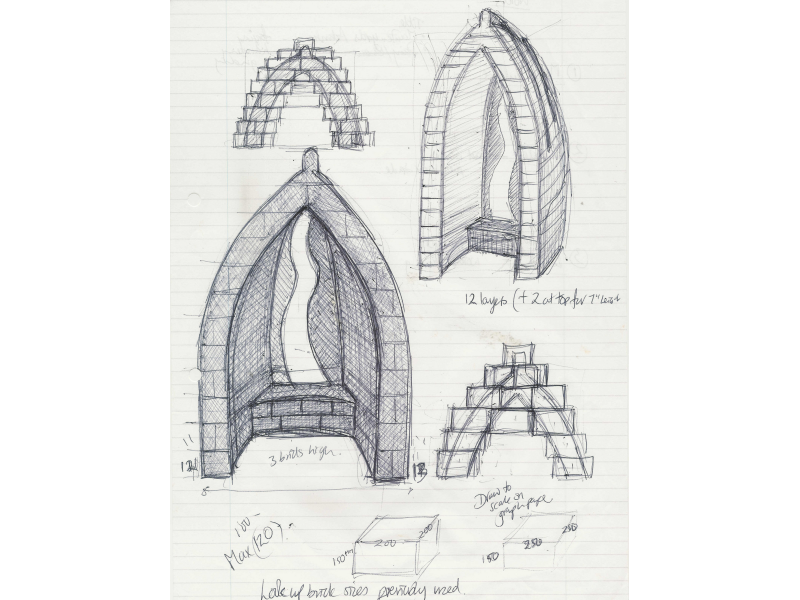
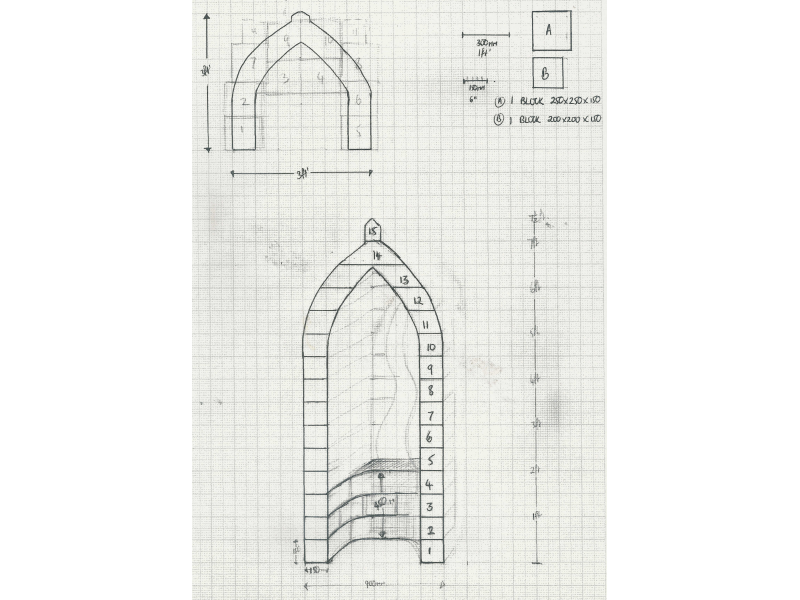
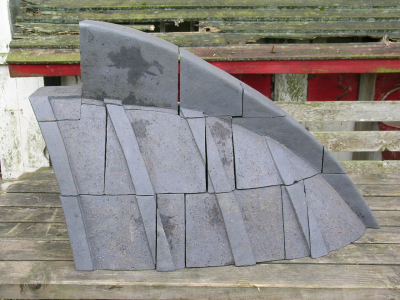
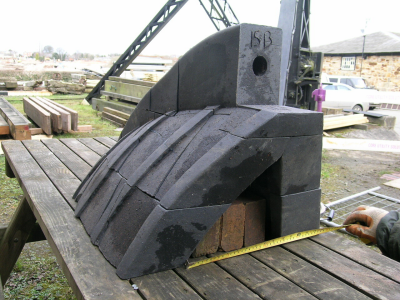
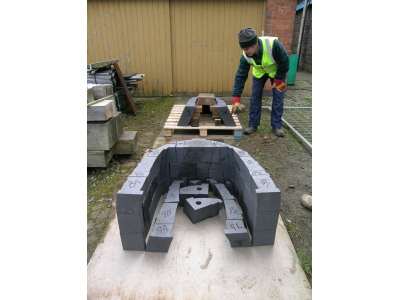
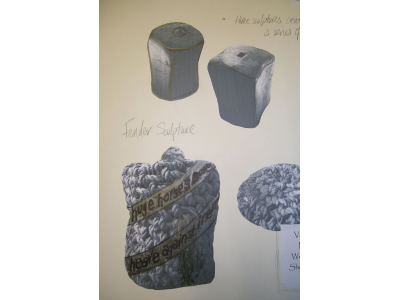
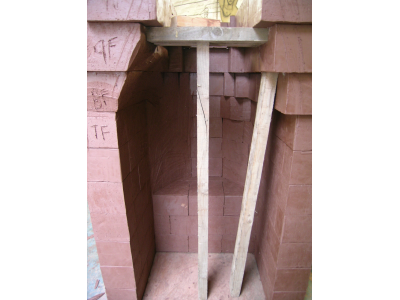
· Sorting bricks, 140 for main sculpture, 33 for bench, 16 for fender, into layers. Using detailed plans made during dismantling process pre-firing.
· Dry run of initial layers on concrete base.
· Any alteration of bricks during construction will need to be carried out in the maintenance yard using electric angle-grinder at a power point. This may not be necessary.
· Mixing of mortar to the required strength and consistency, by hand, on site.
· Brick laying sections of sculpture to a max of 3 or 4 layers per day to allow cement to dry and strengthen.
· Smallest pieces of carved brick added at the end of brick laying using an epoxy resin and touched up with cement grout.
· When brick laying is complete and dry it may need cleaning up with a weak solution of brick acid. This is applied with a brush and then washed off with clean water
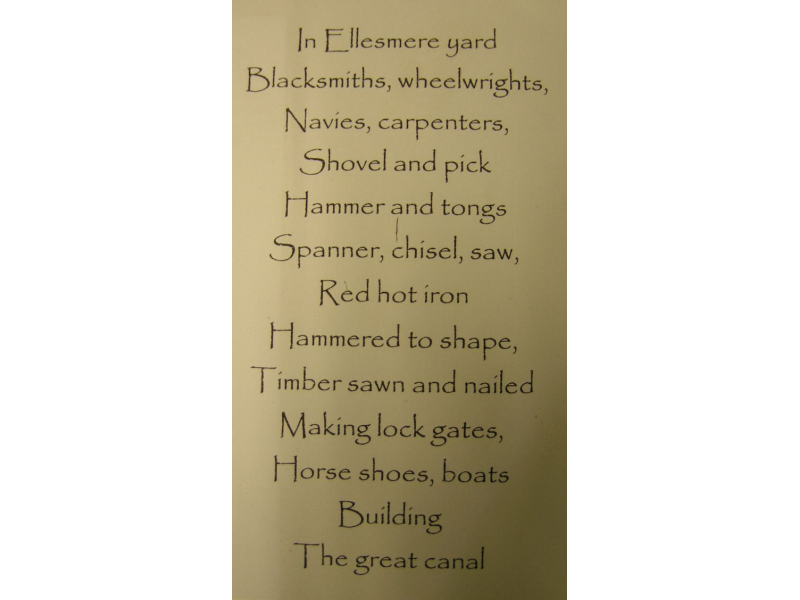
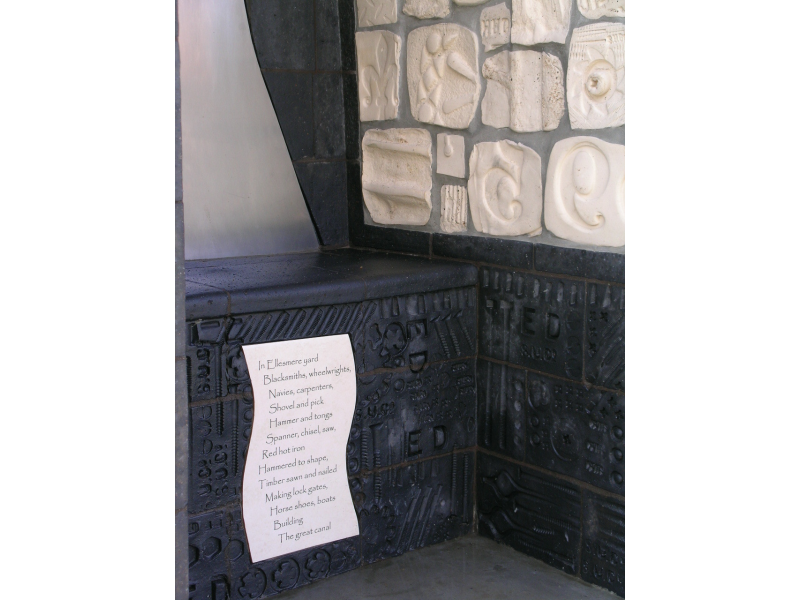
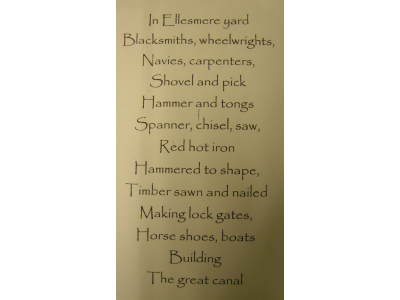
In Ellesmere yard
Blacksmiths, wheelwrights,
Navies, carpenters,
Shovel and pick
Hammer and tongs
Spanner, chisel, saw,
Red hot iron
Hammered to shape,
Timber sawn and nailed
Making lock gates,
Horse shoes, boats
Building
The great canal